
Table of Contents
Vasupati is a powerful and ancient Sanskrit name with deep roots in Hindu mythology and Vedic tradition. Meaning ‘Lord of the Vasus’ or ‘Lord of wealth,’ this name carries regal and divine connotations that have made it a meaningful choice for centuries. As both an epithet for deities and a personal name, Vasupati represents leadership, prosperity, and spiritual authority. This comprehensive guide explores the rich etymology, cultural significance, and modern relevance of this distinguished name.
Meaning of Vasupati
Vasupati derives from classical Sanskrit, combining ‘Vasu’ (वसु) meaning ‘wealth, good, excellent’ or specifically referring to the eight Vasus—divine beings associated with natural elements in Hindu cosmology—and ‘pati’ (पति) meaning ‘lord, master, or ruler.’ Thus, Vasupati literally translates to ‘Lord of the Vasus’ or ‘Lord of wealth/prosperity.’ In Hindu scriptures, this title is applied to several deities: Indra as lord of the Vasus, Agni as lord of wealth (since fire purifies and creates prosperity), and Krishna as the supreme lord. The name appears in texts like the Mahabharata and various Puranas, where it signifies divine authority over both material and spiritual riches. This compound structure follows common Sanskrit naming patterns where ‘pati’ denotes mastery or ownership.
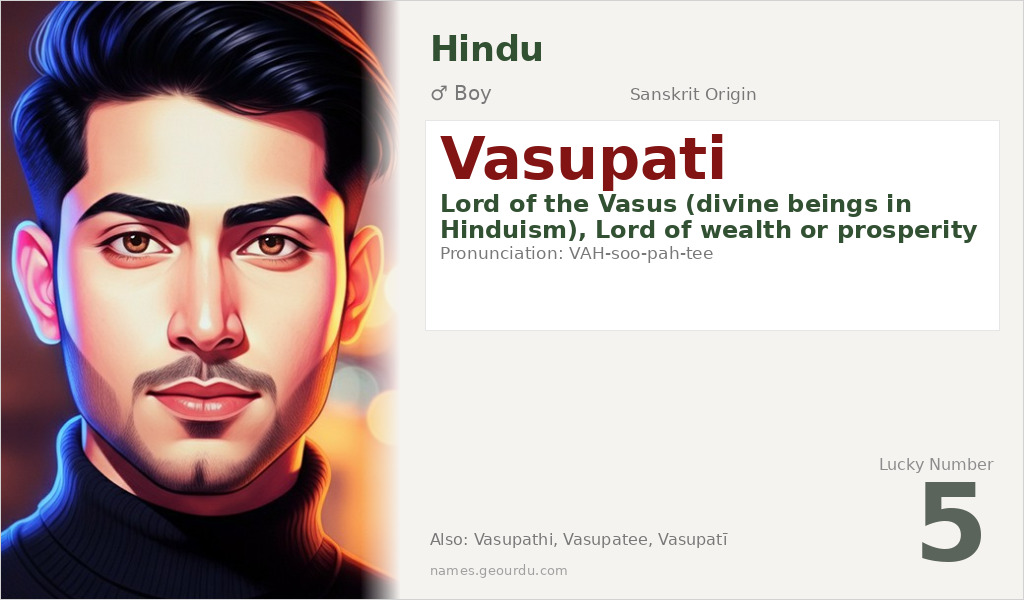
| 📛 Name | Vasupati |
| 💎 Meaning | Lord of the Vasus (divine beings in Hinduism), Lord of wealth or prosperity |
| 👤 Gender | Boy |
| 🕌 Religion | Hindu |
| 🌍 Origin | Sanskrit |
| 🗣 Pronunciation | VAH-soo-pah-tee |
| ✍️ Urdu | وسوپتی |
| ✍️ Arabic | فاسوباتي |
| 🔢 Numerology | 5 |
| ✨ Spellings | Vasupathi, Vasupatee, Vasupatī |
Origin & Cultural Significance
Vasupati originates from ancient India’s Sanskrit language and Hindu religious tradition, with its earliest references found in Vedic literature dating back over 3,000 years. The name is deeply embedded in Hindu mythology, where the Vasus are eight attendant deities of Indra, each representing different aspects of nature and prosperity. Culturally, names ending in ‘pati’ (like Vasupati, Dhanpati, or Lokpati) were traditionally given to denote leadership qualities or divine connection. While primarily used in Hindu communities across India and Nepal, the name’s Sanskrit roots give it pan-Indian appeal. Historically, it has been more common as a title or epithet in religious texts than as a personal name, though it has been adopted for boys in traditional Hindu families seeking names with spiritual and prosperous connotations.
Personality Traits
Those named Vasupati are often perceived as natural authorities with a balanced approach to material and spiritual matters. They tend to exhibit protective instincts toward family and community, combined with practical wisdom in managing resources. The name’s association with lordship and prosperity suggests individuals who are ambitious yet responsible, often taking leadership roles with grace. Their connection to the Vasus—deities of natural elements—may reflect a personality that is grounded, adaptable, and in harmony with their environment.
Similar Names
If you like Vasupati, consider: Vasudeva, Vasuman, Vasubandhu, Patidev, Dhanpati
Famous People Named Vasupati
- Vasupati — A character in the Mahabharata, a king of Chedi who fought in the Kurukshetra War
- Vasupati — An epithet used for Lord Krishna in Hindu scriptures, particularly in the Bhagavata Purana
Frequently Asked Questions About Vasupati
What does Vasupati mean?
Vasupati means 'Lord of the Vasus' or 'Lord of wealth/prosperity' in Sanskrit. It's a compound name from 'Vasu' (wealth/divine beings) and 'pati' (lord/master), used as an epithet for Hindu deities like Krishna, Indra, and Agni.
Is Vasupati a boy or girl name?
Vasupati is exclusively a boy's name in Hindu naming tradition. The '-pati' suffix (meaning 'lord' or 'husband') and its usage in scriptures for male deities establish it as masculine.
What is the origin of Vasupati?
Vasupati originates from Sanskrit, the classical language of ancient India, and Hindu religious texts. It has Vedic roots dating back millennia and is deeply connected to Hindu mythology, particularly references to the Vasus (divine attendants) and deities who rule over them.





