
Table of Contents
Vitashokha is a profound Sanskrit name with deep philosophical roots in Hindu tradition. Meaning ‘one who is free from sorrow’, this name carries centuries of cultural significance and spiritual meaning. Historically associated with resilience and emotional mastery, Vitashokha represents an ideal state of being in Indian philosophical thought. Today, it remains a meaningful choice for parents seeking a name with both linguistic beauty and spiritual depth.
Meaning of Vitashokha
Vitashokha derives from classical Sanskrit, combining ‘Vita’ (वीत), meaning ‘free from’ or ‘without’, and ‘Shokha’ (शोख), meaning ‘sorrow’, ‘grief’, or ‘mourning’. This compound construction follows standard Sanskrit naming conventions where the first element modifies the second. The name appears in various Hindu and Buddhist texts, often describing individuals who have achieved emotional liberation or spiritual enlightenment. Linguistically, it belongs to the category of Sanskrit names expressing positive attributes through negation. The concept of being ‘free from sorrow’ (vita-shoka) is central to many Indian philosophical traditions, particularly in teachings about detachment and inner peace.
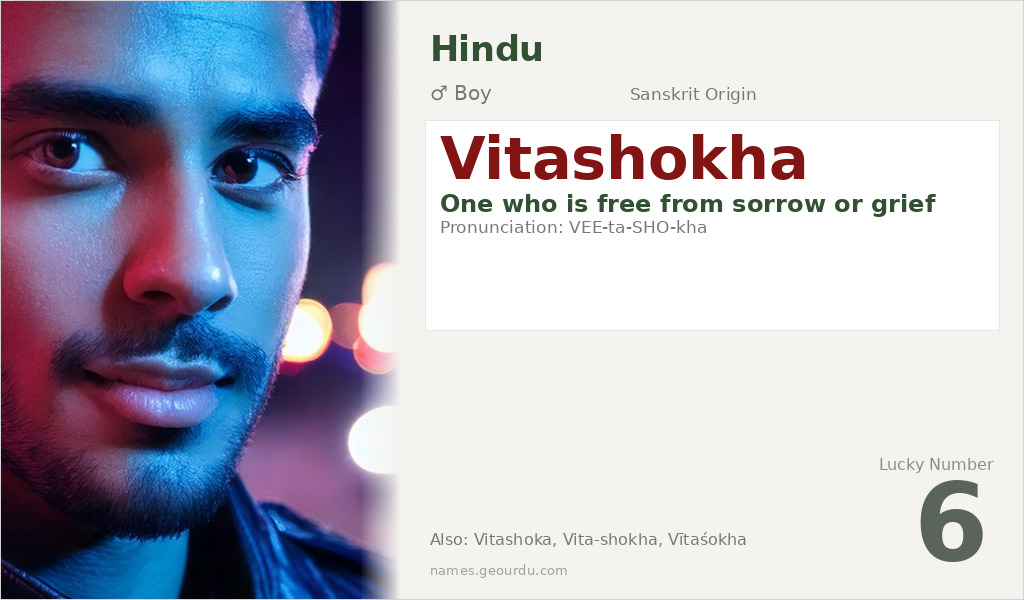
| 📛 Name | Vitashokha |
| 💎 Meaning | One who is free from sorrow or grief |
| 👤 Gender | Boy |
| 🕌 Religion | Hindu |
| 🌍 Origin | Sanskrit |
| 🗣 Pronunciation | VEE-ta-SHO-kha |
| ✍️ Urdu | وِتاشوکھ |
| ✍️ Arabic | فيتاشوكها |
| 🔢 Numerology | 6 |
| ✨ Spellings | Vitashoka, Vita-shokha, Vītaśokha |
Origin & Cultural Significance
Vitashokha originates from ancient Sanskrit, the classical language of India that has influenced numerous South Asian languages. The name has historical connections to both Hindu and Buddhist traditions, most notably through Emperor Ashoka (also sometimes referred to as Ashoka Vitashoka in certain historical contexts). In Hindu philosophy, the state of being ‘free from sorrow’ represents spiritual achievement and emotional mastery. The name reflects core values in Indian spiritual traditions that emphasize overcoming suffering through wisdom and detachment. While primarily associated with Hindu culture, the concept has resonance in Buddhist teachings as well, particularly in the context of achieving nirvana or liberation from suffering.
Personality Traits
Those named Vitashokha are often associated with emotional resilience and philosophical depth. The meaning suggests someone who maintains composure during challenges and brings calm to difficult situations. They may be perceived as wise beyond their years, with a natural inclination toward spiritual or philosophical pursuits. The name implies an inner strength that allows them to support others while remaining centered themselves.
Similar Names
If you like Vitashokha, consider: Vitabhaya, Vitakrodha, Nirbhaya, Ashoka, Sukhad, Ananda, Sukumar, Sukrit
Famous People Named Vitashokha
- Ashoka the Great (also known as Ashoka Vitashoka) — 3rd century BCE Mauryan emperor who converted to Buddhism after the Kalinga war, though historical records use 'Ashoka' more commonly than 'Vitashoka'
- Vitashoka (Buddhist monk) — Younger brother of Emperor Ashoka who became a Buddhist monk according to some historical accounts
Frequently Asked Questions About Vitashokha
What does Vitashokha mean?
Vitashokha means 'one who is free from sorrow' or 'without grief'. It's a Sanskrit compound name combining 'Vita' (free from) and 'Shokha' (sorrow).
Is Vitashokha a boy or girl name?
Vitashokha is traditionally a masculine name in Hindu and Sanskrit naming traditions. The grammatical structure and historical usage consistently indicate it as a boy's name.
What is the origin of Vitashokha?
Vitashokha originates from Sanskrit, the classical language of ancient India. It has historical connections to Hindu philosophy and appears in Indian historical records, most notably associated with Emperor Ashoka's family.





