
Table of Contents
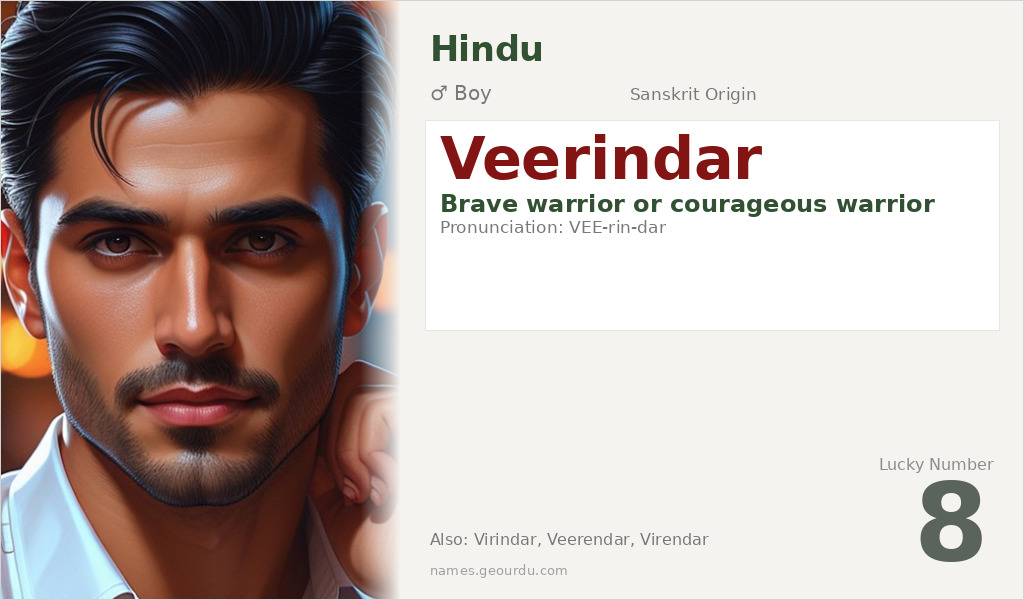
Veerindar is a powerful and meaningful name with deep roots in Sanskrit tradition and Hindu culture. Combining elements of bravery and divine warrior energy, this name carries significant historical and linguistic weight. Popular in Indian communities, it reflects values of courage, strength, and leadership. Understanding its etymology reveals why it remains a cherished choice for boys across generations.
Meaning of Veerindar
Veerindar derives from two Sanskrit components: ‘veer’ (वीर) meaning ‘brave, courageous, hero, or warrior,’ and ‘Indar,’ a variant of ‘Indra’ (इन्द्र), the king of gods in Hindu mythology who embodies warrior qualities, strength, and sovereignty. The name literally translates to ‘brave like Indra’ or ‘courageous warrior,’ emphasizing both human valor and divine inspiration. This compound structure follows classical Sanskrit naming conventions where martial virtues are combined with divine references. The name appears in various Indian languages including Hindi, Punjabi, and Gujarati with consistent meaning, demonstrating its linguistic stability across regions.
| 📛 Name | Veerindar |
| 💎 Meaning | Brave warrior or courageous warrior |
| 👤 Gender | Boy |
| 🕌 Religion | Hindu |
| 🌍 Origin | Sanskrit |
| 🗣 Pronunciation | VEE-rin-dar |
| ✍️ Urdu | ویرندر |
| ✍️ Arabic | فيريندار |
| 🔢 Numerology | 8 |
| ✨ Spellings | Virindar, Veerendar, Virendar, Veerindar |
Origin & Cultural Significance
Veerindar originates from Sanskrit, the ancient Indo-Aryan language that forms the foundation of many Indian languages and Hindu religious texts. The name reflects the cultural importance of warrior virtues in traditional Indian society, where names often invoked gods or heroic qualities. While primarily associated with Hindu communities, the name is used by some Sikh families as well, particularly in Punjab. Its usage spans several centuries, appearing in regional records and literature, though it gained broader popularity in the 20th century. The name’s components are deeply embedded in Indian epics like the Mahabharata and Ramayana, where ‘veer’ heroes and Indra’s exploits are celebrated.
Personality Traits
Those named Veerindar are often associated with leadership qualities, resilience, and protective instincts. The name’s warrior etymology suggests someone who approaches life with courage and determination, potentially excelling in challenging environments. They may display natural authority and a strong sense of justice, inspired by the name’s connection to Indra, the divine ruler. While personality varies individually, the name carries cultural expectations of strength and responsibility.
Similar Names
If you like Veerindar, consider: Veer, Veerendra, Indra, Veeresh, Veerabhadra, Indrajit, Veeraprasad, Veeran, Indravadan, Veeravrat
Famous People Named Veerindar
- Veerindar Singh — Indian politician and former Member of Legislative Assembly
- Veerindar Pal Singh — Punjabi poet and writer known for his contributions to Sikh literature
Frequently Asked Questions About Veerindar
What does Veerindar mean?
Veerindar means 'brave warrior' or 'courageous warrior.' It combines Sanskrit 'veer' (brave) with 'Indar' (variant of Indra, the warrior god).
Is Veerindar a boy or girl name?
Veerindar is exclusively a boy's name in all cultural contexts where it's used, reflecting its masculine warrior connotations.
What is the origin of Veerindar?
Veerindar originates from Sanskrit, the classical language of India, and is primarily associated with Hindu naming traditions.





