
Table of Contents
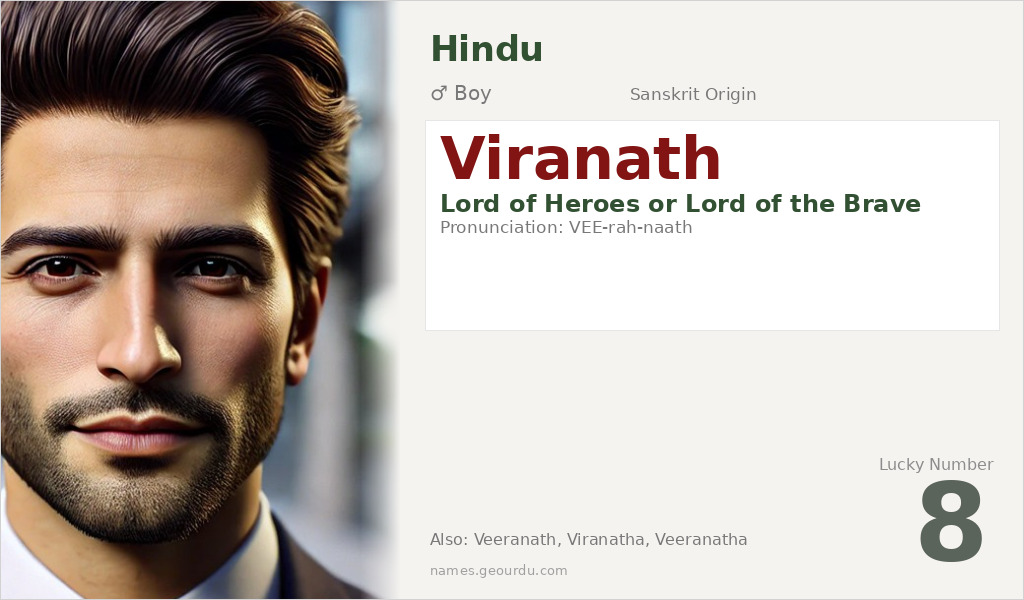
Viranath is a powerful and traditional name deeply rooted in Hindu culture, symbolizing bravery and divine leadership. Derived from Sanskrit, it combines ‘Vira’ (hero) and ‘Nath’ (lord) to mean ‘Lord of Heroes’. This name is often chosen for boys to imbue qualities of courage, protection, and strength. In this guide, we explore its rich etymology, cultural significance, and associated traits.
Meaning of Viranath
Viranath is a compound name from Sanskrit, an ancient Indo-Aryan language central to Hindu scriptures. The first component, ‘Vira’ (वीर), originates from the Sanskrit root ‘vīr’, meaning ‘hero’, ‘brave’, ‘warrior’, or ‘man of courage’, and is widely used in Indian names and literature to denote valor. The second component, ‘Nath’ (नाथ), comes from the Sanskrit root ‘nāth’, meaning ‘lord’, ‘master’, ‘protector’, or ‘ruler’, often associated with deities and spiritual leaders. Together, Viranath translates precisely to ‘Lord of Heroes’ or ‘Lord of the Brave’, emphasizing leadership and protective qualities. This name is commonly found in Hindu texts as an epithet for gods like Shiva, reflecting its religious and cultural depth.
| 📛 Name | Viranath |
| 💎 Meaning | Lord of Heroes or Lord of the Brave |
| 👤 Gender | Boy |
| 🕌 Religion | Hindu |
| 🌍 Origin | Sanskrit |
| 🗣 Pronunciation | VEE-rah-naath |
| ✍️ Urdu | ویراناتھ |
| ✍️ Arabic | فيراناث |
| 🔢 Numerology | 8 |
| ✨ Spellings | Veeranath, Viranatha, Veeranatha |
Origin & Cultural Significance
Viranath originates from Sanskrit, the classical language of India, and is predominantly used within Hindu communities. It has historical roots in ancient Hindu mythology and scriptures, where similar compound names are prevalent to honor divine or heroic attributes. The name is especially popular in regions with strong Sanskrit influences, such as India and Nepal, and among Hindu diaspora worldwide. Culturally, it aligns with Hindu naming traditions that often incorporate elements from nature, deities, or virtues to bestow positive qualities upon the bearer. Over time, Viranath has maintained its traditional appeal while being adapted into modern usage through variations in spelling and pronunciation.
Personality Traits
People named Viranath are often seen as embodying the heroic and lordly traits suggested by their name. They may display leadership, courage, and a protective nature, making them natural guides or supporters in personal and professional settings. Their personality can inspire trust and admiration, driven by a sense of duty and strength. While individual traits vary, the name’s meaning encourages a legacy of bravery and responsibility.
Similar Names
If you like Viranath, consider: Veer, Viraj, Nath, Virat, Virendra
Famous People Named Viranath
- Viranath — A character in Hindu mythology and literature, often associated with heroic figures or deities
- Viranath Shastri — A noted Sanskrit scholar and educator in India
Frequently Asked Questions About Viranath
What does Viranath mean?
Viranath means 'Lord of Heroes' or 'Lord of the Brave', derived from the Sanskrit words 'Vira' (hero) and 'Nath' (lord).
Is Viranath a boy or girl name?
Viranath is traditionally a boy name in Hindu culture, reflecting masculine qualities of bravery and leadership.
What is the origin of Viranath?
Viranath originates from Sanskrit, an ancient Indian language, and is primarily used in Hindu naming traditions.





