
Table of Contents
Elfa is a enchanting girl’s name with roots deep in Norse mythology and Germanic folklore. Meaning ‘elf’ or ‘supernatural being,’ it evokes images of mystical creatures from ancient Scandinavian tales. This name carries a sense of magic, nature, and ethereal beauty, making it a unique choice for parents seeking a name with mythological resonance. While not common globally, it remains cherished in Nordic regions and among those appreciating pagan heritage.
Meaning of Elfa
Elfa derives from the Old Norse word ‘alfr’ and Old High German ‘alb,’ both meaning ‘elf.’ In Norse mythology, elves (álfar) were considered divine beings associated with fertility, nature, and magic, often depicted as beautiful and benevolent. The name specifically refers to a female elf, emphasizing feminine mystical qualities. Linguistically, it’s related to other Germanic names like Alva and Elva, which share similar roots. Unlike the incorrect ‘Elffriend,’ Elfa directly means the elf itself, highlighting a direct connection to supernatural folklore rather than a relationship with elves.
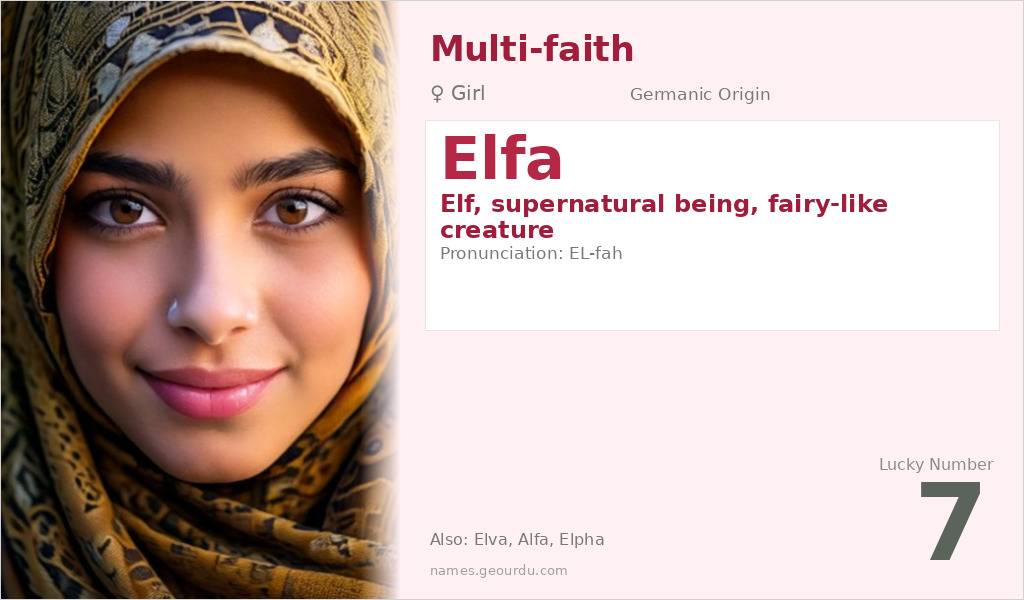
| 📛 Name | Elfa |
| 💎 Meaning | Elf, supernatural being, fairy-like creature |
| 👤 Gender | Girl |
| 🕌 Religion | Multi-faith |
| 🌍 Origin | Germanic |
| 🗣 Pronunciation | EL-fah |
| ✍️ Urdu | ایلفا |
| ✍️ Arabic | إلفا |
| 🔢 Numerology | 7 |
| ✨ Spellings | Elva, Alfa, Elpha |
Origin & Cultural Significance
Elfa originates from pre-Christian Germanic and Norse cultures, particularly in Scandinavia and Germany, where elf mythology was prevalent. It emerged as a given name during the Viking Age and medieval periods, reflecting pagan beliefs in nature spirits. The name has persisted in Nordic countries like Iceland and Norway, often used in modern times without religious connotations. While sometimes adopted by Christians, it is not inherently Christian and belongs to a multi-faith, cultural tradition. Its usage spread through Germanic language influence but remains most authentic in Scandinavian contexts.
Personality Traits
Named after mythical elves, Elfa suggests a personality imbued with creativity, intuition, and a love for the natural world. Those with this name may be seen as dreamy, artistic, and spiritually inclined, often possessing a quiet wisdom. They might excel in fields requiring imagination, such as arts, writing, or environmental sciences. The elf association also implies a graceful, independent character with a touch of mystery and charm.
Similar Names
If you like Elfa, consider: Elva, Alva, Elfrida, Alfhild, Elvira
Famous People Named Elfa
- Elfa Rún Kristinsdóttir — Icelandic musician and composer
- Elfa Ýr Gylfadóttir — Icelandic singer and actress
Frequently Asked Questions About Elfa
What does Elfa mean?
Elfa means 'elf' or 'fairy-like creature,' originating from Old Norse 'alfr' and Germanic languages, referring to supernatural beings in mythology.
Is Elfa a boy or girl name?
Elfa is primarily a girl's name, as it's the feminine form derived from elf mythology, though rare unisex usage might occur in some cultures.
What is the origin of Elfa?
Elfa originates from Germanic and Old Norse languages, with roots in pagan Norse mythology where elves were revered nature spirits, not from Christianity as sometimes misattributed.





