
Table of Contents
Celosia is a captivating and uncommon name that draws inspiration from the natural world. Derived from the Greek word for ‘burning’ or ‘flaming’, it evokes images of vibrant, flame-like flowers in hues of red, orange, and gold. While primarily known as a botanical term for an ornamental plant, Celosia has gained occasional use as a feminine given name, symbolizing passion, beauty, and creativity. This name offers a unique blend of classical roots and modern floral appeal, making it a distinctive choice for parents seeking something both elegant and spirited.
Meaning of Celosia
The meaning of Celosia is deeply rooted in Ancient Greek, originating from the word ‘κέλεος’ (kéleos), which translates to ‘burning’ or ‘flaming’. This refers to the striking, flame-shaped flower heads of the Celosia plant, known for their bright and fiery colors. In botanical Latin, the name was formalized by Carl Linnaeus in the 18th century to classify the genus Celosia argentea, commonly called cockscomb or woolflower. As a personal name, Celosia carries this connotation of vibrancy and heat, symbolizing passion, energy, and natural beauty. It is not associated with any specific religious or cultural tradition but is appreciated for its aesthetic and etymological richness. The name’s meaning is well-documented in etymological and botanical sources, making it a reliable choice for those interested in names with clear linguistic origins.
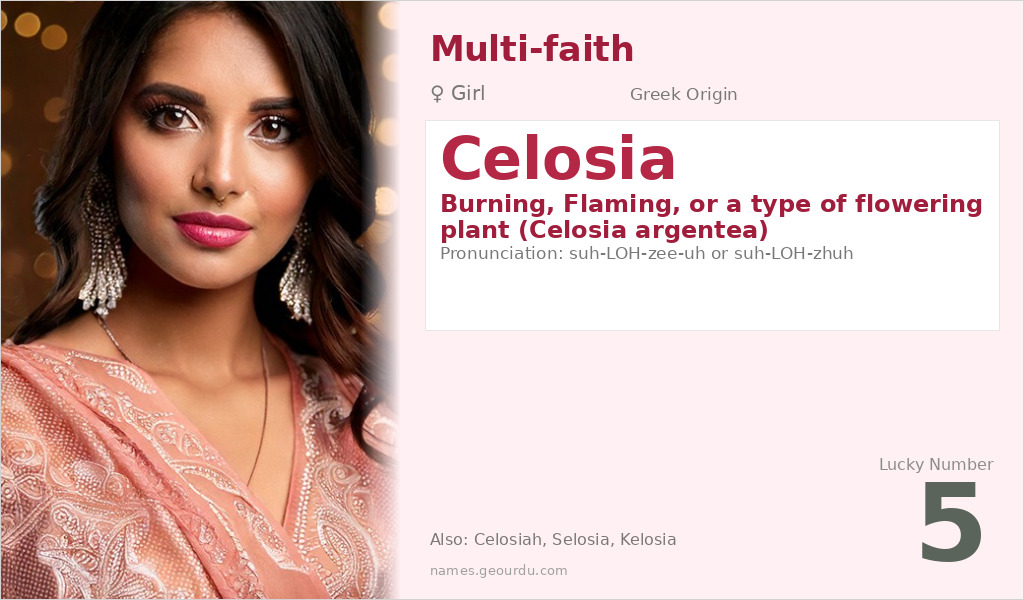
| 📛 Name | Celosia |
| 💎 Meaning | Burning, Flaming, or a type of flowering plant (Celosia argentea) |
| 👤 Gender | Girl |
| 🕌 Religion | Multi-faith |
| 🌍 Origin | Greek |
| 🗣 Pronunciation | suh-LOH-zee-uh or suh-LOH-zhuh |
| ✍️ Urdu | سیلوسیا (a transliteration; not a traditional Urdu name) |
| ✍️ Arabic | سيلوسيا (a transliteration; not a traditional Arabic name) |
| 🔢 Numerology | 5 |
| ✨ Spellings | Celosiah, Selosia, Kelosia |
Origin & Cultural Significance
Celosia originates from the Greek language, with its etymology tracing back to the word ‘kéleos’ meaning ‘burning’. It entered Western nomenclature through Latin and was adopted into scientific classification in the 1700s by botanist Carl Linnaeus, who used it to name a genus of flowering plants in the amaranth family. Culturally, the Celosia plant is native to tropical regions of Africa, Asia, and South America, and it has been cultivated for ornamental and culinary purposes in various cultures. As a personal name, Celosia is a modern invention, primarily used in English-speaking countries as a feminine name inspired by the flower’s exotic and colorful appeal. It does not have historical usage as a traditional given name in any major culture or religion, but its botanical significance and Greek roots give it a timeless and cross-cultural charm.
Personality Traits
Those named Celosia are often associated with traits of passion, creativity, and vitality, mirroring the fiery and vibrant nature of the flower. They may possess a bold and expressive personality, with a strong sense of individuality and a love for artistic endeavors. Their energetic and dynamic approach to life can make them inspiring leaders or innovators, though they might also be perceived as intense or unconventional. Overall, the name suggests a person who shines brightly and leaves a lasting impression.
Similar Names
If you like Celosia, consider: Chrysanthemum, Zinnia, Azalea, Flora, Blaze
Famous People Named Celosia
- None widely known as a personal name; Celosia is primarily recognized as a plant genus in botany and horticulture.
Frequently Asked Questions About Celosia
What does Celosia mean?
Celosia means 'burning' or 'flaming' in Greek, referring to the flame-like appearance of the Celosia flower. It is also the botanical name for a genus of ornamental plants known for their vibrant colors.
Is Celosia a boy or girl name?
Celosia is primarily used as a girl's name in modern contexts, inspired by its floral and feminine connotations. It is not traditionally gender-specific but is overwhelmingly given to females.
What is the origin of Celosia?
Celosia originates from the Greek language, derived from 'kéleos' meaning 'burning'. It was adopted into Latin and later into botanical nomenclature, and as a personal name, it is a modern creation with Greek roots.





