Table of Contents
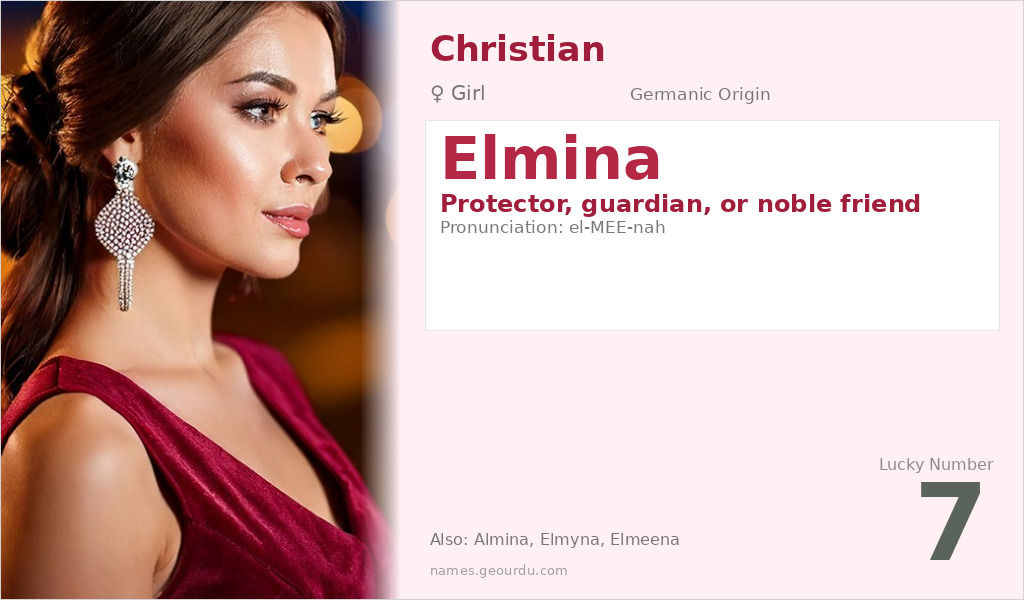
Elmina is a classic Germanic name with deep historical roots, meaning ‘protector’ or ‘noble guardian.’ Primarily used for girls in Christian communities, it carries a sense of strength and dignity. This name has endured through centuries, from medieval Europe to modern times, offering a timeless choice for parents seeking a name with both elegance and substance. Its rich etymology reflects values of nobility and protection.
Meaning of Elmina
Elmina originates from Old High German, combining the elements ‘adal’ (noble) and ‘mund’ (protection or guardian). This gives it the precise meaning of ‘noble protector’ or ‘guardian of nobility.’ The name evolved through medieval Germanic dialects, appearing in variations like Adelmund before simplifying to Elmina. It is linguistically related to other Germanic names such as Edmund (wealth-protector) and Almond (noble-protector). In historical contexts, it was used among Germanic tribes and later spread through Christian naming traditions, emphasizing virtues of guardianship and aristocratic virtue.
| 📛 Name | Elmina |
| 💎 Meaning | Protector, guardian, or noble friend |
| 👤 Gender | Girl |
| 🕌 Religion | Christian |
| 🌍 Origin | Germanic |
| 🗣 Pronunciation | el-MEE-nah |
| ✍️ Urdu | ایل مینا |
| ✍️ Arabic | إلمينا |
| 🔢 Numerology | 7 |
| ✨ Spellings | Almina, Elmyna, Elmeena |
Origin & Cultural Significance
Elmina has its origins in Germanic cultures, particularly among Old High German-speaking communities during the early Middle Ages. It was adopted into Christian naming practices as Germanic tribes converted to Christianity, becoming popular in regions like Germany, the Netherlands, and Scandinavia. The name saw use among European nobility and commoners alike, often chosen for its connotations of protection and moral integrity. In modern times, it remains a recognizable name in Christian-majority countries, though less common than its variants. Its cultural significance is tied to Germanic heritage rather than specific religious rituals or astrological associations.
Personality Traits
People named Elmina are often associated with traits of loyalty, protection, and nobility. They may exhibit a strong sense of responsibility and a calm, reassuring presence, making them natural caregivers or leaders. Their personality is frequently described as dignified and trustworthy, with a deep respect for tradition and family values. These characteristics align with the name’s etymological roots, emphasizing guardianship and ethical strength.
Similar Names
If you like Elmina, consider: Alma, Elvira, Adelaide, Emmeline, Wilhelmina
Famous People Named Elmina
- Elmina R. Lucke — 19th-century American educator and writer
- Elmina M. Gale — early 20th-century American author and poet
Frequently Asked Questions About Elmina
What does Elmina mean?
Elmina means 'protector' or 'noble guardian,' derived from the Old High German words 'adal' (noble) and 'mund' (protection).
Is Elmina a boy or girl name?
Elmina is traditionally a girl's name, with historical usage primarily for females in Germanic and Christian contexts.
What is the origin of Elmina?
Elmina originates from Germanic languages, specifically Old High German, and has been used in Christian communities since the Middle Ages.