
Table of Contents
Earlene is an elegant feminine name with aristocratic roots that has maintained its appeal for over a century. Derived from the Old English word for nobleman or warrior, this name carries a sense of dignity and leadership. While particularly popular in English-speaking countries during the mid-20th century, Earlene continues to be chosen by parents seeking a name with historical depth and noble connotations. Its melodic sound and meaningful origin make it a timeless choice for girls.
Meaning of Earlene
Earlene originates from the Old English word ‘eorl,’ which meant ‘nobleman, warrior, or chief’ in Anglo-Saxon society. The name developed by adding the feminine suffix ‘-ene’ or ‘-lene’ to create a distinctly female version of the masculine name Earl. This linguistic construction follows a common pattern in English name formation, similar to how feminine names like Pauline developed from Paul. The core meaning connects to nobility, aristocracy, and leadership qualities, reflecting the social hierarchy of early Germanic tribes where earls were high-ranking nobles. The name’s evolution demonstrates how English has adapted ancient words to create modern feminine names with historical resonance.
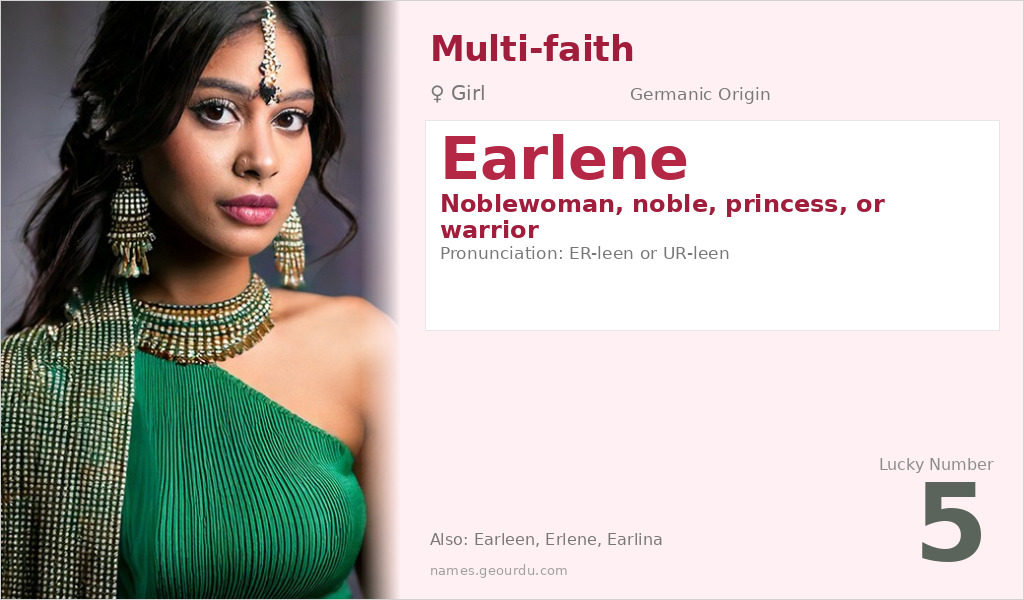
| 📛 Name | Earlene |
| 💎 Meaning | Noblewoman, noble, princess, or warrior |
| 👤 Gender | Girl |
| 🕌 Religion | Multi-faith |
| 🌍 Origin | Germanic |
| 🗣 Pronunciation | ER-leen or UR-leen |
| ✍️ Urdu | ارلین |
| ✍️ Arabic | إيرلين |
| 🔢 Numerology | 5 |
| ✨ Spellings | Earleen, Erlene, Earlina, Earline |
Origin & Cultural Significance
Earlene emerged in English-speaking countries during the late 19th and early 20th centuries as part of a broader trend of creating feminine forms from masculine names. Its roots trace back to Germanic languages, specifically Old English, where ‘eorl’ denoted a nobleman of high rank, equivalent to a count in continental European nobility systems. The name gained popularity in the United States and United Kingdom during the 1920s-1950s, peaking in usage around the mid-20th century. Unlike names tied to specific religious traditions, Earlene has been used across various cultural and religious backgrounds in English-speaking societies, reflecting its linguistic rather than religious origin. Its usage has declined since the 1960s but maintains a classic, vintage appeal.
Personality Traits
The noble meaning of Earlene suggests personality traits associated with leadership, dignity, and strength of character. Those bearing this name are often perceived as confident individuals with natural authority and grace. The name’s historical connection to warriors and chiefs implies resilience and determination, while its feminine suffix adds a layer of elegance and refinement. These combined elements create an impression of someone who balances strength with sophistication in their personal and professional life.
Similar Names
If you like Earlene, consider: Earl, Earla, Earline, Earlina, Earletta
Famous People Named Earlene
- Earlene Brown — American track and field athlete and Olympic medalist
- Earlene Fowler — American mystery novelist known for the Benni Harper series
Frequently Asked Questions About Earlene
What does Earlene mean?
Earlene means 'noblewoman,' 'princess,' or 'warrior' and originates from the Old English word 'eorl' meaning nobleman, combined with a feminine suffix.
Is Earlene a boy or girl name?
Earlene is exclusively a feminine name, created as the female version of the masculine name Earl. It has been used for girls since the late 19th century.
What is the origin of Earlene?
Earlene has Germanic origins, specifically from Old English, where 'eorl' meant nobleman or warrior. The name developed in English-speaking countries by adding feminine suffixes to create a distinct female form.





