
Table of Contents
Edda is a distinctive feminine name with deep roots in Norse mythology and Germanic heritage. While relatively uncommon today, it carries significant cultural weight as both a personal name and the title of foundational medieval Icelandic texts. This name connects modern bearers to ancient Scandinavian traditions and literary history.
Meaning of Edda
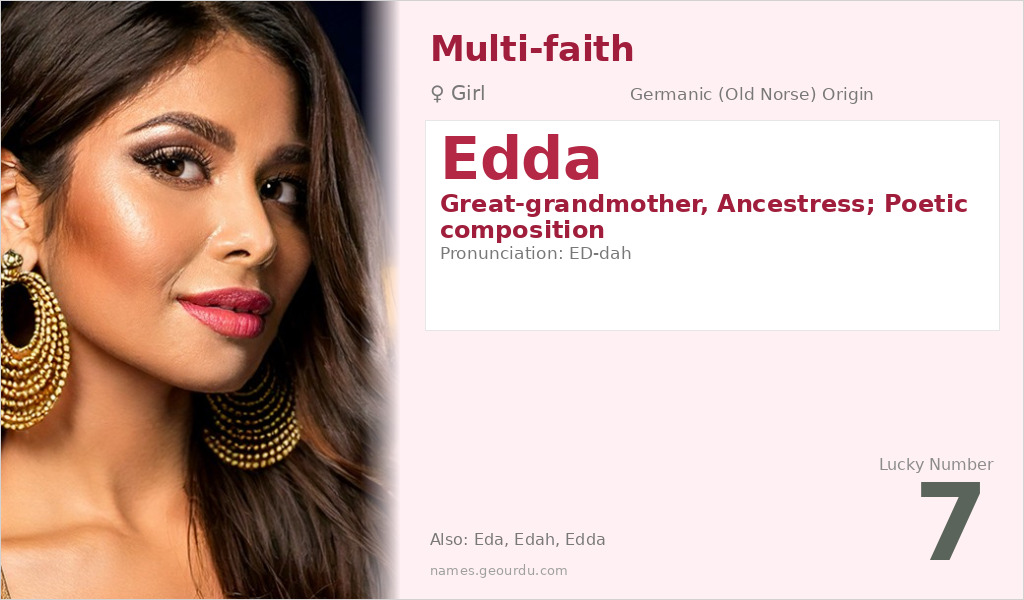
Edda has two primary meanings, both originating from Old Norse. First, it means ‘great-grandmother’ or ‘ancestress,’ derived from the Proto-Germanic *awōdōn. Second, and more famously, ‘Edda’ refers to two medieval Icelandic literary works: the Prose Edda by Snorri Sturluson (c. 1220) and the anonymous Poetic Edda collection. These texts preserve Norse mythology, legends, and poetic forms. The name gained popularity during 19th-century Norse revival movements across Europe, particularly in Germany and Scandinavia, where ancient Germanic heritage was being rediscovered and celebrated.
| 📛 Name | Edda |
| 💎 Meaning | Great-grandmother, Ancestress; Poetic composition |
| 👤 Gender | Girl |
| 🕌 Religion | Multi-faith |
| 🌍 Origin | Germanic (Old Norse) |
| 🗣 Pronunciation | ED-dah |
| ✍️ Urdu | ایڈا |
| ✍️ Arabic | إيدا |
| 🔢 Numerology | 7 |
| ✨ Spellings | Eda, Edah, Edda |
Origin & Cultural Significance
Edda originates from Old Norse, the North Germanic language spoken by inhabitants of Scandinavia during the Viking Age. The name first appears in medieval Iceland, where it was used both as a personal name and as the title for important literary collections. During the 19th century, with the rise of Romantic nationalism across Europe, Edda was revived as a given name, particularly in Germany and Scandinavian countries. Today, it remains most common in Iceland, Norway, Sweden, and Germany, though it has spread to English-speaking countries as well, often chosen by parents interested in Norse mythology or seeking a distinctive, historically significant name.
Personality Traits
Those named Edda often exhibit traits associated with their name’s mythological and ancestral connections. They tend to be creative, introspective individuals with strong appreciation for tradition and storytelling. Many display intuitive understanding of human nature and family dynamics, possibly reflecting the ‘great-grandmother’ meaning. Their connection to literary history often manifests as interest in arts, literature, or cultural preservation.
Similar Names
If you like Edda, consider: Freya, Astrid, Sigrid, Gudrun, Brynhild
Famous People Named Edda
- Edda Mussolini — Daughter of Italian dictator Benito Mussolini
- Edda van Heemstra Hepburn-Ruston — Mother of actress Audrey Hepburn
Frequently Asked Questions About Edda
What does Edda mean?
Edda has two meanings: 'great-grandmother' or 'ancestress' in Old Norse, and it also refers to medieval Icelandic collections of Norse mythology and poetry.
Is Edda a boy or girl name?
Edda is exclusively a feminine name in all cultures where it's used, originating from Old Norse feminine nouns and consistently used for girls throughout its history.
What is the origin of Edda?
Edda originates from Old Norse (North Germanic language) and medieval Icelandic literature. It's not originally Christian but comes from pre-Christian Norse/Germanic traditions.





