
Table of Contents
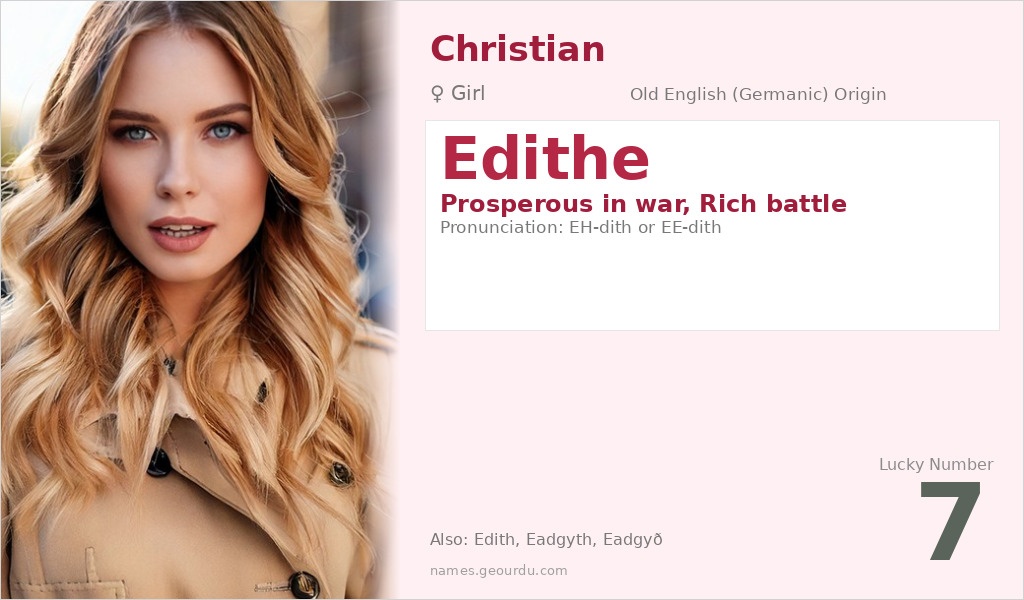
Edithe is a graceful variant of the classic name Edith, carrying centuries of history and meaning. With roots in Old English, this name combines elements of prosperity and strength, making it both elegant and powerful. Popular in Christian traditions, Edithe has been borne by saints and noblewomen throughout European history. Discover the rich linguistic heritage and cultural significance of this timeless name.
Meaning of Edithe
The name Edithe derives from the Old English elements ‘ēad’ meaning ‘wealth, fortune, prosperity’ and ‘gȳð’ meaning ‘war, battle’. This combination creates the meaning ‘prosperous in war’ or ‘rich battle’, reflecting values important in early Germanic societies where material success and martial prowess were closely linked. The name first appeared in Anglo-Saxon England before the Norman Conquest of 1066. Variants like Eadgyth were recorded in medieval documents, with the simplified Edith becoming standard after the Middle English period. The ‘e’ ending in Edithe represents a phonetic variation that emerged in different regional pronunciations.
| 📛 Name | Edithe |
| 💎 Meaning | Prosperous in war, Rich battle |
| 👤 Gender | Girl |
| 🕌 Religion | Christian |
| 🌍 Origin | Old English (Germanic) |
| 🗣 Pronunciation | EH-dith or EE-dith |
| ✍️ Urdu | ایڈتھ |
| ✍️ Arabic | إديث |
| 🔢 Numerology | 7 |
| ✨ Spellings | Edith, Eadgyth, Eadgyð, Edyth, Edytha |
Origin & Cultural Significance
Edithe originates from Old English, specifically the Anglo-Saxon language spoken in England from the 5th to 12th centuries. The name gained prominence through Saint Edith of Wilton (c. 961-984), daughter of King Edgar the Peaceful, who became an important figure in English Christianity. During the medieval period, the name spread across Europe through Christian monastic networks and royal marriages. While primarily associated with English and Germanic Christian traditions, the name has been adopted in various cultures without significant alteration to its original form or meaning.
Personality Traits
Historically, individuals named Edithe/Edith have been associated with qualities of resilience, wisdom, and grace under pressure. The name’s meaning suggests someone who can prosper through challenges, combining strategic thinking with inner strength. In literature and history, bearers of this name often exhibit determination balanced with compassion, making it suitable for those who value both tradition and personal fortitude.
Similar Names
If you like Edithe, consider: Edith, Eadgyth, Edwina, Ethel, Matilda, Gertrude, Winifred, Æthelflæd
Famous People Named Edithe
- Saint Edith of Wilton — 10th-century English saint and princess, daughter of King Edgar the Peaceful
- Edith Piaf — French singer (1915-1963), though she used Edith rather than Edithe specifically
Frequently Asked Questions About Edithe
What does Edithe mean?
Edithe means 'Prosperous in war' or 'Rich battle', derived from Old English elements 'ēad' (wealth/fortune) and 'gȳð' (war/battle).
Is Edithe a boy or girl name?
Edithe is exclusively a feminine name, with historical usage limited to girls and women across all cultural contexts where it appears.
What is the origin of Edithe?
Edithe originates from Old English (Germanic language family) and has been used primarily in Christian European cultures since Anglo-Saxon times.





