
Table of Contents
Erek is a distinctive masculine name with deep roots in Norse and Germanic heritage. Meaning ‘ever-ruler’ or ‘eternal ruler,’ this name carries centuries of historical significance from Viking traditions to modern usage. While often considered a variant of Eric, Erek maintains its own unique character and appeal. Explore the rich linguistic journey and cultural adaptations of this powerful name.
Meaning of Erek
The name Erek derives from the Old Norse name Eiríkr, which is composed of two elements: ‘ei’ meaning ‘ever, always’ or sometimes interpreted as ‘alone, unique,’ and ‘ríkr’ meaning ‘ruler, mighty, powerful.’ This combination creates the meaning ‘eternal ruler’ or ‘sole ruler.’ The name entered English through Old Norse during the Viking Age and was reinforced by Norman French forms after the Norman Conquest. In Scandinavian countries, the name has been consistently popular since medieval times, with Eiríkr being borne by several kings and historical figures. The variant spelling Erek represents a phonetic adaptation in various European languages.
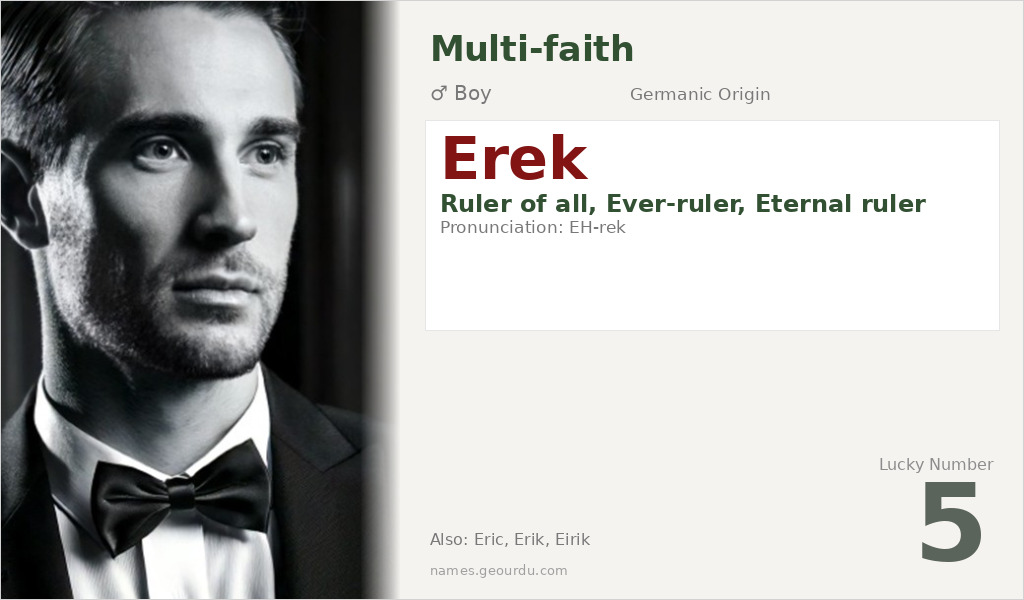
| 📛 Name | Erek |
| 💎 Meaning | Ruler of all, Ever-ruler, Eternal ruler |
| 👤 Gender | Boy |
| 🕌 Religion | Multi-faith |
| 🌍 Origin | Germanic |
| 🗣 Pronunciation | EH-rek |
| ✍️ Urdu | اریک |
| ✍️ Arabic | إيريك |
| 🔢 Numerology | 5 |
| ✨ Spellings | Eric, Erik, Eirik, Eiríkr, Eryk |
Origin & Cultural Significance
Erek originates from Old Norse naming traditions that were prevalent among Scandinavian peoples during the Viking Age (approximately 793-1066 CE). The name spread throughout Europe via Viking exploration, trade, and settlement, particularly in areas like the British Isles, Normandy, and Russia. After Christianization, the name continued in use across Scandinavia and was adopted in Christian contexts without losing its pagan origins. In modern times, Erek and its variants are used globally, particularly in countries with Scandinavian heritage like Sweden, Norway, Denmark, Iceland, and among diaspora communities. The name appears in various forms across cultures, reflecting local phonetic adaptations.
Personality Traits
Those named Erek are often associated with leadership qualities, strength, and resilience. The name’s meaning ‘ever-ruler’ suggests individuals who are natural organizers with a strong sense of responsibility. They tend to be independent thinkers who value freedom and self-determination, while also demonstrating loyalty to those they care about. These traits align with the historical figures who bore this name, from Viking explorers to modern achievers.
Similar Names
If you like Erek, consider: Eric, Erik, Eirik, Frederick, Derrick
Famous People Named Erek
- Erek Hansen — American professional volleyball player
- Erek Slater — Fictional character in the 'Animorphs' book series
Frequently Asked Questions About Erek
What does Erek mean?
Erek means 'ever-ruler' or 'eternal ruler,' originating from Old Norse Eiríkr, composed of 'ei' (ever) and 'ríkr' (ruler).
Is Erek a boy or girl name?
Erek is traditionally a masculine name with Norse/Germanic origins. While names can be used creatively, historical and cultural usage strongly associates it with boys.
What is the origin of Erek?
Erek originates from Old Norse (Eiríkr) and has Germanic roots. It spread through Viking expansion and was later adapted in various European languages.





