
Table of Contents
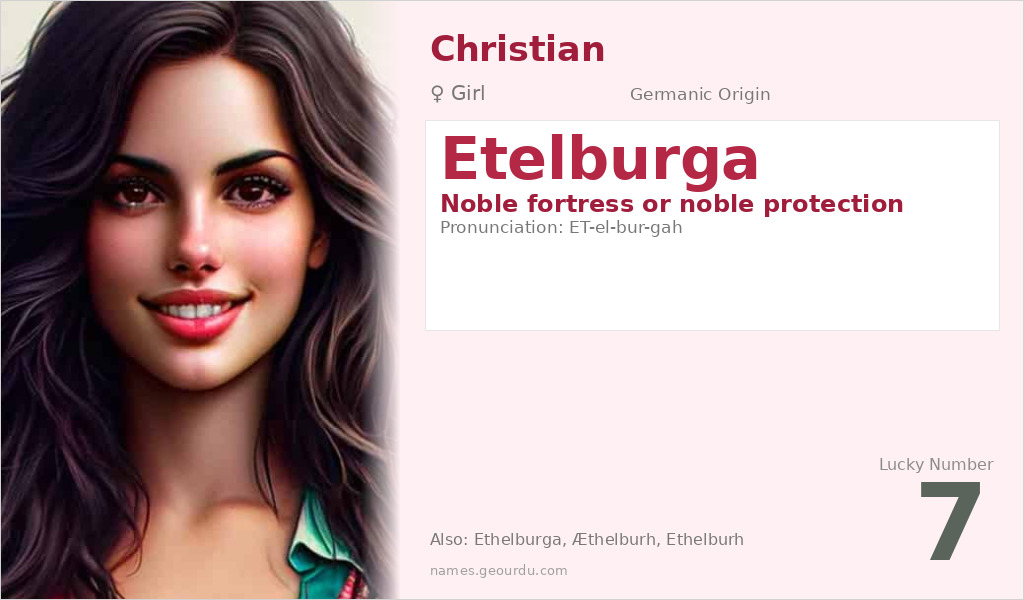
Etelburga is a distinguished Germanic name with deep historical roots in early medieval Europe. Meaning ‘noble fortress’ or ‘noble protection’, this name carries the weight of Anglo-Saxon royalty and Christian sainthood. While uncommon today, Etelburga represents an important piece of naming history that connects us to 7th-century England. Its compound structure reveals the values of protection and nobility that were prized by Germanic peoples.
Meaning of Etelburga
Etelburga derives from two Old High German elements that together create a meaningful compound name. The first element ‘ethel’ (variants: adal, edel) means ‘noble’, ‘aristocratic’, or ‘of noble birth’, appearing in numerous Germanic names like Ethelbert and Ethelred. The second element ‘burg’ means ‘fortress’, ‘protection’, or ‘stronghold’, reflecting the importance of defensive structures in medieval society. This combination creates the meaning ‘noble fortress’ or ‘noble protection’, suggesting both social status and protective qualities. Such compound names were characteristic of Germanic naming traditions, where parents combined meaningful elements to create names with specific virtues or attributes.
| 📛 Name | Etelburga |
| 💎 Meaning | Noble fortress or noble protection |
| 👤 Gender | Girl |
| 🕌 Religion | Christian |
| 🌍 Origin | Germanic |
| 🗣 Pronunciation | ET-el-bur-gah |
| ✍️ Urdu | ایتھلبرگا |
| ✍️ Arabic | إيثلبورغا |
| 🔢 Numerology | 7 |
| ✨ Spellings | Ethelburga, Æthelburh, Ethelburh, Edelburga |
Origin & Cultural Significance
Etelburga originated among the Germanic peoples, specifically the Anglo-Saxons who settled in England from the 5th century onward. The name appears in historical records from the 7th to 9th centuries, primarily among royalty and nobility. Several notable women bearing variations of this name became important figures in early English Christianity, including Saint Ethelburga of Barking and Ethelburga of Kent. The name reflects the cultural values of early medieval Germanic societies, where names often conveyed protective qualities and social status. While the name fell out of common use after the Norman Conquest, it remains significant for historians studying Anglo-Saxon England and early Christian saints.
Personality Traits
The meaning ‘noble fortress’ suggests someone with strong protective instincts and dignified character. People named Etelburga might naturally assume leadership roles, valuing tradition and stability while defending those in their care. The name implies both intellectual depth (from the ‘noble’ element) and practical strength (from the ‘fortress’ element), creating a balanced personality. While individual personalities vary, the name’s historical associations with saintly figures suggests potential for principled living and spiritual depth.
Similar Names
If you like Etelburga, consider: Ethelinda, Etheldreda, Ethelbert, Adelheid, Brunhilda, Gunhilda, Mathilda, Rosalind
Famous People Named Etelburga
- Saint Ethelburga of Barking — 7th century Anglo-Saxon abbess and saint, sister of Saint Erkenwald
- Ethelburga of Kent — 7th century queen of Northumbria, wife of King Edwin, later venerated as a saint
Frequently Asked Questions About Etelburga
What does Etelburga mean?
Etelburga means 'noble fortress' or 'noble protection', derived from the Old High German elements 'ethel' (noble) and 'burg' (fortress).
Is Etelburga a boy or girl name?
Etelburga is exclusively a feminine name, historically borne by several Anglo-Saxon queens and saints in early medieval England.
What is the origin of Etelburga?
Etelburga originates from Old High German and was used by Anglo-Saxons in England during the 7th-9th centuries, particularly among royalty and early Christians.





