
Table of Contents
Fae is an enchanting girl’s name that literally means ‘fairy’ or ‘magical being’. With roots in medieval European folklore and Arthurian legends, this name carries a sense of mystery and wonder. Popularized during the Victorian era’s fascination with fairy tales, Fae remains a charming choice for parents seeking a name with mythological resonance. Its simplicity and elegance have maintained its appeal across generations.
Meaning of Fae
The name Fae has a clear and well-documented etymology meaning ‘fairy’ or ‘supernatural being’. It originates from Middle English ‘faie’ and Old French ‘fae’, both referring to enchanted creatures of folklore. These terms derive from Latin ‘fata’ (the Fates—mythological beings who control destiny) and ultimately from the Proto-Indo-European root ‘*bʰeh₂-‘ meaning ‘to speak’ or ‘to say’, reflecting the prophetic nature of these beings. Unlike many names with uncertain origins, Fae has a direct linguistic lineage through Romance languages to its mythological source, making it one of the few names that literally means what it represents—a magical, otherworldly creature.
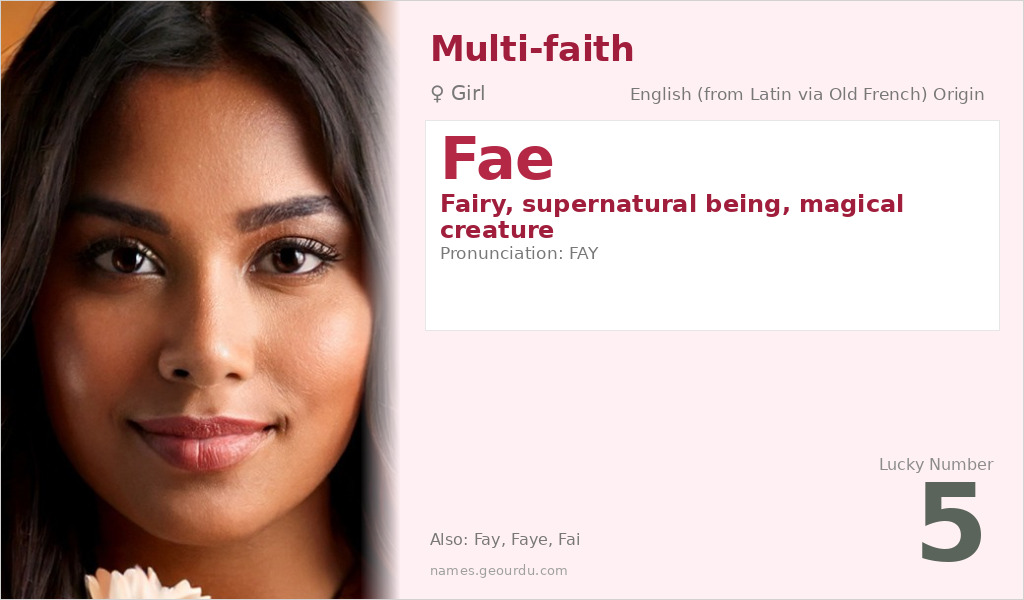
| 📛 Name | Fae |
| 💎 Meaning | Fairy, supernatural being, magical creature |
| 👤 Gender | Girl |
| 🕌 Religion | Multi-faith |
| 🌍 Origin | English (from Latin via Old French) |
| 🗣 Pronunciation | FAY |
| ✍️ Urdu | فی |
| ✍️ Arabic | فاي |
| 🔢 Numerology | 5 |
| ✨ Spellings | Fay, Faye, Fai, Faei |
Origin & Cultural Significance
Fae originates from European folklore traditions, particularly Celtic and Germanic mythology where fairies were believed to inhabit natural landscapes. The name entered English through Norman French after the 1066 conquest, where ‘fae’ referred to fairy folk. During the Middle Ages, these beings were considered both benevolent and dangerous in folk belief. The Victorian era (19th century) saw a revival of interest in fairy mythology through literature and art, making Fae and its variants fashionable names. While sometimes associated with Christianized folklore, the name’s roots are fundamentally pre-Christian and pan-European rather than tied to any specific religious tradition.
Personality Traits
Those named Fae are often perceived as creative, intuitive individuals with a touch of magic about them. They may possess artistic talents, vivid imaginations, and a connection to nature or mystical pursuits. Their independent spirit and unconventional thinking can make them stand out in social settings. While sometimes seen as dreamy or elusive, they typically have strong inner convictions and a unique perspective on life.
Similar Names
If you like Fae, consider: Faye, Fay, Freyja, Fiona, Fauna, Fairy, Fawn, Fern, Flora, Freya
Famous People Named Fae
- Fae Myenne Ng — American novelist known for 'Bone'
- Fae Ellington — Jamaican broadcaster and media personality
Frequently Asked Questions About Fae
What does Fae mean?
Fae means 'fairy' or 'magical being', originating from Old French 'fae' and Latin 'fata' (the Fates).
Is Fae a boy or girl name?
Fae is primarily a girl's name, though its variants like Fay have occasionally been used for boys historically.
What is the origin of Fae?
Fae originates from European folklore via Old French and Latin, specifically from words meaning fairy or enchanted being.





