
Table of Contents
Burt is a classic masculine name with roots stretching back to medieval Europe. While often used as a standalone name today, it originated as a diminutive form of names containing the Germanic element for ‘bright’ or ‘famous’. This name carries a straightforward, strong sound that has maintained popularity across generations, particularly in English-speaking countries. From Hollywood stars to everyday individuals, Burt represents a timeless choice with deep historical connections.
Meaning of Burt
The name Burt derives from the Germanic element ‘beraht’, which means ‘bright, famous, or illustrious’. This element appears in numerous Germanic names that spread throughout Europe following the migration periods. Specifically, Burt developed as a shortened form of names like Albert (‘noble-bright’), Robert (‘fame-bright’), and Herbert (‘army-bright’). The name entered English usage through Norman French after the 11th century Norman Conquest, where it was initially used as a nickname before becoming established as an independent given name. The ‘bright’ meaning carries connotations of intelligence, clarity, and renown, giving the name positive associations across cultures where Germanic names have influence.
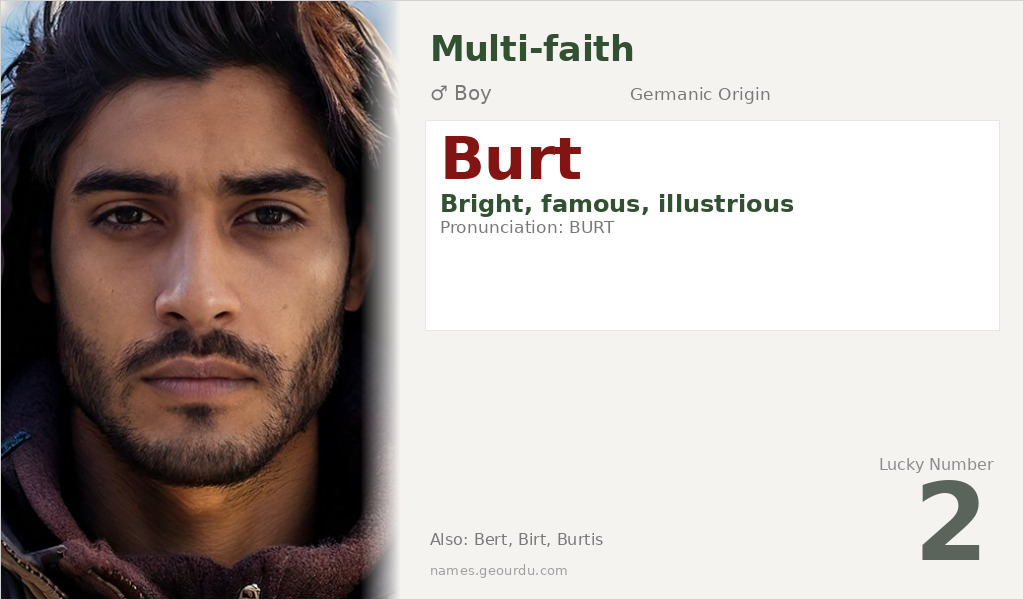
| 📛 Name | Burt |
| 💎 Meaning | Bright, famous, illustrious |
| 👤 Gender | Boy |
| 🕌 Religion | Multi-faith |
| 🌍 Origin | Germanic |
| 🗣 Pronunciation | BURT |
| ✍️ Urdu | برٹ |
| ✍️ Arabic | برت |
| 🔢 Numerology | 2 |
| ✨ Spellings | Bert, Birt, Burtis, Burton |
Origin & Cultural Significance
Burt originates from Germanic languages, specifically from the Old High German word ‘beraht’. Following the Norman Conquest of England in 1066, many Norman French names containing Germanic elements became popular in England. While initially a diminutive or nickname, Burt began appearing as a formal given name in English records by the late Middle Ages. The name saw particular popularity in the United States during the 20th century, likely influenced by famous bearers like actor Burt Lancaster and later Burt Reynolds. Unlike names with specific religious connotations, Burt has been used across various cultural and religious contexts in Western countries, making it a secular name with broad appeal.
Personality Traits
People named Burt are often associated with reliability, practicality, and traditional values. The name’s etymological meaning of ‘bright’ suggests intellectual clarity and perceptiveness. Historically, names containing the ‘bert’ element were given to convey hopes for the child’s future fame or distinction. In modern contexts, Burts are frequently perceived as steady, honest individuals who approach life with straightforward determination. The name’s simplicity and strength contribute to these personality associations across different cultures.
Similar Names
If you like Burt, consider: Bert, Albert, Robert, Herbert, Gilbert
Famous People Named Burt
- Burt Reynolds — American actor known for films like 'Deliverance' and 'Smokey and the Bandit'
- Burt Bacharach — American composer and songwriter known for numerous pop hits
Frequently Asked Questions About Burt
What does Burt mean?
Burt means 'bright, famous, or illustrious'. It derives from the Germanic element 'beraht' and is related to names like Albert and Robert.
Is Burt a boy or girl name?
Burt is exclusively a masculine name. While some names have become unisex over time, Burt has remained consistently male in usage across all cultures.
What is the origin of Burt?
Burt originates from Germanic languages, specifically from the Old High German element 'beraht'. It entered English through Norman French after the 1066 Norman Conquest.





