
Table of Contents
Granville is a distinguished name with aristocratic Norman French roots that has transitioned from surname to given name over centuries. With its meaning of ‘large town’ or ‘settlement,’ it carries a sense of heritage and connection to place. This name has been borne by notable inventors, abolitionists, and historical figures, giving it both intellectual and moral resonance. While traditionally masculine, its elegant sound and rich history make it a compelling choice for parents seeking a name with depth and tradition.
Meaning of Granville
Granville originates from the Norman French place name ‘Grandville’ or ‘Grainville,’ which literally translates to ‘large town’ or ‘big settlement.’ The first element ‘grand’ comes from Latin ‘grandis’ meaning large or great, while ‘ville’ derives from Latin ‘villa’ meaning country house or estate, evolving to mean town or settlement in French. As a toponymic surname, it identified people who came from various places called Granville in Normandy, France. The name entered English usage after the Norman Conquest of 1066 and gradually evolved into a given name, particularly in English-speaking countries. Its meaning reflects the Norman practice of naming people after their places of origin, preserving geographical connections across generations.
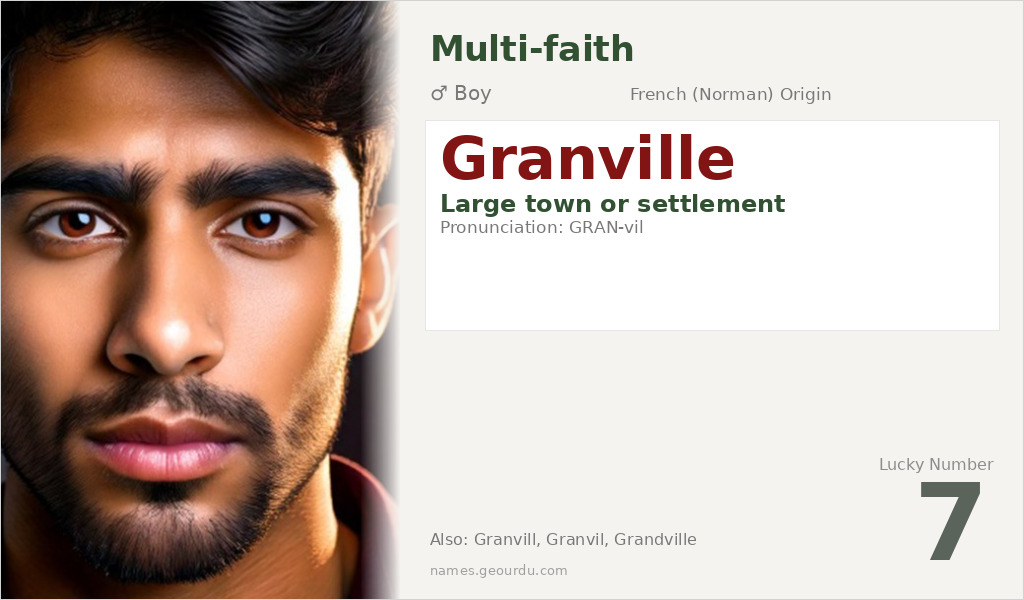
| 📛 Name | Granville |
| 💎 Meaning | Large town or settlement |
| 👤 Gender | Boy |
| 🕌 Religion | Multi-faith |
| 🌍 Origin | French (Norman) |
| 🗣 Pronunciation | GRAN-vil |
| ✍️ Urdu | گرینویل |
| ✍️ Arabic | غرانفيل |
| 🔢 Numerology | 7 |
| ✨ Spellings | Granvill, Granvil, Grandville |
Origin & Cultural Significance
Granville has its roots in 11th century Normandy, where it began as a locational surname for people from towns called Granville in the Manche department of northwestern France. Following the Norman Conquest of England in 1066, the name was brought to Britain by Norman nobles and settlers. Over centuries, it transitioned from exclusively a surname to also being used as a masculine given name, particularly among English aristocracy. The name gained wider popularity in the 19th century and has maintained steady, though not overwhelming, usage in English-speaking countries. While associated with Norman French heritage, it has been adopted by diverse cultural and religious communities without specific religious connotations.
Personality Traits
Those named Granville are often associated with qualities of intellect, tradition, and refinement. The name’s aristocratic Norman origins suggest someone who values heritage and stability, while its meaning of ‘large town’ implies community orientation and organizational skills. Historically, notable Granvilles have been innovators and reformers, suggesting potential for both creative thinking and moral conviction. The name carries an air of dignified competence that might influence how bearers are perceived and how they develop their identities.
Similar Names
If you like Granville, consider: Grantham, Grayson, Graham, Garrett, Gavin
Famous People Named Granville
- Granville T. Woods — African-American inventor known as the 'Black Edison' who held over 60 patents
- Granville Sharp — English abolitionist and biblical scholar who helped establish the Society for Effecting the Abolition of the Slave Trade
Frequently Asked Questions About Granville
What does Granville mean?
Granville means 'large town' or 'big settlement.' It comes from the Norman French place name combining 'grand' (large) and 'ville' (town).
Is Granville a boy or girl name?
Granville is traditionally and almost exclusively a masculine name, though as with many names, creative usage could theoretically apply it to any gender.
What is the origin of Granville?
Granville originates from Norman French as a locational surname for people from towns called Granville in Normandy, France. It entered English usage after the Norman Conquest of 1066.





