
Table of Contents
Erland is a distinctive Scandinavian name with deep roots in Norse history and mythology. Derived from Old Norse elements meaning ‘foreigner’s land’, this name carries echoes of Viking exploration and settlement. While less common today than other Scandinavian names, Erland maintains a strong cultural presence in Norway, Sweden, and Iceland. Its historical significance and unique sound make it an intriguing choice for parents seeking a name with authentic Nordic heritage.
Meaning of Erland
The name Erland originates from the Old Norse word ‘erlendr’, which means ‘foreigner’, ‘stranger’, or ‘person from another land’. This is combined with ‘land’, meaning territory or country. The complete meaning translates to ‘foreigner’s land’ or ‘stranger’s territory’. In medieval Scandinavia, this name was often given to settlers from other regions or to children born in new settlements. The name appears in several Old Norse sagas and historical records, including the Icelandic Landnámabók (Book of Settlements). Linguistic analysis shows the name evolved from Proto-Germanic roots, with cognates appearing in other Germanic languages, though Erland remains distinctly Scandinavian in usage.
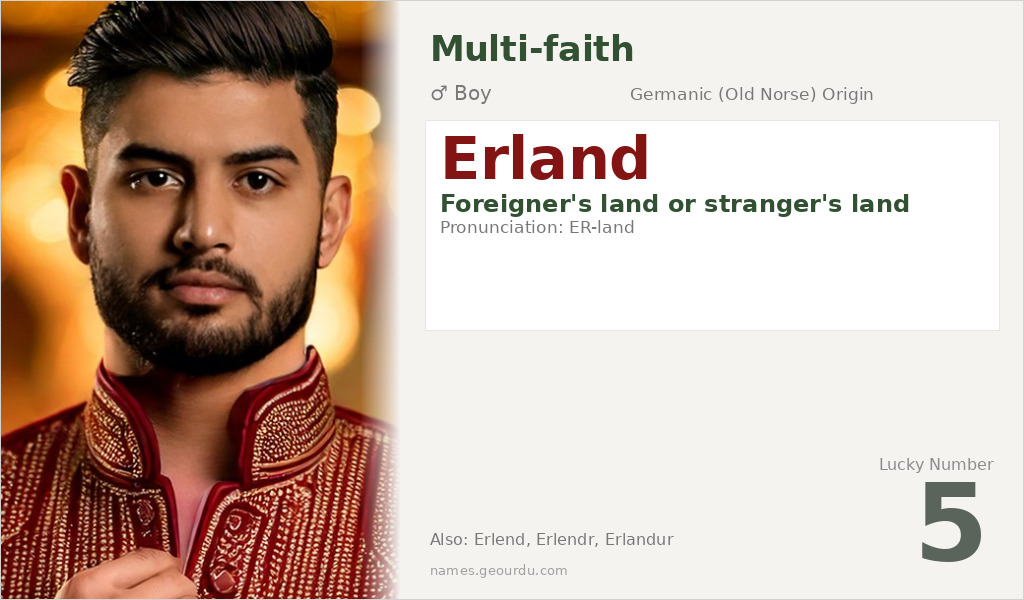
| 📛 Name | Erland |
| 💎 Meaning | Foreigner's land or stranger's land |
| 👤 Gender | Boy |
| 🕌 Religion | Multi-faith |
| 🌍 Origin | Germanic (Old Norse) |
| 🗣 Pronunciation | ER-land |
| ✍️ Urdu | ارلینڈ |
| ✍️ Arabic | إرلاند |
| 🔢 Numerology | 5 |
| ✨ Spellings | Erlend, Erlendr, Erlandur, Erlendur |
Origin & Cultural Significance
Erland has its origins in medieval Scandinavia, particularly in Norway and Sweden, with strong historical connections to Iceland through Norse settlement. The name appears in historical records dating back to the Viking Age and medieval period, borne by several notable figures including Erling Skjalgsson’s son Erland in 11th century Norway. During the Christianization of Scandinavia, the name continued in use and appears in medieval church records. While the name is historically Scandinavian, it has been adopted in other cultures through migration and cultural exchange, though it remains most common in Nordic countries. The Icelandic form Erlandur maintains particular cultural significance in Iceland’s naming traditions.
Personality Traits
Those named Erland are often associated with qualities of exploration, adaptability, and independence. The name’s meaning suggests someone comfortable in new environments and capable of navigating unfamiliar territory. Historically, bearers of this name were often settlers, explorers, or individuals who bridged different cultures. In modern contexts, these traits might manifest as intellectual curiosity, cultural openness, and resilience in changing circumstances.
Similar Names
If you like Erland, consider: Erik, Einar, Harald, Bjorn, Leif
Famous People Named Erland
- Erland Josephson — Swedish actor and director known for collaborations with Ingmar Bergman
- Erland von Koch — Swedish composer known for his symphonic works and folk music arrangements
Frequently Asked Questions About Erland
What does Erland mean?
Erland means 'foreigner's land' or 'stranger's territory', derived from the Old Norse words 'erlendr' (foreigner) and 'land' (land).
Is Erland a boy or girl name?
Erland is exclusively a masculine name in all Scandinavian cultures where it is used, with no historical or contemporary usage as a feminine name.
What is the origin of Erland?
Erland originates from Old Norse (Germanic language family) and has been used in Scandinavia since the Viking Age, particularly in Norway, Sweden, and Iceland.





