
Table of Contents
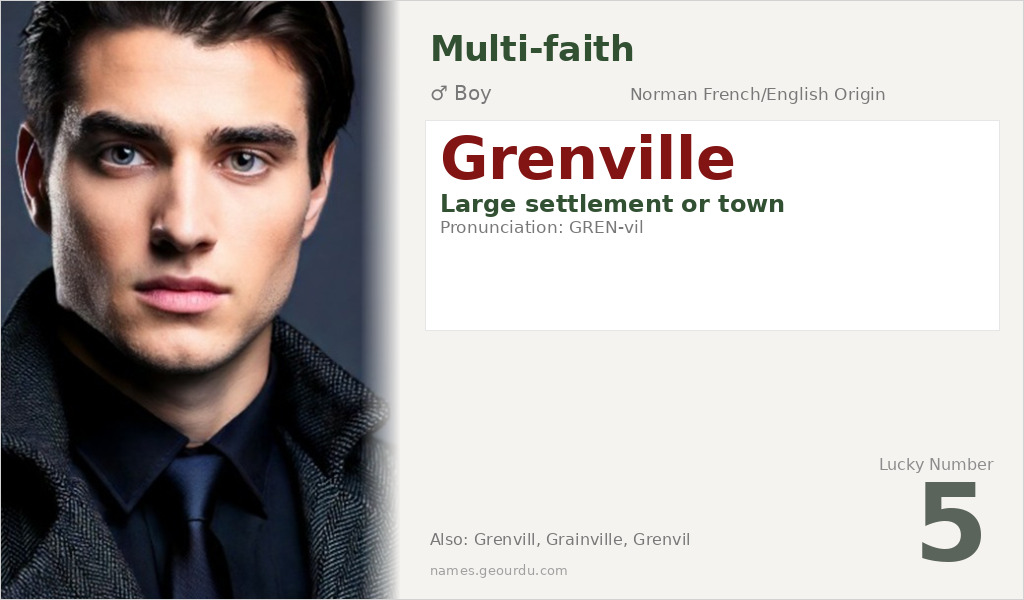
Grenville is a distinguished name with deep historical roots in English nobility and exploration. Originally a Norman French surname meaning ‘large settlement’, it has evolved into a classic given name with a strong, traditional feel. This name carries centuries of history, from medieval Normandy to Elizabethan England, making it a choice rich with heritage and character for modern parents seeking a name with substance.
Meaning of Grenville
The name Grenville originates from Norman French, specifically from the place name ‘Grainville-la-Teinturière’ in Normandy. The Old French components are ‘grain’ (meaning grain or seed) and ‘ville’ (meaning settlement or town), though in English adaptation, it has been broadly interpreted as ‘large settlement’. This toponymic name follows a common pattern where geographical locations became surnames and eventually given names. The Norman French ‘ville’ element is particularly significant, as it appears in many English place names and surnames following the Norman Conquest of 1066, reflecting the lasting linguistic influence of the Normans on English nomenclature.
| 📛 Name | Grenville |
| 💎 Meaning | Large settlement or town |
| 👤 Gender | Boy |
| 🕌 Religion | Multi-faith |
| 🌍 Origin | Norman French/English |
| 🗣 Pronunciation | GREN-vil |
| ✍️ Urdu | گرین ول |
| ✍️ Arabic | غرينفيل |
| 🔢 Numerology | 5 |
| ✨ Spellings | Grenvill, Grainville, Grenvil |
Origin & Cultural Significance
Grenville entered English usage as a surname after the Norman Conquest, when many Norman French names were adopted by the English aristocracy. The Grenville family became prominent in English history, particularly in Devon and Cornwall, with notable members including naval commanders, politicians, and explorers. As a given name, it gained popularity in the 19th and 20th centuries, often used to honor family heritage or historical figures. Unlike names with specific religious origins, Grenville is secular and multi-faith in nature, though it has been borne by many Christians due to England’s historical religious context.
Personality Traits
Those named Grenville often project an air of reliability and tradition, qualities that align with the name’s meaning of settlement and community. They tend to be practical problem-solvers who value structure and history, possibly reflecting the name’s aristocratic heritage. While grounded, they can also demonstrate the adventurous spirit of the Grenville explorers, balancing stability with curiosity about the world.
Similar Names
If you like Grenville, consider: Granville, Grayson, Graham, Garrett, Gavin
Famous People Named Grenville
- Sir Richard Grenville (1542–1591) — English naval commander and explorer during the Elizabethan era
- George Grenville (1712–1770) — British Whig statesman who served as Prime Minister of Great Britain
Frequently Asked Questions About Grenville
What does Grenville mean?
Grenville means 'large settlement' or 'town', originating from Norman French where 'ville' means settlement and 'grain' refers to grain or seed, though the English interpretation emphasizes the settlement aspect.
Is Grenville a boy or girl name?
Grenville is traditionally and almost exclusively a masculine name, used for boys. It has historical usage as both a surname and given name for males, particularly in English-speaking countries.
What is the origin of Grenville?
Grenville originates from Norman French, specifically from the place name Grainville-la-Teinturière in Normandy. It entered English as a surname after the Norman Conquest of 1066 and later became used as a given name.





