
Table of Contents
Benjamin is one of the most enduring and beloved names across cultures, with roots stretching back to ancient Hebrew scripture. As the name of Jacob’s youngest son in the Bible, it carries profound religious and historical significance. Today, Benjamin remains popular worldwide, appreciated for its classic sound and rich meaning. This comprehensive guide explores everything from its etymology to modern usage.
Meaning of Benjamin
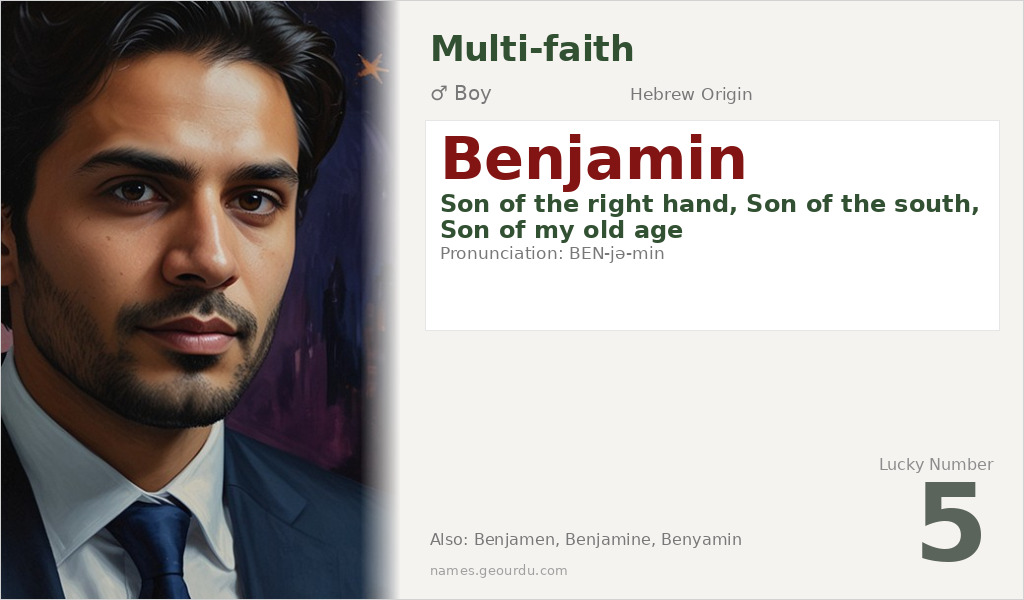
The name Benjamin derives from the Hebrew בִּנְיָמִין (Binyamin), literally meaning ‘son of the right hand’. The Hebrew word ‘ben’ (בֵּן) means ‘son’, while ‘yamin’ (יָמִין) means ‘right hand’ or ‘south’. In biblical context, Rachel named her son Ben-oni (‘son of my sorrow’) as she died in childbirth, but Jacob renamed him Benjamin. The ‘right hand’ symbolism represents strength, favor, and protection in ancient Near Eastern cultures. Some interpretations also translate it as ‘son of the south’, referring to Benjamin’s tribal territory south of Ephraim. The name appears in the Torah, Old Testament, and Quran, maintaining consistent meaning across Abrahamic traditions.
| 📛 Name | Benjamin |
| 💎 Meaning | Son of the right hand, Son of the south, Son of my old age |
| 👤 Gender | Boy |
| 🕌 Religion | Multi-faith |
| 🌍 Origin | Hebrew |
| 🗣 Pronunciation | BEN-jə-min |
| ✍️ Urdu | بنجمن |
| ✍️ Arabic | بنيامين |
| 🔢 Numerology | 5 |
| ✨ Spellings | Benjamen, Benjamine, Benyamin, Binyamin, Benyamen |
Origin & Cultural Significance
Benjamin originates from ancient Hebrew culture and first appears in the Book of Genesis as the twelfth son of Jacob and second son of Rachel. The Tribe of Benjamin became one of the twelve tribes of Israel, known for skilled warriors like King Saul. The name spread through Jewish diaspora, early Christianity, and Islamic tradition where Benjamin (Binyamin) is recognized as a prophet. During the Protestant Reformation, biblical names gained popularity in Europe, leading to widespread adoption in English, French (Benjamin), German (Benjamin), and other languages. Today, it’s used globally by people of various faiths and cultural backgrounds.
Personality Traits
Those named Benjamin often exhibit qualities associated with their name’s meaning—being reliable ‘right-hand’ supporters with strong family values. They tend to be intelligent problem-solvers who adapt well to change while maintaining core principles. Many Benjamins show creative expression and diplomatic skills, making them effective in leadership and collaborative roles. The name’s biblical heritage often connects bearers to traditions of loyalty and perseverance.
Similar Names
If you like Benjamin, consider: Ben, Benji, Bennett, Benedict, Binyamin
Famous People Named Benjamin
- Benjamin Franklin — American polymath, Founding Father, and inventor
- Benjamin Netanyahu — Israeli politician and Prime Minister
- Benjamin Britten — English composer and pianist
Frequently Asked Questions About Benjamin
What does Benjamin mean?
Benjamin means 'son of the right hand' or 'son of the south' in Hebrew, originating from the biblical name Binyamin, the youngest son of Jacob and Rachel.
Is Benjamin a boy or girl name?
Benjamin is traditionally and overwhelmingly a masculine name across all cultures where it's used, though rare feminine variants like Benjamina exist.
What is the origin of Benjamin?
Benjamin originates from ancient Hebrew (בִּנְיָמִין) and first appears in the Hebrew Bible as the name of Jacob's youngest son, making it approximately 3,500 years old.





