
Table of Contents
Collin is a classic boy’s name with roots deep in Scottish Gaelic tradition. Far from the modern misconceptions about its meaning, this name carries a charmingly earthy origin that reflects affection for youth and vitality. Popularized through centuries of use in Scotland and beyond, Collin has become a timeless choice for parents seeking a name with historical depth and cross-cultural appeal. Let’s explore the true story behind this enduring name.
Meaning of Collin
The name Collin derives directly from the Scottish Gaelic name ‘Cailean’, which comes from the Gaelic word ‘cailean’ meaning ‘whelp’, ‘cub’, or ‘young creature’. This etymology reflects an affectionate term for a young boy in Gaelic-speaking communities, similar to how ‘puppy’ might be used endearingly. The name has no connection to ‘dove’ or bird symbolism—that association appears in some modern name websites but lacks linguistic evidence. Through Anglicization, ‘Cailean’ became ‘Colin’ and later ‘Collin’, with the double-L spelling gaining popularity in English-speaking countries. The core meaning of youthfulness and vitality has remained consistent throughout its linguistic journey.
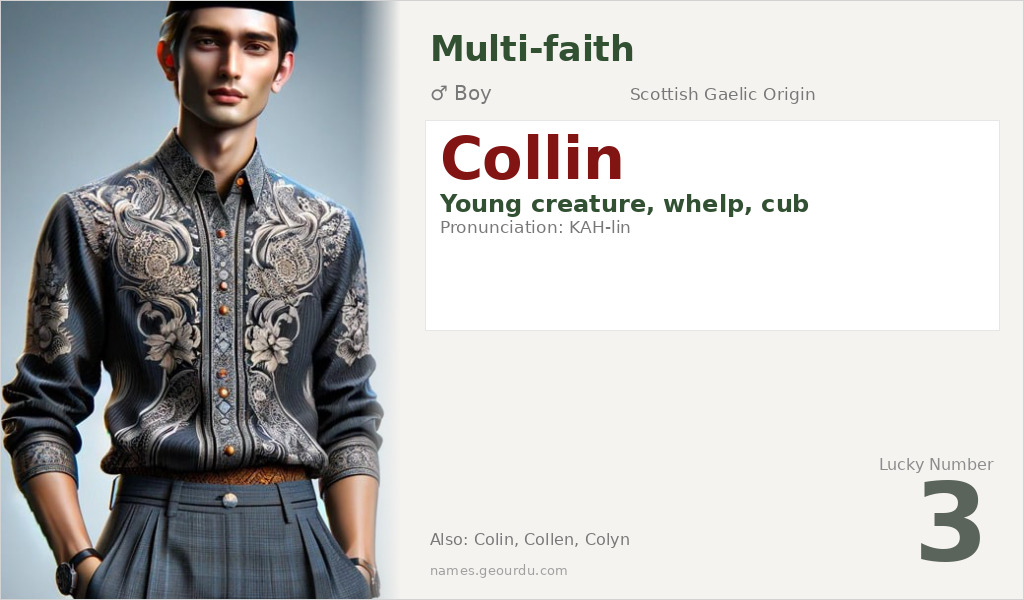
| 📛 Name | Collin |
| 💎 Meaning | Young creature, whelp, cub |
| 👤 Gender | Boy |
| 🕌 Religion | Multi-faith |
| 🌍 Origin | Scottish Gaelic |
| 🗣 Pronunciation | KAH-lin |
| ✍️ Urdu | کولن |
| ✍️ Arabic | كولين |
| 🔢 Numerology | 3 |
| ✨ Spellings | Colin, Collen, Colyn, Kolin |
Origin & Cultural Significance
Collin originated in Scotland as an Anglicized form of the Gaelic name Cailean, which was particularly associated with the Clan Campbell in the Scottish Highlands. Historical records show the name in use as early as the 13th century, notably with Cailean Mór (Colin the Great), a prominent Campbell chief. The name spread to England and other English-speaking regions through Scottish migration and cultural influence. While it has Gaelic pagan origins, the name has been adopted by Christians and people of various faiths over centuries without specific religious connotations. Today, Collin remains popular in Scotland, the United States, Canada, Australia, and other countries with Scottish diaspora communities.
Personality Traits
People named Collin often embody the youthful energy suggested by their name’s meaning. They tend to be approachable, creative, and adaptable, with a natural curiosity that serves them well in learning and social situations. Their communication skills are frequently noted, along with an optimistic outlook that can inspire those around them. While personality varies by individual, the name’s historical association with youthfulness and vitality often resonates in the characteristics attributed to those who bear it.
Similar Names
If you like Collin, consider: Callum, Caleb, Cole, Connor, Cillian
Famous People Named Collin
- Colin Firth — English actor known for roles in 'The King's Speech' and 'Pride and Prejudice'
- Colin Powell — American statesman and former U.S. Secretary of State
Frequently Asked Questions About Collin
What does Collin mean?
Collin means 'young creature', 'whelp', or 'cub' in Scottish Gaelic. It comes from the Gaelic word 'cailean' and was originally an affectionate term for a young boy.
Is Collin a boy or girl name?
Collin is traditionally and predominantly a boy's name. While names can evolve, historical usage and cultural context firmly establish Collin as masculine, derived from male names in Gaelic tradition.
What is the origin of Collin?
Collin originates from Scottish Gaelic, specifically from the name 'Cailean'. It has been used in Scotland since at least the 13th century and spread to other English-speaking countries through Scottish immigration and cultural influence.





