
Table of Contents
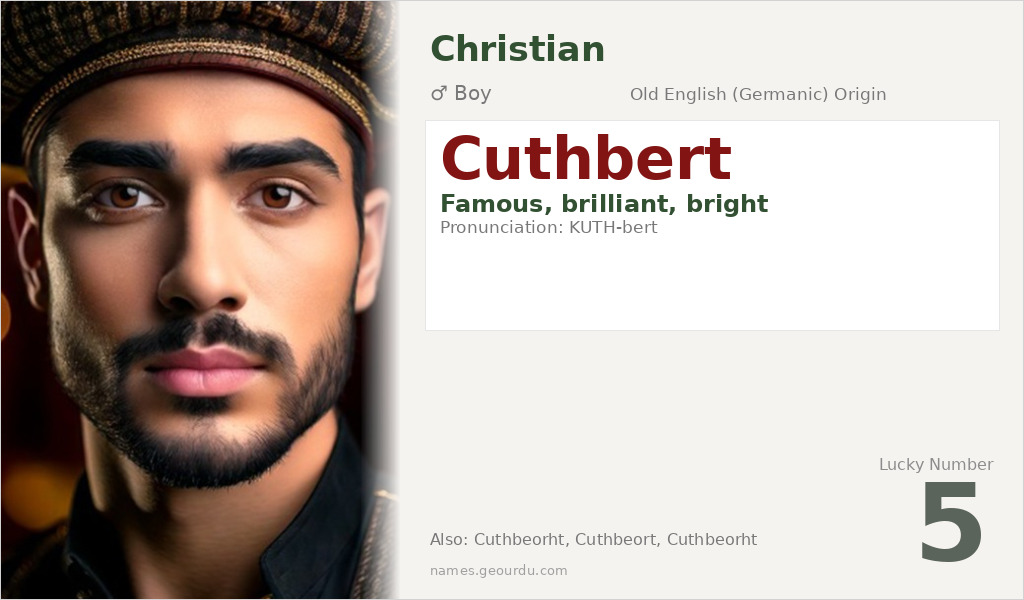
Cuthbert is a distinguished name with deep roots in English history and Christian tradition. Originating from Old English, this name carries the powerful meaning of ‘famous and brilliant,’ reflecting qualities of leadership and distinction. Most famously associated with Saint Cuthbert of Lindisfarne, this name has maintained its appeal through centuries of English history. While less common today, Cuthbert remains a name with significant historical and religious resonance.
Meaning of Cuthbert
The name Cuthbert derives from two Old English elements: ‘cūþ’ meaning ‘famous, known, familiar’ and ‘beorht’ meaning ‘bright, brilliant, shining.’ This combination creates a name that literally translates to ‘famous-bright’ or ‘brilliantly known.’ These elements were common in Anglo-Saxon naming conventions before the Norman Conquest of 1066. The ‘beorht’ element appears in many Germanic names (equivalent to German ‘berühmt’) and survives in modern English words like ‘bright.’ The name’s meaning reflects the Anglo-Saxon value placed on reputation and distinction within the community. Saint Cuthbert’s popularity in medieval England helped preserve this name through the centuries.
| 📛 Name | Cuthbert |
| 💎 Meaning | Famous, brilliant, bright |
| 👤 Gender | Boy |
| 🕌 Religion | Christian |
| 🌍 Origin | Old English (Germanic) |
| 🗣 Pronunciation | KUTH-bert |
| ✍️ Urdu | کتھبرٹ |
| ✍️ Arabic | كثبرت |
| 🔢 Numerology | 5 |
| ✨ Spellings | Cuthbeorht, Cuthbeort, Cuthbeorht |
Origin & Cultural Significance
Cuthbert originated in Anglo-Saxon England during the early medieval period, specifically from the Northumbrian dialect of Old English. The name gained prominence through Saint Cuthbert (c. 634–687), a monk, bishop, and hermit from the Kingdom of Northumbria who became one of England’s most important medieval saints. His shrine at Durham Cathedral became a major pilgrimage site, ensuring the name’s survival through the Middle Ages. The name represents pre-Norman English naming traditions and reflects the linguistic heritage of the Germanic tribes who settled in Britain. While the name declined after the Norman Conquest, it experienced revivals during the Victorian era and among those interested in medieval English history.
Personality Traits
The meaning ‘famous and brilliant’ suggests someone destined for recognition and intellectual achievement. Historically, bearers of this name have been associated with leadership, spiritual depth, and scholarly pursuits. The connection to Saint Cuthbert adds layers of humility, devotion, and connection to nature, as the saint was known for his hermit lifestyle and affinity for wildlife. While the name carries weighty historical associations, it also suggests approachability and wisdom.
Similar Names
If you like Cuthbert, consider: Cuthred, Cuthwulf, Cuthwin, Cutha, Bertram, Albert, Robert, Gilbert, Herbert, Egbert
Famous People Named Cuthbert
- Saint Cuthbert of Lindisfarne — 7th-century Anglo-Saxon monk, bishop, and hermit who became one of the most important medieval English saints
- Cuthbert Collingwood — British naval commander who served as Nelson's second-in-command at the Battle of Trafalgar
Frequently Asked Questions About Cuthbert
What does Cuthbert mean?
Cuthbert means 'famous and brilliant' or 'brightly known.' It comes from the Old English elements 'cūþ' (famous) and 'beorht' (bright).
Is Cuthbert a boy or girl name?
Cuthbert is exclusively a masculine name with a long history as a boy's name in English-speaking countries, particularly associated with male saints and historical figures.
What is the origin of Cuthbert?
Cuthbert originates from Old English (specifically Northumbrian dialect) and has Germanic roots. It was popularized by Saint Cuthbert of Lindisfarne in 7th-century England.





