
Table of Contents
Odin is a powerful name steeped in ancient mythology and Germanic tradition. As the chief god in Norse mythology, Odin represents wisdom, poetry, war, and magical knowledge. This name carries centuries of cultural heritage and continues to inspire parents seeking a name with historical depth and strong character. From Viking sagas to modern usage, Odin remains a name of significant meaning and presence.
Meaning of Odin
The name Odin originates from Old Norse ‘Óðinn’, which evolved from Proto-Germanic ‘*Wōđanaz’. The core meaning derives from the root ‘*wōđ-‘, referring to ‘fury, rage, inspiration, and poetic ecstasy’. In Old Norse literature, ‘óðr’ specifically denotes a state of poetic inspiration or frenzy, connecting the name to creative and ecstatic states. This etymology reflects Odin’s mythological role as the god of poetry, wisdom, and ecstatic knowledge, who sacrificed an eye at Mímir’s well for wisdom and hung himself on Yggdrasil to gain runic knowledge. The name embodies both the ferocity of battle and the inspiration of artistic creation.
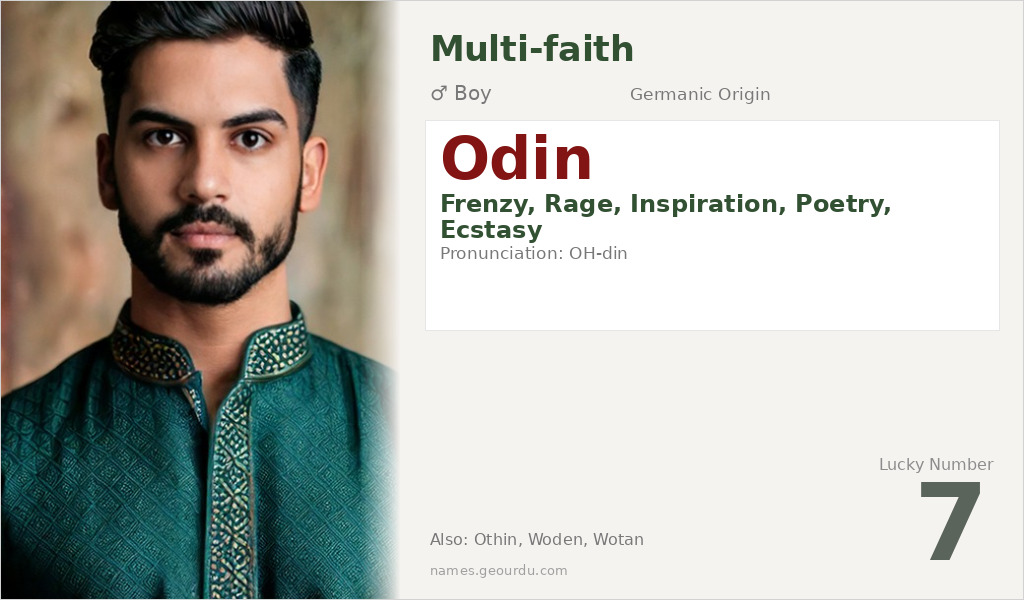
| 📛 Name | Odin |
| 💎 Meaning | Frenzy, Rage, Inspiration, Poetry, Ecstasy |
| 👤 Gender | Boy |
| 🕌 Religion | Multi-faith |
| 🌍 Origin | Germanic |
| 🗣 Pronunciation | OH-din |
| ✍️ Urdu | اوڈن |
| ✍️ Arabic | أودين |
| 🔢 Numerology | 7 |
| ✨ Spellings | Othin, Woden, Wotan, Óðinn |
Origin & Cultural Significance
Odin has its origins in Germanic paganism and Norse mythology, where he is the chief of the Æsir gods. The name appears across Germanic languages: as Wōden in Old English, Wodan in Old Saxon, Wuotan in Old High German, and Óðinn in Old Norse. Archaeological evidence and historical texts like the Poetic Edda and Prose Edda document his worship across Scandinavia and Germanic Europe from at least the Roman Iron Age through the Viking Age. While the name has been adopted in modern times across various cultures, its primary cultural and historical context remains firmly rooted in pre-Christian Germanic religion and mythology.
Personality Traits
Those named Odin often carry associations of wisdom, creativity, and intensity drawn from the mythological figure. They may be perceived as deep thinkers with strategic minds and a thirst for knowledge. The name suggests someone who balances intellectual pursuit with passionate engagement, potentially exhibiting leadership qualities and artistic inspiration. While individual personalities vary, the name’s historical weight often influences perceptions toward strength, wisdom, and cultural connection.
Similar Names
If you like Odin, consider: Thor, Loki, Frey, Tyr, Baldur
Famous People Named Odin
- Odin (Norse mythology) — Chief god in Norse mythology, associated with wisdom, war, poetry, and magic
- Odin Bailey — English professional footballer
Frequently Asked Questions About Odin
What does Odin mean?
Odin means 'frenzy, rage, inspiration, poetry, or ecstasy' in Old Norse, derived from the Proto-Germanic root '*wōđ-' referring to inspired or ecstatic states.
Is Odin a boy or girl name?
Odin is traditionally and overwhelmingly a masculine name, originating as the name of the chief male god in Norse mythology. While names can evolve, historical and contemporary usage strongly favors male gender association.
What is the origin of Odin?
Odin originates from Germanic paganism and Norse mythology, with linguistic roots in Proto-Germanic '*Wōđanaz'. It is specifically associated with Old Norse culture and the pre-Christian religion of Scandinavia and Germanic Europe.





