
Table of Contents
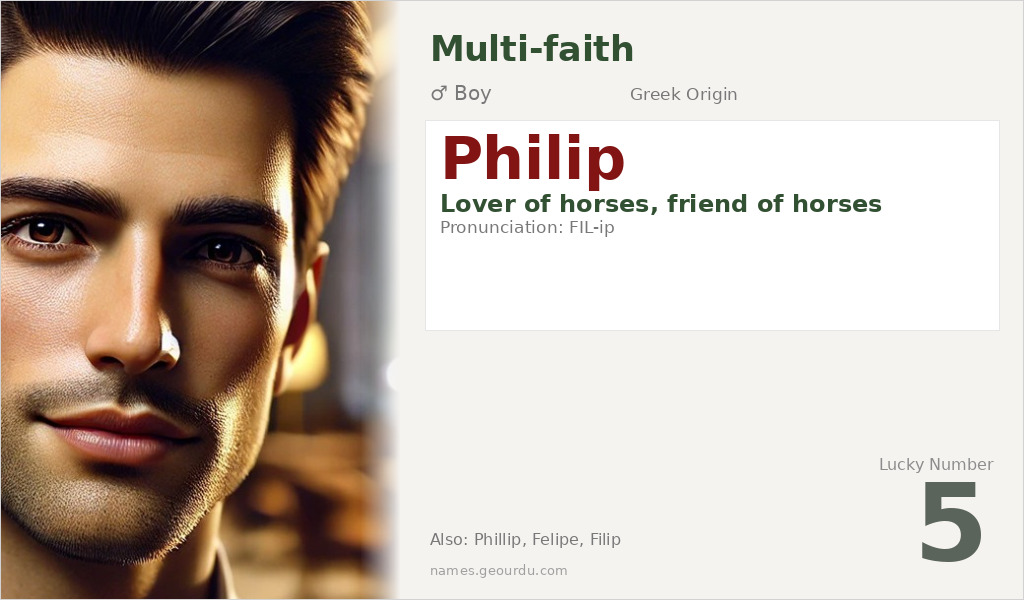
Philip is a classic name with deep historical roots dating back to ancient Greece. Meaning ‘lover of horses,’ this name has been borne by kings, saints, and modern royalty. Its enduring popularity across centuries and cultures speaks to its strong, timeless appeal. From the father of Alexander the Great to contemporary figures, Philip continues to be a name of distinction.
Meaning of Philip
The name Philip derives from the Greek Φίλιππος (Philippos), combining φίλος (philos), meaning ‘friend’ or ‘lover,’ and ἵππος (hippos), meaning ‘horse.’ This literal translation as ‘lover of horses’ reflects the high value placed on horses in ancient Greek society for military, athletic, and ceremonial purposes. The name appears in historical records as early as the 4th century BCE with Philip II of Macedon, whose cavalry reforms revolutionized warfare. In the New Testament, Philip is one of the twelve apostles, further cementing the name’s significance in Christian tradition. The name spread through Latin as Philippus and into various European languages during the Middle Ages.
| 📛 Name | Philip |
| 💎 Meaning | Lover of horses, friend of horses |
| 👤 Gender | Boy |
| 🕌 Religion | Multi-faith |
| 🌍 Origin | Greek |
| 🗣 Pronunciation | FIL-ip |
| ✍️ Urdu | فلپ |
| ✍️ Arabic | فيليب |
| 🔢 Numerology | 5 |
| ✨ Spellings | Phillip, Felipe, Filip, Philipp, Phillipp |
Origin & Cultural Significance
Philip originated in ancient Greece, where it was a common name among nobility and military leaders. The most famous early bearer was Philip II of Macedon (382-336 BCE), who expanded the Macedonian kingdom and fathered Alexander the Great. The name gained religious significance through Saint Philip the Apostle in Christianity, mentioned in the Gospels as a follower of Jesus. During the Middle Ages, Philip became popular across Europe, particularly among royalty, including several kings of France and Spain. Today, it remains widely used in English, Spanish (as Felipe), and other European languages, transcending its original cultural boundaries.
Personality Traits
People named Philip are often perceived as confident, intelligent, and socially adept. They tend to excel in leadership roles due to their strategic thinking and ability to inspire others. With a natural curiosity and love for adventure, Philips are frequently drawn to careers that involve travel, communication, or innovation. Their loyalty and warmth make them valued friends and family members.
Similar Names
If you like Philip, consider: Alexander, Theodore, Nicholas, Christopher, Andrew
Famous People Named Philip
- Philip II of Macedon — King of Macedon and father of Alexander the Great
- Prince Philip, Duke of Edinburgh — husband of Queen Elizabeth II of the United Kingdom
Frequently Asked Questions About Philip
What does Philip mean?
Philip means 'lover of horses' or 'friend of horses,' originating from the Greek words philos (friend/lover) and hippos (horse).
Is Philip a boy or girl name?
Philip is traditionally a masculine name, though feminine variants like Philippa exist. It is overwhelmingly used for boys across cultures.
What is the origin of Philip?
Philip originates from ancient Greek, specifically from the name Philippos. It gained prominence through historical figures like Philip II of Macedon and spread through Christian and royal traditions.





