
Table of Contents
Triston is a distinguished masculine name with roots in medieval romance and Arthurian legend. While its meaning of ‘sad’ or ‘sorrowful’ might seem melancholic, the name carries a rich literary heritage that has made it enduringly popular across centuries. From tragic knights to modern athletes, Triston has evolved while maintaining its classic appeal. This guide explores the true etymology, cultural significance, and contemporary usage of this timeless name.
Meaning of Triston
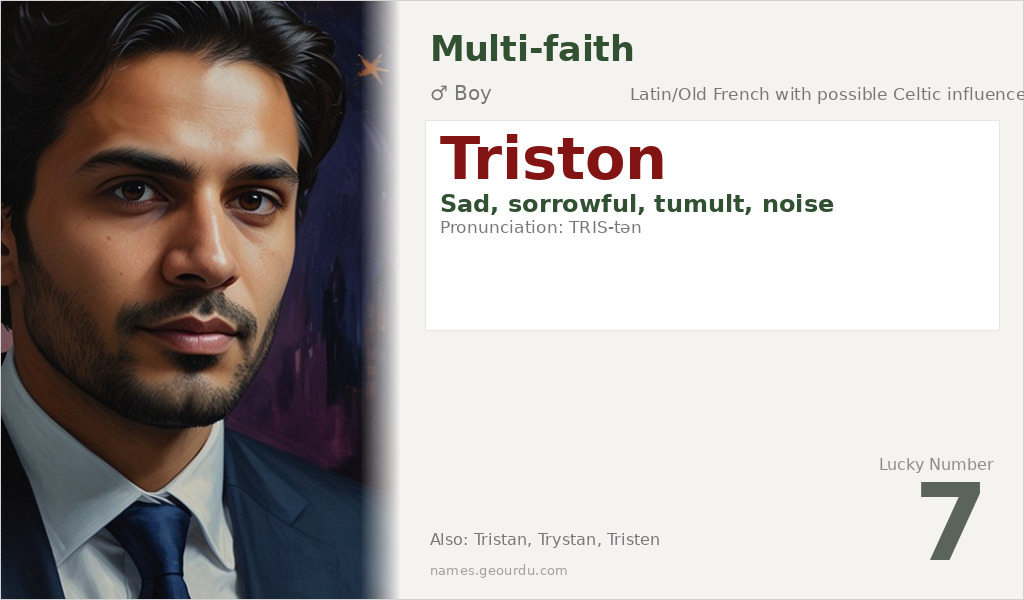
The name Triston derives from the Old French ‘Tristan’, which itself comes from the Latin ‘Tristanus’ meaning ‘sad’ or ‘sorrowful’. This etymology reflects the name’s association with the tragic romance of Tristan and Iseult in Arthurian legend. Some scholars suggest additional Celtic influences from the Pictish name ‘Drust’ or ‘Drest’, meaning ‘riot’ or ‘tumult’, though the Latin-French derivation is more widely accepted. The name’s melancholic meaning is central to its literary origins, where Tristan was portrayed as a doomed lover. Despite this somber etymology, the name has been embraced for its romantic and noble connotations rather than its literal meaning.
| 📛 Name | Triston |
| 💎 Meaning | Sad, sorrowful, tumult, noise |
| 👤 Gender | Boy |
| 🕌 Religion | Multi-faith |
| 🌍 Origin | Latin/Old French with possible Celtic influences |
| 🗣 Pronunciation | TRIS-tən |
| ✍️ Urdu | ٹرسٹن |
| ✍️ Arabic | تريستان |
| 🔢 Numerology | 7 |
| ✨ Spellings | Tristan, Trystan, Tristen, Tristin, Triston |
Origin & Cultural Significance
Triston originated as a variant of Tristan, which first appeared in 12th-century Arthurian romances, particularly the works of Béroul and Thomas of Britain. The character Tristan (or Tristram) was a Cornish knight and one of the Knights of the Round Table, famous for his tragic love affair with Iseult. The name spread throughout Europe via these medieval romances and was adopted in various forms across languages. While often associated with Christian medieval Europe due to its Arthurian connections, Triston has no exclusive religious affiliation and is used by people of various faiths worldwide. The modern variant ‘Triston’ emerged as an alternative spelling in English-speaking countries during the 20th century.
Personality Traits
People named Triston often exhibit characteristics that reflect both the name’s literary heritage and its etymological meaning. They tend to be thoughtful, introspective individuals with a romantic sensibility and creative streak. The name’s association with the tragic hero Tristan suggests someone who may experience deep emotions and have a tendency toward idealism in relationships. Many Tristons display artistic talents or appreciation for the arts, along with a quiet determination that serves them well in both personal and professional pursuits.
Similar Names
If you like Triston, consider: Tristram, Christian, Preston, Justin, Austin
Famous People Named Triston
- Triston McKenzie — American professional baseball pitcher for the Cleveland Guardians
- Triston Casas — American professional baseball first baseman for the Boston Red Sox
Frequently Asked Questions About Triston
What does Triston mean?
Triston means 'sad' or 'sorrowful', derived from the Latin 'Tristanus' through Old French. It may also carry connotations of 'tumult' from possible Celtic influences.
Is Triston a boy or girl name?
Triston is traditionally and predominantly a masculine name, though very rare feminine usage exists as a variant of Tristan. Over 99% of people named Triston are male.
What is the origin of Triston?
Triston originates from the Old French name Tristan, which comes from Latin Tristanus meaning 'sad'. It gained popularity through the Arthurian legend of Tristan and Iseult in medieval literature.





