
Table of Contents
Valentin is a classic masculine name with deep historical roots stretching back to ancient Rome. Carrying the powerful meaning of ‘strong, healthy, and vigorous’, this name has been borne by saints, artists, and innovators throughout centuries. Its enduring popularity across Europe reflects both its beautiful sound and substantial meaning. From Valentine’s Day celebrations to literary references, Valentin maintains a distinguished presence in Western naming traditions.
Meaning of Valentin
The name Valentin derives directly from the Latin ‘Valentinus’, which itself comes from the Latin adjective ‘valens’ meaning ‘strong, healthy, vigorous, powerful’. This root word appears in numerous Latin derivatives including ‘valiant’ and ‘valid’. The name’s meaning reflects Roman values of physical strength and vitality, qualities highly prized in ancient society. During the Christian era, this physical strength metaphorically transformed into spiritual fortitude, particularly associated with martyrs who demonstrated strength in faith. The name’s semantic core has remained remarkably consistent across two millennia of usage.
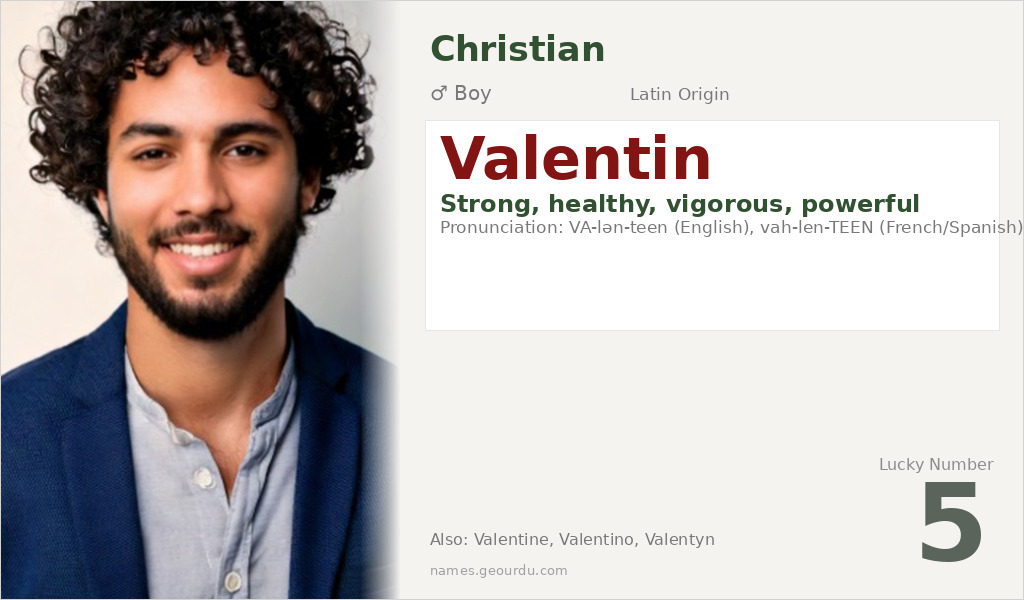
| 📛 Name | Valentin |
| 💎 Meaning | Strong, healthy, vigorous, powerful |
| 👤 Gender | Boy |
| 🕌 Religion | Christian |
| 🌍 Origin | Latin |
| 🗣 Pronunciation | VA-lən-teen (English), vah-len-TEEN (French/Spanish), fah-len-TEEN (German) |
| ✍️ Urdu | ویلنٹائن |
| ✍️ Arabic | فالنتين |
| 🔢 Numerology | 5 |
| ✨ Spellings | Valentine, Valentino, Valentyn, Valentín, Walenty, Valentinas |
Origin & Cultural Significance
Valentin originated in ancient Rome as Valentinus, a common Roman cognomen (third name) indicating strength and health. The name gained Christian significance through Saint Valentine, a 3rd-century priest martyred for performing weddings for soldiers forbidden to marry. During the Middle Ages, the name spread throughout Europe via Christianization, adapting to local languages: becoming Valentin in German and French, Valentyn in Ukrainian, Walenty in Polish, and Valentín in Spanish. The name’s association with February 14th developed in the High Middle Ages through Geoffrey Chaucer’s poetry linking the saint’s feast day with romantic love.
Personality Traits
Those named Valentin often embody the strength and vitality suggested by their name’s meaning. They typically display determination, resilience, and a protective nature toward family and community. While strong-willed, they frequently balance this with compassion and emotional intelligence, creating a personality that commands respect while maintaining warmth. This combination of fortitude and sensitivity makes them effective in leadership roles and valued in personal relationships.
Similar Names
If you like Valentin, consider: Valentine, Valentino, Valerian, Valentina, Valery
Famous People Named Valentin
- Saint Valentine — 3rd-century Roman priest and martyr, patron saint of love
- Valentin Serov — Renowned Russian portrait painter of the late 19th-early 20th century
- Valentin Glushko — Soviet rocket engineer and pioneer of spacecraft propulsion systems
Frequently Asked Questions About Valentin
What does Valentin mean?
Valentin means 'strong, healthy, vigorous, powerful' and originates from the Latin word 'valens'. This meaning has been consistent since ancient Roman times.
Is Valentin a boy or girl name?
Valentin is traditionally a masculine name. The feminine equivalent is Valentina, which shares the same Latin root meaning 'strong and healthy'.
What is the origin of Valentin?
Valentin originates from Latin, specifically from the Roman name Valentinus. It spread throughout Europe during Christianization and remains popular in many European countries today.





