
Table of Contents
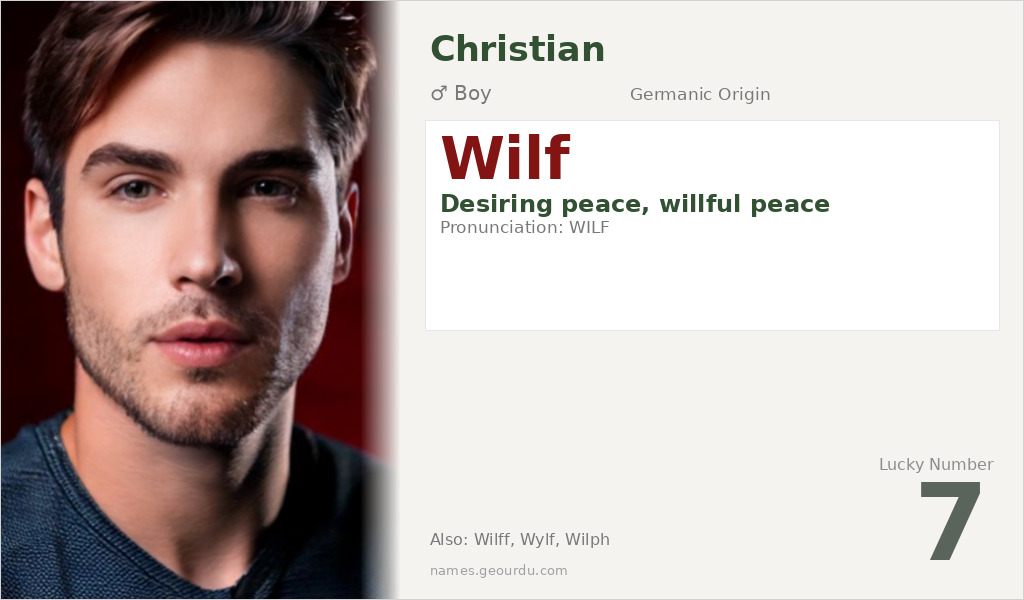
Wilf is a classic boy’s name with deep roots in Christian history and Germanic languages. This compact, strong-sounding name carries the beautiful meaning of ‘desiring peace’ or ‘willful peace’. Popularized by Saint Wilfrid in the 7th century, it has remained in use for over a millennium. Today, Wilf offers a traditional yet distinctive choice for parents seeking a name with historical significance and positive meaning.
Meaning of Wilf
The name Wilf derives from the Old English name Wilfrith (later Wilfrid), which combines two Germanic elements: ‘wil’ meaning ‘will, desire’ and ‘frith’ meaning ‘peace’. This creates the literal translation ‘desiring peace’ or ‘willful peace’. The shortened form Wilf emerged as a nickname or diminutive, much like Bill from William. The name’s peace-oriented meaning reflects Christian values prominent in Anglo-Saxon England, where it first gained popularity. Saint Wilfrid of York (634-709 AD) ensured the name’s lasting association with early English Christianity through his missionary work and ecclesiastical leadership.
| 📛 Name | Wilf |
| 💎 Meaning | Desiring peace, willful peace |
| 👤 Gender | Boy |
| 🕌 Religion | Christian |
| 🌍 Origin | Germanic |
| 🗣 Pronunciation | WILF |
| ✍️ Urdu | ولف |
| ✍️ Arabic | ويلف |
| 🔢 Numerology | 7 |
| ✨ Spellings | Wilff, Wylf, Wilph |
Origin & Cultural Significance
Wilf originated in Anglo-Saxon England before the Norman Conquest of 1066. It comes from the Germanic naming tradition brought to Britain by Anglo-Saxon settlers. The name gained prominence through Saint Wilfrid, an influential bishop who helped establish Roman Christian practices in Northumbria against Celtic Christian traditions. After the Norman Conquest, the name continued in use but became less common than French-derived names. It experienced revivals in the 19th and 20th centuries, particularly in England and Commonwealth countries. The name remains most popular in English-speaking Christian communities with appreciation for historical names.
Personality Traits
The meaning ‘desiring peace’ suggests someone who values harmony but actively works toward it rather than being passive. People named Wilf often exhibit a balance of determination and diplomacy, with the ‘will’ component indicating strength of character and the ‘peace’ component suggesting conflict-resolution skills. Historically, bearers like Saint Wilfrid showed both strong convictions in theological debates and efforts to unify Christian communities. Modern Wilfs might be perceived as grounded individuals who pursue their goals while maintaining respectful relationships.
Similar Names
If you like Wilf, consider: Wilfred, Wilfrid, Wilbert, Wilbur, William
Famous People Named Wilf
- Saint Wilfrid of York — 7th-century English bishop and saint who played key roles in the Synod of Whitfield and spread of Christianity in England
- Wilfrid Laurier — 7th Prime Minister of Canada (1896-1911), the first French-Canadian to hold the office
Frequently Asked Questions About Wilf
What does Wilf mean?
Wilf means 'desiring peace' or 'willful peace'. It comes from the Old English name Wilfrith, combining Germanic elements 'wil' (will/desire) and 'frith' (peace).
Is Wilf a boy or girl name?
Wilf is traditionally and almost exclusively a boy's name. It originated as a masculine name in Anglo-Saxon England and has remained primarily male throughout its history.
What is the origin of Wilf?
Wilf originates from Old English/Germanic languages. It's a shortened form of Wilfrith/Wilfrid, names used by Anglo-Saxons in England before the Norman Conquest, popularized by Saint Wilfrid in the 7th century.





