
Table of Contents
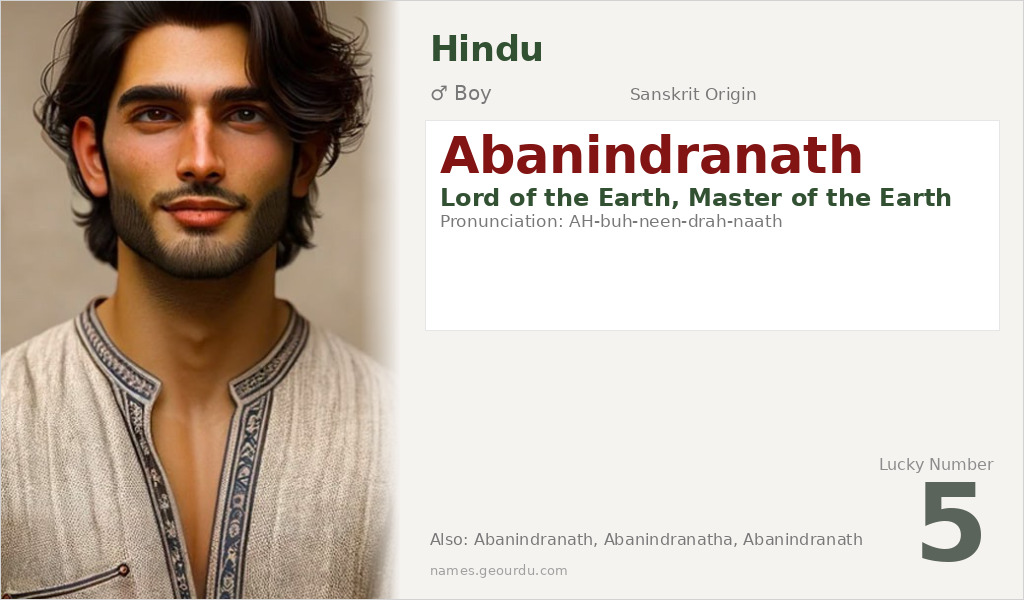
Abanindranath is a distinguished Sanskrit name rich with mythological and cultural significance, primarily used in Hindu communities. Meaning ‘Lord of the Earth’ or ‘Master of the Earth’, it combines elements referencing the Hindu god Indra with terms of leadership and protection. This name carries a legacy of artistic and literary prominence in Bengal, most notably through the renowned painter Abanindranath Tagore. Explore the profound etymology, historical usage, and personality attributes associated with this classic Indian name.
Meaning of Abanindranath
Abanindranath derives from Sanskrit, an ancient Indo-Aryan language foundational to Hindu scriptures and Indian culture. The name is a compound of ‘Abhani’ (earth/world), ‘Indra’ (the king of gods in Hindu mythology), and ‘Nath’ (lord/master). Etymologically, it signifies ‘Lord Indra of the Earth’, blending divine rulership with terrestrial dominion. In Hindu tradition, Indra is a major deity associated with rain, thunder, and sovereignty, while ‘Nath’ is a common suffix in Indian names denoting guardianship or authority. This linguistic construction reflects a desire to bestow qualities of protection, leadership, and earthly stability upon the bearer, making it a name of substantial cultural depth.
| 📛 Name | Abanindranath |
| 💎 Meaning | Lord of the Earth, Master of the Earth |
| 👤 Gender | Boy |
| 🕌 Religion | Hindu |
| 🌍 Origin | Sanskrit |
| 🗣 Pronunciation | AH-buh-neen-drah-naath |
| ✍️ Urdu | ابنیندراناتھ |
| ✍️ Arabic | أبانيندرانات |
| 🔢 Numerology | 5 |
| ✨ Spellings | Abanindranath, Abanindranatha, Abanindranath |
Origin & Cultural Significance
Originating from Sanskrit, Abanindranath is deeply embedded in Hindu naming traditions, particularly in India and among Bengali communities. The name gained cultural prominence in the late 19th and early 20th centuries through figures like Abanindranath Tagore, who was instrumental in the Bengal Renaissance and Indian art movement. Its usage reflects a blend of mythological reverence and artistic heritage, often chosen by families valuing classical roots and intellectual legacy. While primarily Hindu, the name’s appeal extends to those appreciating Indian linguistics and history, though it remains regionally concentrated in South Asia.
Personality Traits
Those named Abanindranath are often seen as authoritative and protective, with a natural inclination toward leadership and responsibility. Grounded in the earthy connotations of their name, they may exhibit practicality, stability, and a nurturing approach to relationships. The artistic associations, particularly through famous bearers, suggest potential creativity, cultural sensitivity, and a strong connection to heritage, shaping individuals who are both dependable and inspired.
Similar Names
If you like Abanindranath, consider: Abhinandan, Indranath, Abhijit, Arindam, Bharat
Famous People Named Abanindranath
- Abanindranath Tagore — Indian painter and writer, founder of the Bengal School of Art, nephew of Rabindranath Tagore
- Abanindranath Chakraborty — Bengali poet and literary critic
Frequently Asked Questions About Abanindranath
What does Abanindranath mean?
Abanindranath means 'Lord of the Earth' or 'Master of the Earth', derived from Sanskrit elements 'Abhani' (earth), 'Indra' (Hindu god), and 'Nath' (lord).
Is Abanindranath a boy or girl name?
Abanindranath is exclusively a boy's name in Hindu naming traditions, with no recorded usage as a feminine name.
What is the origin of Abanindranath?
The origin is Sanskrit, an ancient Indian language, with strong ties to Hindu mythology and Bengali cultural history.





