
Table of Contents
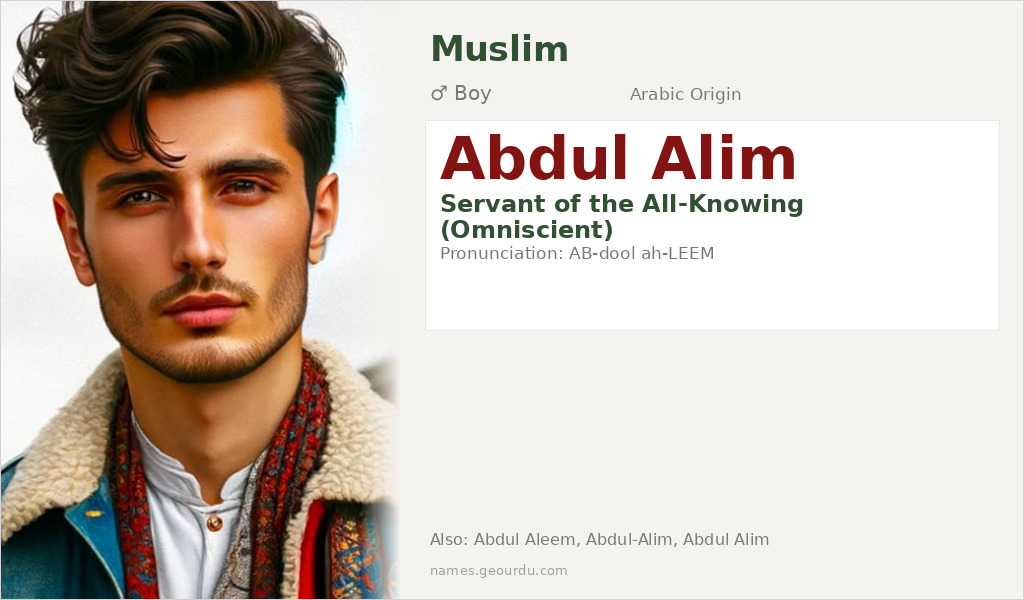
Abdul Alim is a profound Arabic name that carries deep spiritual significance in Islamic tradition. Meaning ‘Servant of the All-Knowing’, this name reflects devotion to one of Allah’s most important attributes. Popular across Muslim communities from South Asia to the Middle East, Abdul Alim represents a connection to divine knowledge and wisdom. Parents choosing this name often hope to instill values of learning, understanding, and spiritual awareness in their child.
Meaning of Abdul Alim
Abdul Alim is a compound Arabic name with clear theological roots. The first component ‘Abdul’ (عبد ال) literally means ‘servant of the’ and is a common prefix in Arabic names that express servitude to God. The second component ‘Alim’ (العليم) comes from the Arabic root ع-ل-م which relates to knowledge, knowing, and science. In Islamic theology, Al-Alim is the 31st name in the Asma ul-Husna (99 Beautiful Names of Allah), describing God’s attribute of perfect, comprehensive, and eternal knowledge. The complete name therefore means ‘Servant of the All-Knowing’, expressing humility before divine omniscience. This name structure follows the common Islamic naming pattern of ‘Abdul + [one of Allah’s names]’ seen in names like Abdul Rahman (Servant of the Merciful) and Abdul Malik (Servant of the King).
| 📛 Name | Abdul Alim |
| 💎 Meaning | Servant of the All-Knowing (Omniscient) |
| 👤 Gender | Boy |
| 🕌 Religion | Muslim |
| 🌍 Origin | Arabic |
| 🗣 Pronunciation | AB-dool ah-LEEM |
| ✍️ Urdu | عبد العليم |
| ✍️ Arabic | عبد العليم |
| 🔢 Numerology | |
| ✨ Spellings | Abdul Aleem, Abdul-Alim, Abdul Alim, Abdul Aleem, Abdul Alim |
Origin & Cultural Significance
Abdul Alim originates from Classical Arabic and Islamic naming traditions that developed in the 7th century CE with the advent of Islam. The practice of using ‘Abdul’ with divine attributes became widespread as Muslims sought names that expressed monotheistic devotion while avoiding pre-Islamic polytheistic associations. The name spread throughout the Muslim world via Arabic language and Islamic scholarship, becoming particularly common in regions like South Asia, the Middle East, and Southeast Asia. In countries like Pakistan, Bangladesh, India, and Indonesia, Abdul Alim remains a popular choice that reflects both religious identity and cultural heritage. The name’s usage transcends ethnic boundaries while maintaining its core Arabic linguistic and Islamic theological foundation.
Personality Traits
While personality traits associated with names are cultural rather than deterministic, Abdul Alim carries connotations of wisdom, intellect, and spiritual depth. The name’s meaning suggests someone who values knowledge, seeks understanding, and approaches life with thoughtful consideration. In many Muslim cultures, names are believed to influence character, and Abdul Alim would be associated with qualities like perceptiveness, learning orientation, and humble recognition of greater wisdom. These associations reflect the name’s theological roots in divine omniscience and human servitude to that perfect knowledge.
Similar Names
If you like Abdul Alim, consider: Abdul Hakim, Abdul Karim, Abdul Rahim, Abdul Aziz, Abdul Qadir
Famous People Named Abdul Alim
- Abdul Aleem Khan – Pakistani politician and former Chief Minister of Punjab
- Abdul Alim – Bangladeshi playback singer known as the 'Nightingale of Bangladesh'
Frequently Asked Questions About Abdul Alim
What does Abdul Alim mean?
Abdul Alim means 'Servant of the All-Knowing' or 'Servant of the Omniscient' in Arabic. It's a compound name where 'Abdul' means 'servant of the' and 'Alim' means 'the All-Knowing', one of the 99 names of Allah in Islam.
Is Abdul Alim a boy or girl name?
Abdul Alim is exclusively a boy's name in all Muslim cultures where it's used. The 'Abdul' prefix with divine attributes is traditionally masculine in Arabic naming conventions.
What is the origin of Abdul Alim?
Abdul Alim originates from Classical Arabic and Islamic naming traditions. It follows the pattern of 'Abdul + [divine attribute]' that became standard after the advent of Islam in the 7th century CE, expressing devotion to Allah's attributes.





