
Table of Contents
Abdul Haafiz is a meaningful Arabic name that carries deep religious significance in Islamic tradition. As a compound name combining ‘Abdul’ (servant of) with ‘Haafiz’ (the protector), it represents devotion to one of Allah’s 99 beautiful names. This name has been cherished by Muslim families for centuries, symbolizing both faith and protective qualities. Understanding its linguistic roots reveals why it remains a popular choice for boys across the Muslim world.
Meaning of Abdul Haafiz
The name Abdul Haafiz has a precise and well-documented meaning in Arabic. The first component ‘Abdul’ (عبد ال) literally means ‘servant of’ or ‘worshipper of’, forming the beginning of many Islamic names that express submission to God. The second component ‘Haafiz’ (حافظ) comes from the Arabic root Ḥ-F-Ẓ (ح-ف-ظ), which carries meanings of protection, preservation, guarding, and memorization. In Islamic theology, Al-Hafiz is one of the 99 names of Allah, referring to God as the ultimate protector and preserver of all existence. Thus, Abdul Haafiz translates directly to ‘Servant of the Protector’, indicating devotion to this divine attribute. The name emphasizes both humility before God and the aspiration to embody protective qualities.
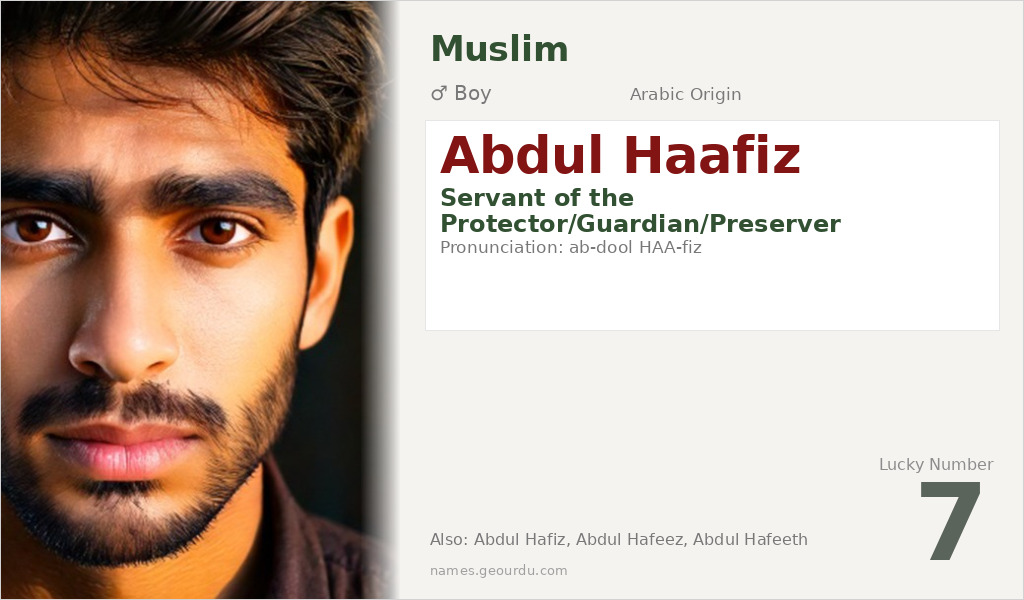
| 📛 Name | Abdul Haafiz |
| 💎 Meaning | Servant of the Protector/Guardian/Preserver |
| 👤 Gender | Boy |
| 🕌 Religion | Muslim |
| 🌍 Origin | Arabic |
| 🗣 Pronunciation | ab-dool HAA-fiz |
| ✍️ Urdu | عبد الحافظ |
| ✍️ Arabic | عبد الحافظ |
| 🔢 Numerology | 7 |
| ✨ Spellings | Abdul Hafiz, Abdul Hafeez, Abdul Hafeeth, Abdul Hāfiz, Abdul Haafeez |
Origin & Cultural Significance
Abdul Haafiz originates from classical Arabic and Islamic naming traditions that developed in the 7th century CE with the advent of Islam. The practice of creating compound names with ‘Abdul’ followed by one of Allah’s names became widespread among early Muslim communities as a way to express devotion and theological understanding. This naming convention spread throughout the Islamic world from Arabia to Persia, South Asia, Africa, and beyond through trade, conquest, and religious conversion. While the name remains most common in Arabic-speaking regions, it has been adopted by Muslim communities worldwide regardless of their native language. The name reflects core Islamic values of submission to God and recognition of divine attributes, making it a timeless choice across diverse Muslim cultures.
Personality Traits
While personality traits associated with names are cultural rather than scientific, Abdul Haafiz suggests qualities of protection, responsibility, and faithfulness. Those bearing this name are often expected to demonstrate guardian-like qualities, showing care for others and preserving important traditions. The name’s meaning may influence how individuals perceive themselves and how others perceive them, potentially encouraging protective behavior and steadfast commitment. In many cultures, names are believed to shape character, and Abdul Haafiz certainly carries expectations of reliability and devotion.
Similar Names
If you like Abdul Haafiz, consider: Abdul Hakeem, Abdul Haleem, Abdul Kareem, Abdul Lateef, Abdul Majeed
Famous People Named Abdul Haafiz
- Abdul Hafiz (Indian Army officer) — Recipient of the Victoria Cross for bravery during World War II
- Abdul Hafiz (Bangladeshi politician) — Former Minister of Fisheries and Livestock in Bangladesh
Frequently Asked Questions About Abdul Haafiz
What does Abdul Haafiz mean?
Abdul Haafiz means 'Servant of the Protector' or 'Servant of the Guardian' in Arabic. It is a compound Islamic name where 'Abdul' means 'servant of' and 'Haafiz' means 'the protector', referring to one of Allah's 99 names in Islamic tradition.
Is Abdul Haafiz a boy or girl name?
Abdul Haafiz is exclusively a boy's name in Islamic naming traditions. The 'Abdul' prefix is traditionally used for male names, while female equivalents would use different constructions like 'Amatul' instead of 'Abdul'.
What is the origin of Abdul Haafiz?
Abdul Haafiz originates from classical Arabic and Islamic naming conventions that developed in the 7th century CE. It follows the pattern of combining 'Abdul' (servant of) with one of the 99 names of Allah, in this case Al-Hafiz (the Protector).





