Table of Contents
AbdulShakoor is a meaningful Arabic name with deep religious significance in Islamic tradition. As a compound name combining ‘Abdul’ (servant of) with ‘Shakoor’ (the Most Thankful), it represents devotion to one of Allah’s divine attributes. This name has been cherished across Muslim communities for centuries, particularly in Arabic-speaking regions and South Asia. Parents choosing this name often seek to instill values of gratitude and spiritual connection in their child.
Meaning of AbdulShakoor
AbdulShakoor has a clear, well-documented meaning in Arabic: ‘Servant of the Most Thankful’ or ‘Servant of the Appreciative One’. The name consists of two components: ‘Abdul’ (عبد ال), a prefix meaning ‘servant of the’, and ‘Shakoor’ (شكور), which is one of the 99 names of Allah in Islamic theology. Shakoor comes from the Arabic root sh-k-r (ش-ك-ر), which conveys meanings of thankfulness, appreciation, and recognition. In Islamic context, Al-Shakoor describes God’s attribute of being appreciative and rewarding even small acts of goodness abundantly. This naming pattern follows the traditional Islamic practice of combining ‘Abdul’ with one of God’s attributes to express devotion and humility before the Divine.
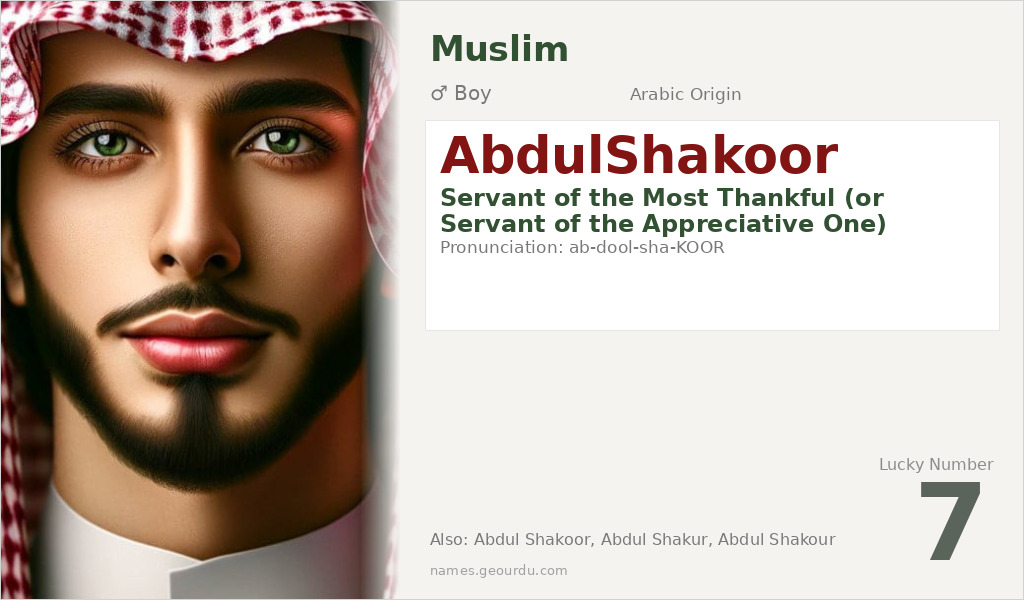
| 📛 Name | AbdulShakoor |
| 💎 Meaning | Servant of the Most Thankful (or Servant of the Appreciative One) |
| 👤 Gender | Boy |
| 🕌 Religion | Muslim |
| 🌍 Origin | Arabic |
| 🗣 Pronunciation | ab-dool-sha-KOOR |
| ✍️ Urdu | عبد الشکور |
| ✍️ Arabic | عبد الشكور |
| 🔢 Numerology | 7 |
| ✨ Spellings | Abdul Shakoor, Abdul Shakur, Abdul Shakour, Abd al-Shakoor, Abdushakoor |
Origin & Cultural Significance
AbdulShakoor originates from classical Arabic and Islamic naming traditions that developed in the 7th century CE with the advent of Islam. The practice of using ‘Abdul’ combined with divine attributes became widespread across the Muslim world, from the Middle East to South Asia and beyond. While the name is fundamentally Arabic, it has been adopted and adapted in various Muslim cultures including Persian, Urdu, Pashto, and Turkish communities. In South Asia particularly, names beginning with ‘Abdul’ became extremely popular among Muslim populations, with AbdulShakoor being one of the many variations honoring different aspects of God. The name reflects the core Islamic principle of servitude to God while emphasizing the attribute of divine thankfulness.
Personality Traits
While personality traits associated with names are cultural rather than scientific, names like AbdulShakoor often carry symbolic expectations. The meaning ‘Servant of the Most Thankful’ suggests qualities of gratitude, appreciation, and spiritual mindfulness. In many Muslim cultures, such names are believed to influence the bearer’s character toward thankfulness and recognition of blessings. The name’s religious significance may also inspire a connection to Islamic values of humility before God and appreciation for divine mercy.
Similar Names
If you like AbdulShakoor, consider: Abdul Karim, Abdul Rahim, Abdul Qadir, Abdul Malik, Abdul Aziz
Famous People Named AbdulShakoor
- Abdul Shakoor Shadab — Pakistani poet and scholar known for his contributions to Urdu literature
- Abdul Shakoor — Afghan cricketer who played for the Afghanistan national team
Frequently Asked Questions About AbdulShakoor
What does AbdulShakoor mean?
AbdulShakoor means 'Servant of the Most Thankful' or 'Servant of the Appreciative One' in Arabic. It combines 'Abdul' (servant of) with 'Shakoor' (the Most Thankful), which is one of the 99 names of Allah in Islam.
Is AbdulShakoor a boy or girl name?
AbdulShakoor is exclusively a boy's name in Islamic naming tradition. All names beginning with 'Abdul' (servant of) are masculine in Arabic grammar and cultural practice across Muslim communities.
What is the origin of AbdulShakoor?
AbdulShakoor originates from Arabic and Islamic naming traditions. It follows the pattern of combining 'Abdul' with divine attributes that developed in early Islamic history and spread throughout the Muslim world from the Middle East to South Asia and beyond.