
Table of Contents
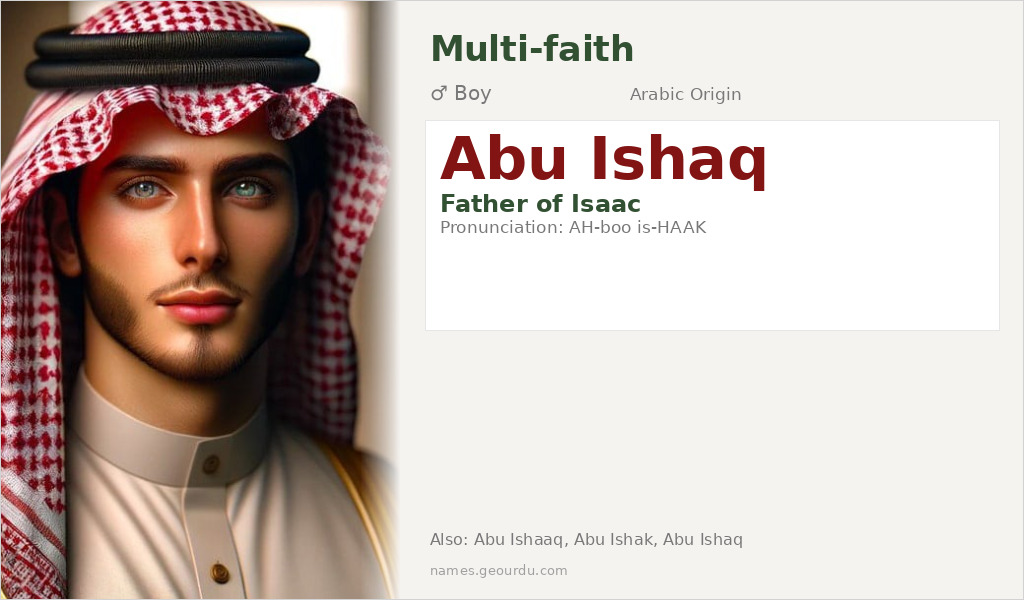
Abu Ishaq is a meaningful Arabic compound name that carries deep religious and cultural significance across Abrahamic traditions. Literally translating to ‘Father of Isaac,’ this name connects directly to prophetic lineage through both Islamic and Judeo-Christian heritage. Unlike typical given names, Abu Ishaq often functions as an honorific title or kunya, reflecting paternal status and religious devotion. Understanding this name requires exploring its linguistic components and historical context within Semitic naming traditions.
Meaning of Abu Ishaq
Abu Ishaq is composed of two distinct Arabic elements with clear etymological roots. The first part, ‘Abu,’ comes from the Arabic word for father (أب) and functions as a prefix meaning ‘father of’ or ‘possessor of.’ This is a common structure in Arabic kunyas, which are honorific nicknames often based on one’s eldest son’s name or notable characteristics. The second component, ‘Ishaq,’ is the Arabic transliteration of the biblical name Isaac, derived from the Hebrew Yitzhak (יצחק). In Hebrew, Yitzhak comes from the root צ-ח-ק (tsa-chak), meaning ‘to laugh,’ referring to the biblical story of Sarah laughing when told she would bear a child in old age. Thus, the complete name Abu Ishaq carries the literal meaning ‘Father of Isaac’ but also connects to the broader Semitic linguistic tradition of prophetic names.
| 📛 Name | Abu Ishaq |
| 💎 Meaning | Father of Isaac |
| 👤 Gender | Boy |
| 🕌 Religion | Multi-faith |
| 🌍 Origin | Arabic |
| 🗣 Pronunciation | AH-boo is-HAAK |
| ✍️ Urdu | ابو اسحاق |
| ✍️ Arabic | أبو إسحاق |
| 🔢 Numerology | |
| ✨ Spellings | Abu Ishaaq, Abu Ishak, Abu Ishaq, Abu Is'haq |
Origin & Cultural Significance
The name Abu Ishaq originates from classical Arabic naming conventions that developed in the Arabian Peninsula and spread throughout the Islamic world. As a compound name, it follows the traditional Arabic kunya pattern that has been used for centuries across the Middle East, North Africa, and South Asia. In Islamic culture, kunyas like Abu Ishaq serve both as respectful forms of address and as identifiers of familial relationships. The name gained particular significance through Islamic tradition, where Prophet Ishaq (Isaac) is revered as one of the prophets mentioned in the Quran, the son of Prophet Ibrahim (Abraham) and the father of Prophet Yaqub (Jacob). Historically, many scholars, rulers, and religious figures adopted Abu Ishaq as a title, particularly in medieval Islamic societies from Persia to Andalusia.
Personality Traits
While personality traits associated with names are largely cultural rather than etymological, names like Abu Ishaq traditionally suggest qualities of paternal responsibility, wisdom, and religious commitment. The ‘Abu’ prefix implies leadership and caretaking roles, while the connection to Prophet Ishaq suggests faithfulness and connection to Abrahamic heritage. In cultural contexts where this name is used, it often carries expectations of maturity, religious knowledge, and community respect, reflecting its common use as an honorific title rather than a childhood given name.
Similar Names
If you like Abu Ishaq, consider: Abu Bakr, Abu Talib, Abu Huraira, Ishaq, Ibrahim, Ismail, Yaqub
Famous People Named Abu Ishaq
- Abu Ishaq al-Shirazi — 11th century Persian Shafi'i scholar and jurist
- Abu Ishaq Ibrahim — Several historical figures including rulers and scholars in Islamic history
Frequently Asked Questions About Abu Ishaq
What does Abu Ishaq mean?
Abu Ishaq means 'Father of Isaac' in Arabic. It's a compound name where 'Abu' means 'father of' and 'Ishaq' is the Arabic form of the biblical name Isaac, derived from Hebrew meaning 'he will laugh.'
Is Abu Ishaq a boy or girl name?
Abu Ishaq is exclusively a masculine name. The 'Abu' prefix specifically means 'father of,' making it inherently male. In Arabic naming traditions, similar feminine forms would use 'Umm' (mother of) instead.
What is the origin of Abu Ishaq?
Abu Ishaq originates from Arabic language and naming conventions. It follows the traditional Arabic kunya (honorific nickname) pattern that developed in pre-Islamic and early Islamic Arabia, with the specific component 'Ishaq' having roots in Hebrew through Abrahamic religious traditions.





