
Table of Contents
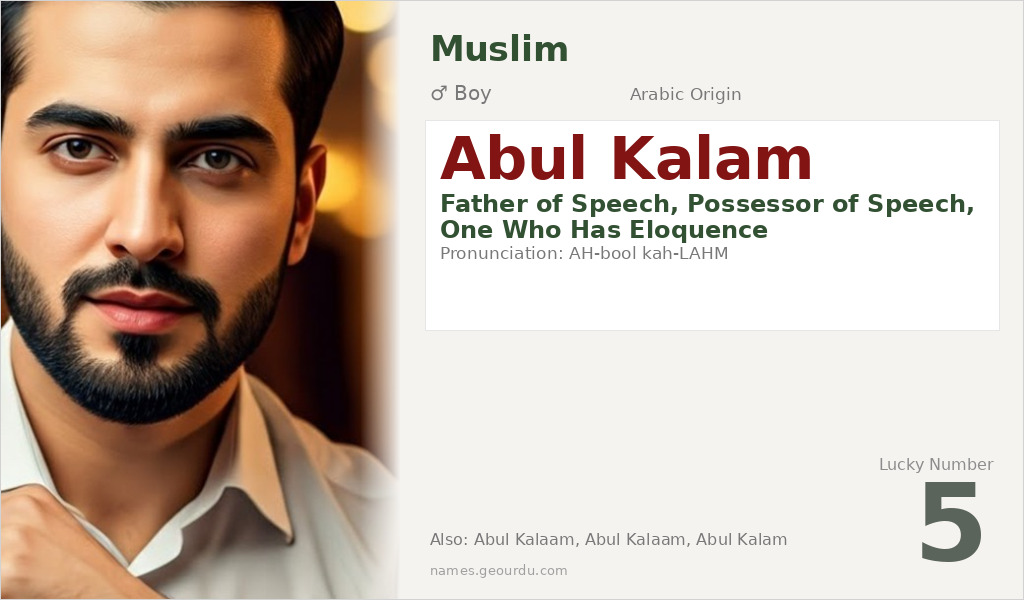
Abul Kalam is a distinguished Arabic name with deep linguistic and cultural significance in Muslim communities worldwide. Meaning ‘Father of Speech’ or ‘Possessor of Eloquence’, this name carries connotations of wisdom, articulation, and intellectual discourse. Historically associated with scholars and leaders, Abul Kalam represents the power of thoughtful communication and knowledge. Its compound structure follows classic Arabic naming patterns that metaphorically attribute qualities to individuals.
Meaning of Abul Kalam
Abul Kalam is an Arabic compound name with clear etymological roots. The first component ‘Abul’ (أبو) is a contraction of ‘Abu al-‘ meaning ‘father of’ or ‘possessor of’, a common prefix in Arabic names that metaphorically indicates someone who embodies or masters a particular quality. The second component ‘Kalam’ (كلام) derives from the Arabic root k-l-m (ك-ل-م) meaning ‘to speak’ or ‘to address’, giving us words like ‘kalām’ (speech), ‘takallum’ (conversation), and ‘mukallim’ (speaker). In Islamic theology, ‘Ilm al-Kalam’ refers to scholastic theology or dialectical theology, adding scholarly dimensions to the name. Thus, Abul Kalam literally means ‘Father of Speech’ but carries deeper implications of eloquence, wisdom in discourse, and possibly theological knowledge.
| 📛 Name | Abul Kalam |
| 💎 Meaning | Father of Speech, Possessor of Speech, One Who Has Eloquence |
| 👤 Gender | Boy |
| 🕌 Religion | Muslim |
| 🌍 Origin | Arabic |
| 🗣 Pronunciation | AH-bool kah-LAHM |
| ✍️ Urdu | ابو الکلام |
| ✍️ Arabic | أبو الكلام |
| 🔢 Numerology | 5 |
| ✨ Spellings | Abul Kalaam, Abul Kalaam, Abul Kalam, Abul Kalaam |
Origin & Cultural Significance
Abul Kalam originates from classical Arabic and has been used across the Muslim world for centuries, particularly in Arabic-speaking regions, South Asia, and Southeast Asia. The name follows the traditional Arabic naming convention where ‘Abu’ (father of) is combined with nouns to create meaningful compounds, similar to names like Abu Bakr (father of the young camel) or Abu Talib (father of the seeker). While primarily an Arabic name, it has been adopted into various languages including Urdu, Persian, and Bengali through Islamic cultural exchange. The name gained particular prominence in the 20th century through figures like Maulana Abul Kalam Azad, who exemplified the name’s connotations of scholarly eloquence and leadership. It remains a respected choice in Muslim communities valuing education and articulate expression.
Personality Traits
The name Abul Kalam suggests personality traits centered around communication, intellect, and leadership through words. Those bearing this name are often expected to be thoughtful speakers who choose their words carefully and value meaningful dialogue. The ‘father of speech’ metaphor implies not just talking, but mastery over language—someone who can persuade, teach, and inspire through eloquence. This often translates to careers in education, writing, law, or religious leadership where articulate expression is paramount.
Similar Names
If you like Abul Kalam, consider: Abdul Kareem, Abul Hasan, Abul Fadl, Kalamullah, Abul Qasim
Famous People Named Abul Kalam
- Abul Kalam Azad (1888-1958) — Indian scholar, Islamic theologian, and independence activist who served as India's first Minister of Education
- Abul Kalam Mohammad Zakaria (born 1936) — Bangladeshi historian and academic specializing in medieval South Asian history
Frequently Asked Questions About Abul Kalam
What does Abul Kalam mean?
Abul Kalam means 'Father of Speech' or 'Possessor of Eloquence' in Arabic. It's a compound name where 'Abul' means 'father of' and 'Kalam' means 'speech' or 'discourse'.
Is Abul Kalam a boy or girl name?
Abul Kalam is exclusively a boy's name in Arabic and Muslim naming traditions. The 'Abul' prefix (meaning 'father of') makes it masculine by grammatical structure.
What is the origin of Abul Kalam?
Abul Kalam originates from classical Arabic language and Islamic naming traditions. It follows the common Arabic pattern of 'Abu + [noun]' to create meaningful compounds indicating possession of qualities.





