
Table of Contents
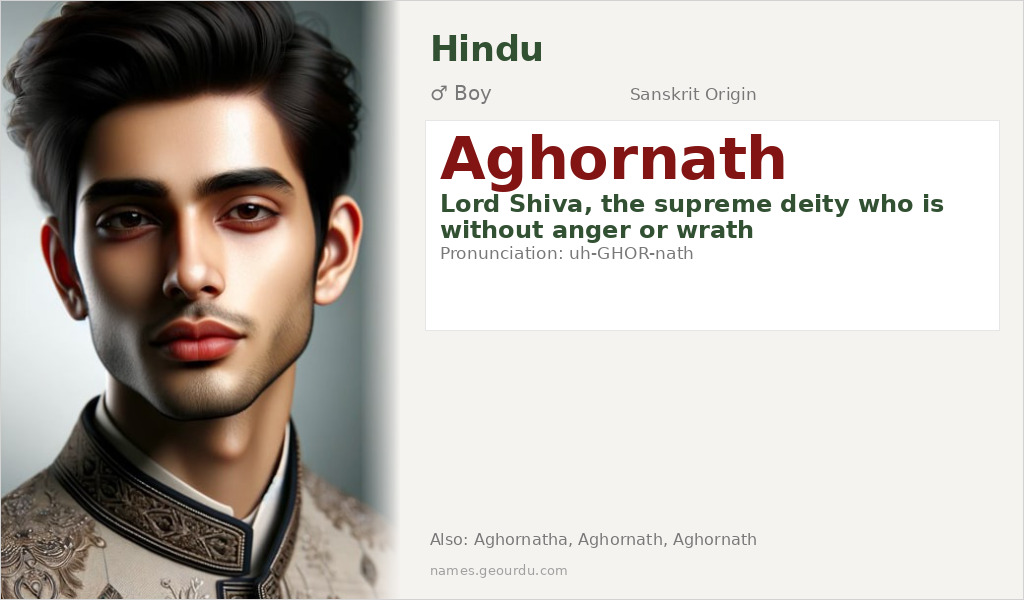
Aghornath is a profound Sanskrit name with rich spiritual significance in Hindu tradition. Meaning ‘Lord Shiva without anger’, this name embodies the peaceful, benevolent aspect of the supreme deity. Primarily used for boys, Aghornath carries centuries of cultural and religious heritage. Discover the fascinating etymology and cultural context of this meaningful name.
Meaning of Aghornath
Aghornath is a compound Sanskrit name with two distinct elements: ‘Aghora’ and ‘Nath’. ‘Aghora’ (अघोर) literally means ‘not terrible’ or ‘without wrath’, derived from ‘a-‘ (not) and ‘ghora’ (terrible, fierce). In Hindu theology, Aghora represents one of the five faces of Shiva, specifically his south-facing aspect that symbolizes dissolution and regeneration without anger. ‘Nath’ (नाथ) means ‘lord’, ‘master’, or ‘protector’. Combined, Aghornath translates to ‘the lord who is without anger’ or ‘the master who transcends wrath’, specifically referring to Shiva in his most benevolent form. This name appears in various Hindu scriptures and traditions as an epithet for Shiva.
| 📛 Name | Aghornath |
| 💎 Meaning | Lord Shiva, the supreme deity who is without anger or wrath |
| 👤 Gender | Boy |
| 🕌 Religion | Hindu |
| 🌍 Origin | Sanskrit |
| 🗣 Pronunciation | uh-GHOR-nath |
| ✍️ Urdu | اغورناتھ |
| ✍️ Arabic | أغورناث |
| 🔢 Numerology | |
| ✨ Spellings | Aghornatha, Aghornath, Aghornath |
Origin & Cultural Significance
Aghornath originates from classical Sanskrit, the ancient liturgical language of Hinduism. The name has deep roots in Shaivism, the tradition devoted to worship of Shiva as the supreme being. Historically, the Aghora aspect of Shiva has been particularly significant in certain tantric and ascetic traditions within Hinduism. The name appears in various regional contexts across India, with temples dedicated to Aghornath found in several states. While primarily used in Hindu communities, the name’s Sanskrit origin gives it linguistic connections to other Indo-European languages through shared roots.
Personality Traits
Those named Aghornath are often associated with calm, composed personalities that reflect the name’s meaning of being without anger. They may exhibit spiritual depth, philosophical thinking, and emotional stability. The ‘nath’ element suggests natural leadership qualities and protective instincts. While personality traits vary by individual, the name carries connotations of wisdom, serenity, and strength.
Similar Names
If you like Aghornath, consider: Aghora, Aghoreshwar, Shivanath, Bholenath, Mahadev
Famous People Named Aghornath
- Aghornath Chattopadhyaya — 19th century Indian educationist and social reformer, father of Sarojini Naidu
- Aghornath Temple — Several temples in India dedicated to Lord Shiva under this name, particularly in Maharashtra and Gujarat
Frequently Asked Questions About Aghornath
What does Aghornath mean?
Aghornath means 'Lord Shiva without anger' or 'the lord who transcends wrath'. It's a Sanskrit compound name combining 'Aghora' (not terrible/without anger) and 'Nath' (lord/master).
Is Aghornath a boy or girl name?
Aghornath is exclusively a boy's name in Hindu naming tradition. It refers to Lord Shiva, a male deity, and follows masculine grammatical forms in Sanskrit.
What is the origin of Aghornath?
Aghornath originates from Sanskrit, the ancient language of Hindu scriptures. It specifically comes from Shaivite tradition within Hinduism, referring to one of the five aspects of Lord Shiva.





