
Table of Contents
Alfred is a classic name with deep historical roots and enduring appeal. Originating from Old English, this name carries the beautiful meaning of ‘elf counsel’ or ‘wise counselor’. From Anglo-Saxon kings to modern innovators, Alfred has been borne by influential figures throughout history. Its timeless quality makes it a meaningful choice that bridges ancient tradition with contemporary relevance.
Meaning of Alfred
The name Alfred derives from the Old English elements ‘ælf’ (elf) and ‘ræd’ (counsel, advice). In Anglo-Saxon culture, elves were often associated with supernatural wisdom and magical knowledge, making ‘elf counsel’ a particularly meaningful combination. The name suggests someone who possesses both mystical insight and practical wisdom. This etymology reflects the Germanic tradition of compound names that describe desirable qualities. The meaning evolved to represent a wise advisor or counselor, emphasizing intellectual guidance rather than rulership. Historically, the name was popularized by Alfred the Great, whose reign reinforced its association with wisdom and leadership.
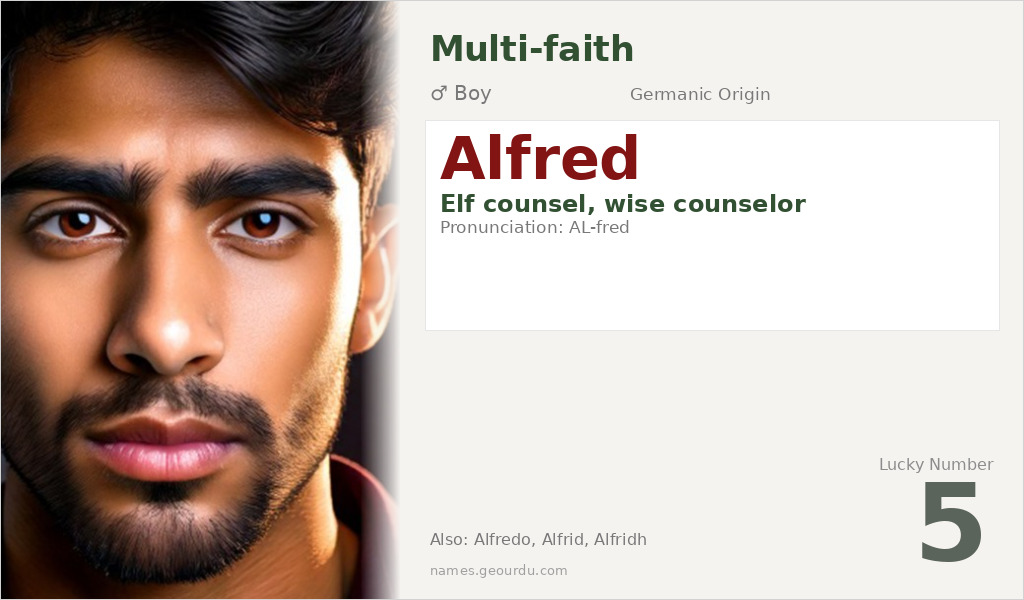
| 📛 Name | Alfred |
| 💎 Meaning | Elf counsel, wise counselor |
| 👤 Gender | Boy |
| 🕌 Religion | Multi-faith |
| 🌍 Origin | Germanic |
| 🗣 Pronunciation | AL-fred |
| ✍️ Urdu | الفریڈ |
| ✍️ Arabic | ألفريد |
| 🔢 Numerology | 5 |
| ✨ Spellings | Alfredo, Alfrid, Alfridh, Alfread |
Origin & Cultural Significance
Alfred has its origins in the Germanic languages, specifically Old English, where it was commonly used before the Norman Conquest of 1066. The name was particularly prominent in Anglo-Saxon England, where compound names combining natural and supernatural elements were popular. Its most famous historical bearer, Alfred the Great (849-899 CE), King of Wessex, played a crucial role in defending England against Viking invasions and promoting education and literacy. While the name declined after the Norman Conquest, it experienced a revival during the Victorian era’s interest in medieval history. Today, Alfred is used across English-speaking countries and has variations in other European languages, maintaining its connection to historical tradition while remaining accessible to modern parents.
Personality Traits
Those named Alfred are often associated with wisdom, thoughtfulness, and strategic thinking. The name’s meaning of ‘elf counsel’ suggests someone who combines intuitive insight with practical advice. Historically, Alfreds have been leaders, innovators, and problem-solvers who approach challenges with careful consideration. These individuals typically value knowledge, education, and thoughtful decision-making in both personal and professional contexts.
Similar Names
If you like Alfred, consider: Alvin, Alistair, Edgar, Edmund, Wilfred
Famous People Named Alfred
- Alfred the Great — King of Wessex who defended England against Viking invasions and promoted education
- Alfred Hitchcock — British film director known as the 'Master of Suspense'
- Alfred Nobel — Swedish chemist and inventor of dynamite who established the Nobel Prizes
Frequently Asked Questions About Alfred
What does Alfred mean?
Alfred means 'elf counsel' or 'wise counselor' from the Old English elements 'ælf' (elf) and 'ræd' (counsel).
Is Alfred a boy or girl name?
Alfred is traditionally a masculine name, though some modern variations might be used differently. Historically and culturally, it has been exclusively male.
What is the origin of Alfred?
Alfred originates from Old English, a Germanic language spoken in Anglo-Saxon England before the Norman Conquest.





