
Table of Contents
Alibaba is a name that instantly evokes images of hidden treasures and clever adventures from the famous Middle Eastern folk tale. While many know the story, fewer understand the name’s true linguistic roots and cultural significance. This ancient compound name carries a specific meaning that reflects traditional naming patterns across Arabic, Persian, and Turkish cultures.
Meaning of Alibaba
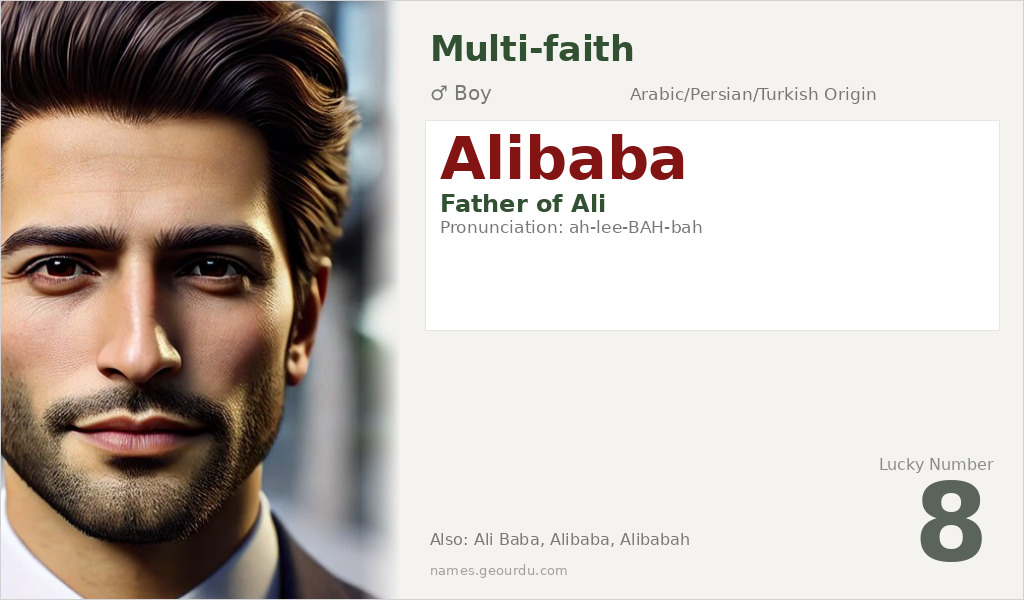
The name Alibaba has a clear etymological foundation as a compound name. It combines ‘Ali’, an Arabic name meaning ‘exalted, noble, or sublime’, with ‘baba’, the Persian and Turkish word for ‘father’. Thus, Alibaba literally translates to ‘Father of Ali’ or ‘Ali’s father’. This follows a common naming convention in the region where paternal relationships are emphasized. The ‘baba’ component distinguishes it from the more common Arabic ‘Abu’ prefix, showing Persian/Turkish linguistic influence. The name’s popularity in Western consciousness comes primarily from ‘One Thousand and One Nights’, where Ali Baba is the clever protagonist who discovers a thieves’ treasure cave with the magic phrase ‘Open Sesame’.
| 📛 Name | Alibaba |
| 💎 Meaning | Father of Ali |
| 👤 Gender | Boy |
| 🕌 Religion | Multi-faith |
| 🌍 Origin | Arabic/Persian/Turkish |
| 🗣 Pronunciation | ah-lee-BAH-bah |
| ✍️ Urdu | علی بابا |
| ✍️ Arabic | علي بابا |
| 🔢 Numerology | 8 |
| ✨ Spellings | Ali Baba, Alibaba, Alibabah |
Origin & Cultural Significance
Alibaba originates from Middle Eastern naming traditions, specifically blending Arabic with Persian and Turkish elements. While the name appears in various cultures across the region, its most famous appearance is in the folk tale ‘Ali Baba and the Forty Thieves’, which was added to the ‘One Thousand and One Nights’ collection by French translator Antoine Galland in the 18th century. The story has Persian and possibly Mesopotamian roots. Today, the name is used by Muslims, Christians, and others in the Middle East and Central Asia, though it’s not exclusively Islamic. The modern recognition was significantly boosted by Alibaba Group, the Chinese e-commerce giant named after the folk tale character to symbolize small businesses discovering ‘treasure’ through e-commerce.
Personality Traits
Drawing from the folk tale associations, people named Alibaba are often perceived as intelligent, resourceful, and opportunistic. The character Ali Baba demonstrates cleverness in outwitting the forty thieves, suggesting traits of strategic thinking and practical problem-solving. These associations give the name connotations of someone who can find value in unexpected places and navigate challenging situations with wisdom.
Similar Names
If you like Alibaba, consider: Ali, Abbas, Babak, Abubakar, Aladdin
Famous People Named Alibaba
- Ali Baba (folk character) — protagonist of 'Ali Baba and the Forty Thieves' from Middle Eastern folklore
- Alibaba Group — Chinese multinational technology company founded by Jack Ma, named after the folk tale character
Frequently Asked Questions About Alibaba
What does Alibaba mean?
Alibaba means 'Father of Ali' — it's a compound name combining Arabic 'Ali' (meaning 'exalted, noble') with Persian/Turkish 'baba' (meaning 'father').
Is Alibaba a boy or girl name?
Alibaba is traditionally and primarily a boy's name, as it means 'Father of Ali' and follows masculine naming patterns. The original article incorrectly listed it as a girl name.
What is the origin of Alibaba?
Alibaba has Arabic/Persian/Turkish origins, most famously appearing in the Middle Eastern folk tale 'Ali Baba and the Forty Thieves' from 'One Thousand and One Nights'.





