Table of Contents
Amarleen is a beautiful modern name that combines ancient Sanskrit roots with contemporary appeal. Meaning ‘Immortal’ or ‘Eternal,’ this name carries profound spiritual significance while maintaining a melodic, approachable sound. Though relatively recent in usage, Amarleen has gained popularity in Indian communities worldwide, particularly among Hindu and Sikh families seeking names that bridge traditional meaning with modern sensibility.
Meaning of Amarleen
The name Amarleen derives from two Sanskrit components that together create a meaningful whole. ‘Amar’ (अमर) is a classical Sanskrit word meaning ‘immortal,’ ‘undying,’ or ‘eternal,’ frequently appearing in Hindu scriptures to describe divine beings or the eternal nature of the soul (atman). The suffix ‘leen’ likely originates from Sanskrit ‘लीन’ (līna), meaning ‘absorbed,’ ‘merged,’ or ‘dissolved into,’ though in contemporary Indian naming practices, particularly in Punjabi and Hindi, ‘-leen’ has evolved into a popular feminine name ending. When combined, Amarleen suggests ‘one who is absorbed in immortality’ or ‘eternally merged,’ though in practical usage, it’s primarily understood as ‘Immortal’ or ‘Eternal.’ This modern compound name represents a creative linguistic blend that maintains connection to India’s ancient philosophical traditions.
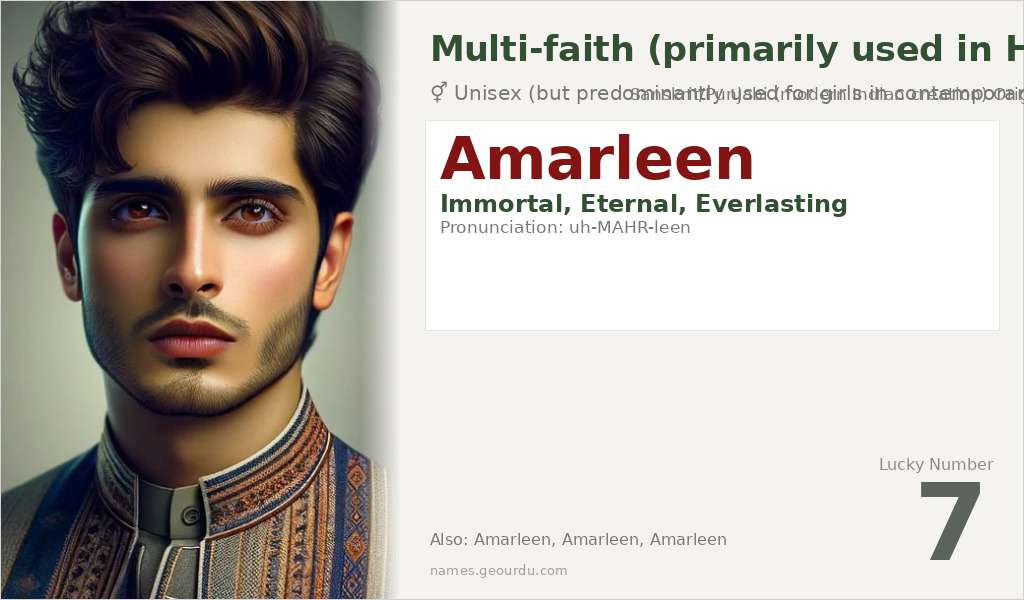
| 📛 Name | Amarleen |
| 💎 Meaning | Immortal, Eternal, Everlasting |
| 👤 Gender | Unisex (but predominantly used for girls in contemporary contexts) |
| 🕌 Religion | Multi-faith (primarily used in Hindu and Sikh communities) |
| 🌍 Origin | Sanskrit/Punjabi (modern Indian creation) |
| 🗣 Pronunciation | uh-MAHR-leen |
| ✍️ Urdu | امرلین |
| ✍️ Arabic | أمارلين |
| 🔢 Numerology | 7 |
| ✨ Spellings | Amarleen, Amarleen, Amarleen |
Origin & Cultural Significance
Amarleen is a modern Indian name that emerged in the late 20th century, primarily within Punjabi and Hindi-speaking communities. While its components have ancient Sanskrit origins, the specific combination appears to be a contemporary creation rather than a traditional name with historical usage. The name gained popularity as part of a broader trend in Indian naming where parents combine meaningful Sanskrit elements to create unique, melodious names for their children. Culturally, Amarleen is used predominantly in Hindu and Sikh families across India and the diaspora, reflecting the ongoing evolution of Indian naming traditions that honor linguistic heritage while embracing creative expression. Unlike traditional names with established astrological associations, Amarleen doesn’t have specific historical lucky elements attached to it in cultural records.
Personality Traits
Those named Amarleen often embody qualities suggested by their name’s meaning of ‘Immortal’ or ‘Eternal.’ They may demonstrate resilience, enduring spirit, and a philosophical outlook on life. Many Amarleens show depth of character, with an inclination toward spiritual or introspective pursuits, and often maintain lasting relationships due to their loyal and persistent nature. The name’s modern creation suggests parents who value both tradition and individuality, which may translate to a balanced personality that respects heritage while embracing contemporary perspectives.
Similar Names
If you like Amarleen, consider: Amar, Amara, Amardeep, Amrit, Amrita, Kavleen, Manleen, Gurleen
Famous People Named Amarleen
- No widely known public figures with this exact name found in records
Frequently Asked Questions About Amarleen
What does Amarleen mean?
Amarleen means 'Immortal' or 'Eternal,' derived from the Sanskrit word 'Amar' (अमर) meaning immortal, combined with the suffix '-leen' from Sanskrit 'लीन' meaning absorbed or merged.
Is Amarleen a boy or girl name?
Amarleen is predominantly used as a girl's name in contemporary Indian communities, though its components are gender-neutral in Sanskrit. Some families may use it for boys, but current usage trends strongly favor feminine application.
What is the origin of Amarleen?
Amarleen originates from modern Indian naming practices, combining ancient Sanskrit roots ('Amar' and 'leen') into a contemporary name. It's primarily used in Hindu and Sikh communities, particularly in Punjabi and Hindi-speaking regions.