
Table of Contents
Ambud is a beautiful Sanskrit name that carries the essence of nature’s life-giving forces. Meaning ‘cloud’ or specifically ‘rain cloud,’ this name evokes imagery of monsoon showers and fertility. With roots in ancient Hindu literature, Ambud represents more than just a meteorological phenomenon—it symbolizes nourishment, renewal, and the cyclical nature of life. This name offers a poetic connection to the natural world while maintaining cultural authenticity.
Meaning of Ambud
Ambud derives from the Sanskrit language, combining two elements: ‘ambu’ meaning water, and ‘da’ meaning giving or bearing. The complete word ‘ambud’ literally translates to ‘water-giver’ or ‘that which bears water.’ In classical Sanskrit poetry and texts, this term specifically refers to rain clouds or clouds that carry moisture. The name appears in works like the Rigveda and later Sanskrit literature where clouds are personified as life-bringers. Unlike generic terms for clouds, ‘ambud’ carries the specific connotation of clouds that bring rain and fertility to the earth.
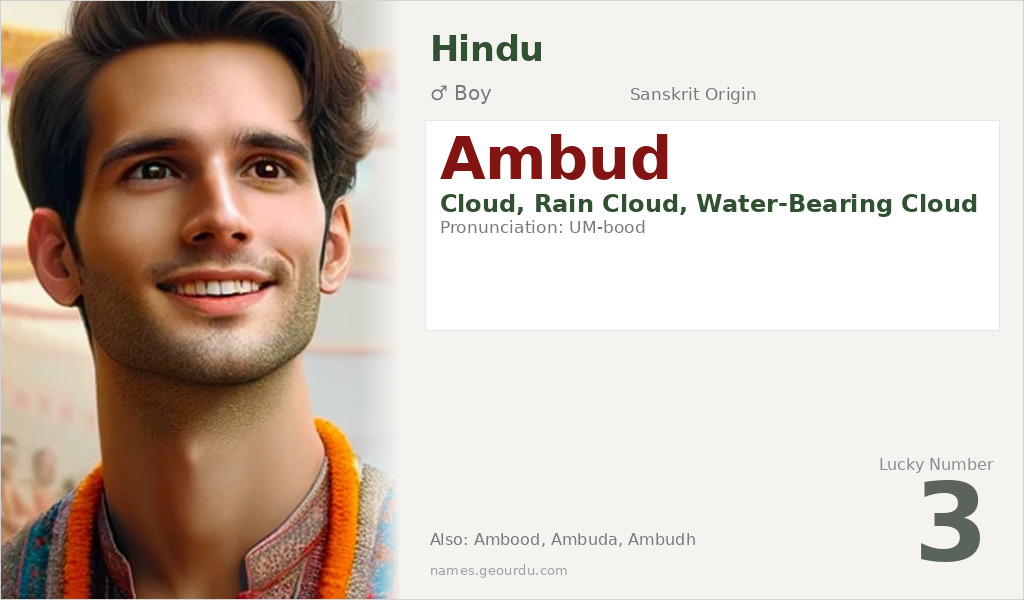
| 📛 Name | Ambud |
| 💎 Meaning | Cloud, Rain Cloud, Water-Bearing Cloud |
| 👤 Gender | Boy |
| 🕌 Religion | Hindu |
| 🌍 Origin | Sanskrit |
| 🗣 Pronunciation | UM-bood |
| ✍️ Urdu | امبرد |
| ✍️ Arabic | أمبود |
| 🔢 Numerology | 3 |
| ✨ Spellings | Ambood, Ambuda, Ambudh |
Origin & Cultural Significance
Ambud originates from ancient Sanskrit, the classical language of Hinduism, Buddhism, and Jainism. The name has been used in Indian subcontinent for centuries, particularly in Hindu communities that value nature-inspired names. In Hindu mythology and poetry, clouds are often personified and celebrated as vital forces that sustain life. The name reflects the cultural importance of monsoon rains in agricultural societies across South Asia. While not among the most common names today, Ambud maintains a presence in regions with strong Sanskrit literary traditions and among families seeking unique, meaningful names with natural elements.
Personality Traits
Those named Ambud are often perceived as adaptable and nurturing individuals, much like the clouds they’re named after. They tend to be creative thinkers who bring refreshment and new perspectives to challenging situations. Their emotional depth and ability to ‘water’ relationships with care make them valued friends and family members. Like clouds that transform and move with grace, Ambuds typically demonstrate flexibility and resilience in life’s changing circumstances.
Similar Names
If you like Ambud, consider: Abhra, Megh, Varsha, Jalad, Payod
Famous People Named Ambud
- Ambud Sharma — Fictional character in modern Indian literature representing nature and fertility
- Ambud Singh — Historical figure mentioned in regional Rajasthani folklore as a rain-bringer
Frequently Asked Questions About Ambud
What does Ambud mean?
Ambud means 'cloud' or specifically 'rain cloud' in Sanskrit. It comes from 'ambu' (water) and 'da' (giving), literally translating to 'water-giver.'
Is Ambud a boy or girl name?
Ambud is traditionally a masculine name in Hindu naming conventions, though its natural meaning could theoretically be used for any gender in modern contexts.
What is the origin of Ambud?
Ambud originates from Sanskrit, the ancient classical language of India. It has been used in Hindu communities for centuries, appearing in classical literature and poetry.





