
Table of Contents
Ameer is a distinguished name with deep roots in Arabic language and culture, symbolizing leadership and nobility. Used across the Islamic world and beyond, this name carries connotations of authority, command, and respect. Whether spelled as Amir, Aamir, or Emir, it remains a popular choice for boys in many cultures. Its historical significance as a title for rulers and military commanders adds to its enduring appeal.
Meaning of Ameer
The name Ameer derives from the Arabic word ‘amīr’ (أمير), which comes from the triliteral root ‘amara’ (أمر) meaning ‘to command’. This root gives rise to related words like ‘amr’ (command) and ‘imārah’ (leadership or emirate). In classical Arabic, an amir was a military commander, governor, or prince—a title used throughout Islamic history from the early caliphates to modern times. The name spread to Persian (امیر), Urdu (امیر), Turkish (emir), and other languages through cultural exchange. While primarily masculine, feminine forms like Amira exist in some cultures. The core meaning of ‘leader’ or ‘ruler’ remains consistent across linguistic variations.
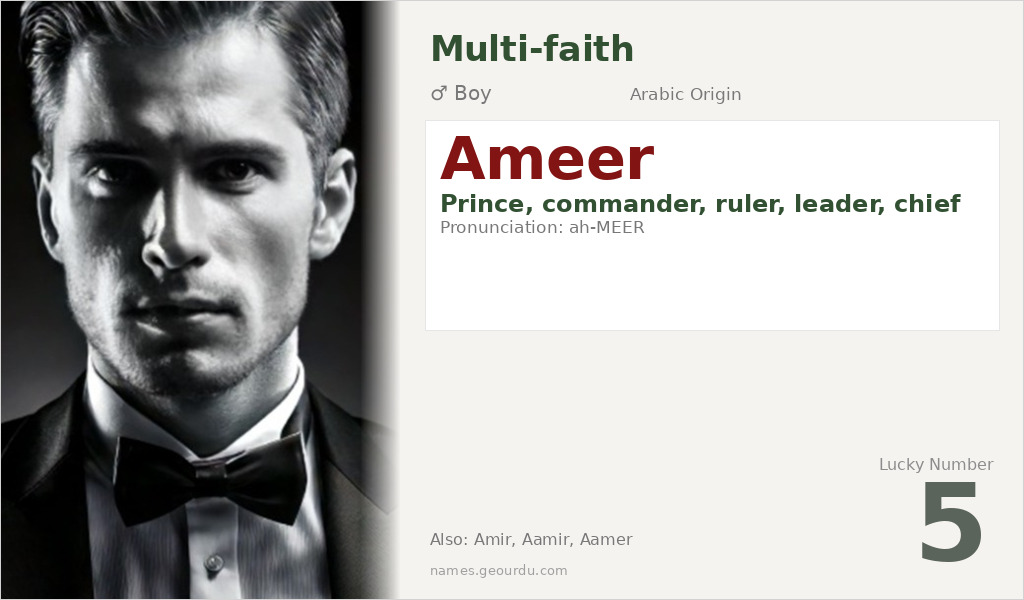
| 📛 Name | Ameer |
| 💎 Meaning | Prince, commander, ruler, leader, chief |
| 👤 Gender | Boy |
| 🕌 Religion | Multi-faith |
| 🌍 Origin | Arabic |
| 🗣 Pronunciation | ah-MEER |
| ✍️ Urdu | امیر |
| ✍️ Arabic | أمير |
| 🔢 Numerology | 5 |
| ✨ Spellings | Amir, Aamir, Aamer, Emir, Ameer |
Origin & Cultural Significance
Ameer originated in pre-Islamic Arabia as a title for tribal leaders and military commanders. With the rise of Islam, it became an official title for provincial governors and military officers in the Rashidun, Umayyad, and Abbasid caliphates. The term evolved into various forms across the Muslim world: ’emir’ in Ottoman Turkish, ‘amir’ in Persian and Urdu-speaking regions, and ‘ameer’ in South Asian contexts. While strongly associated with Islamic culture due to its Arabic origin and historical usage, the name is also used by Arabic-speaking Christians and others, making it multi-faith in practice. Today, it remains popular in the Middle East, South Asia, and among Muslim communities worldwide.
Personality Traits
Those named Ameer are often expected to embody leadership qualities, reflecting their name’s meaning. They may display confidence, strategic thinking, and a natural authority that draws respect from others. While personality varies individually, the name carries cultural expectations of responsibility, protection, and the ability to guide or command—traits associated with historical figures who bore this title.
Similar Names
If you like Ameer, consider: Malik, Sultan, Shah, Khalid, Rashid
Famous People Named Ameer
- Amir Khan — British professional boxer and Olympic medalist
- Aamir Khan — Indian actor, director, and producer known for Bollywood films
Frequently Asked Questions About Ameer
What does Ameer mean?
Ameer means 'prince', 'commander', 'ruler', or 'leader' in Arabic, derived from the root word 'amara' meaning 'to command'.
Is Ameer a boy or girl name?
Ameer is traditionally a masculine name. The feminine equivalent is Amira (meaning 'princess' or 'commander' in feminine form) in Arabic and related languages.
What is the origin of Ameer?
Ameer originates from Arabic, where it has been used since pre-Islamic times as a title for leaders. It spread to Persian, Turkish, Urdu, and other languages through Islamic cultural influence.





