
Table of Contents
Anders is a classic Scandinavian name with deep historical roots and enduring popularity across Northern Europe. This masculine name carries connotations of strength, bravery, and masculinity that have made it a favorite for generations. From scientists to artists, many notable figures have borne this distinguished name. Let’s explore the rich linguistic heritage and cultural significance of Anders.
Meaning of Anders
The name Anders originates from the Greek name Andreas, which derives from the Greek word ‘andrós’ meaning ‘man’ or ‘manly’. This connection to masculinity and strength comes from the Greek root ‘anēr’ (ἀνήρ), referring specifically to an adult male. Through Latin adaptation as ‘Andreas’ and subsequent Germanic evolution, the name entered Scandinavian languages as Anders. The meaning encompasses not just biological maleness but also the qualities traditionally associated with manhood—courage, strength, and protection. This etymological journey from ancient Greek to modern Scandinavian demonstrates how names preserve cultural values across centuries.
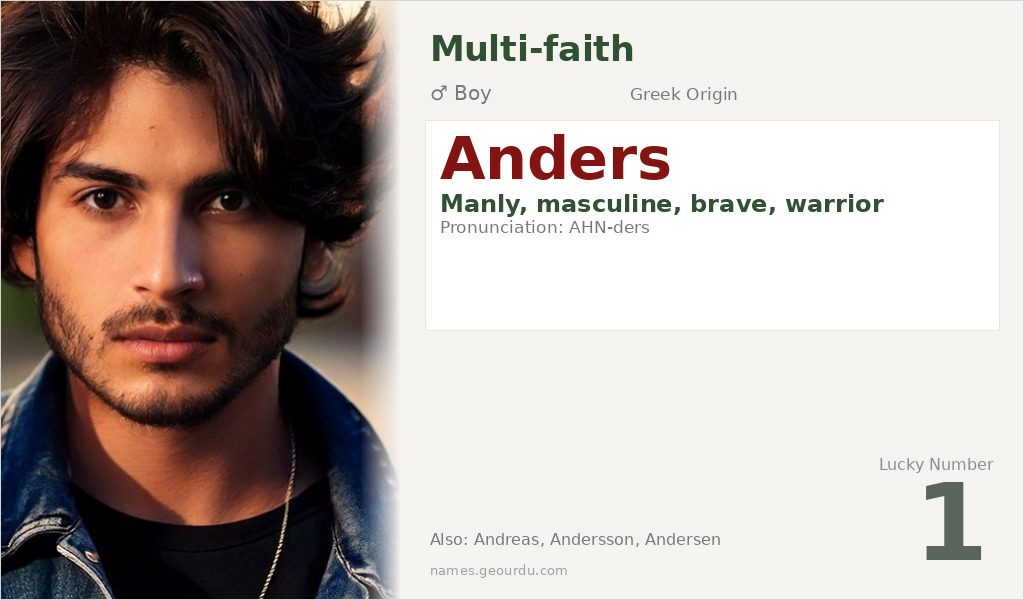
| 📛 Name | Anders |
| 💎 Meaning | Manly, masculine, brave, warrior |
| 👤 Gender | Boy |
| 🕌 Religion | Multi-faith |
| 🌍 Origin | Greek |
| 🗣 Pronunciation | AHN-ders |
| ✍️ Urdu | اینڈرس |
| ✍️ Arabic | أندرس |
| 🔢 Numerology | 1 |
| ✨ Spellings | Andreas, Andersson, Andersen, Ander, Andrés |
Origin & Cultural Significance
Anders emerged as the Scandinavian form of Andrew during the medieval period, particularly in Sweden, Norway, and Denmark. The name gained prominence through Christianization, as Saint Andrew (one of Jesus’s twelve apostles) became a popular saint in Northern Europe. Unlike many names that changed significantly across languages, Anders maintained close phonetic similarity to its Greek and Latin predecessors. Today, it remains one of the most common masculine names in Scandinavia and has spread globally through Scandinavian diaspora. The name’s endurance reflects both its religious significance and its embodiment of valued masculine traits in Nordic cultures.
Personality Traits
Those named Anders are often associated with leadership qualities, practical intelligence, and steadfast determination. They typically exhibit a balanced combination of traditional strength and modern adaptability, making them effective in both personal and professional spheres. Their name’s meaning of ‘manly’ or ‘brave’ often translates to a personality that faces challenges directly and protects those they care about.
Similar Names
If you like Anders, consider: Andrew, Andreas, Andre, Anderson, Andersson
Famous People Named Anders
- Anders Celsius — Swedish astronomer who created the Celsius temperature scale
- Anders Zorn — Renowned Swedish painter and sculptor from the late 19th/early 20th century
Frequently Asked Questions About Anders
What does Anders mean?
Anders means 'manly,' 'masculine,' 'brave,' or 'warrior.' It originates from the Greek name Andreas, which comes from the Greek word 'andrós' meaning 'man.'
Is Anders a boy or girl name?
Anders is exclusively a masculine name in all cultures where it's used, particularly in Scandinavian countries where it's a traditional boy's name.
What is the origin of Anders?
Anders has Greek origins through the name Andreas, but it developed as the Scandinavian form used primarily in Sweden, Norway, and Denmark since medieval times.





