Table of Contents
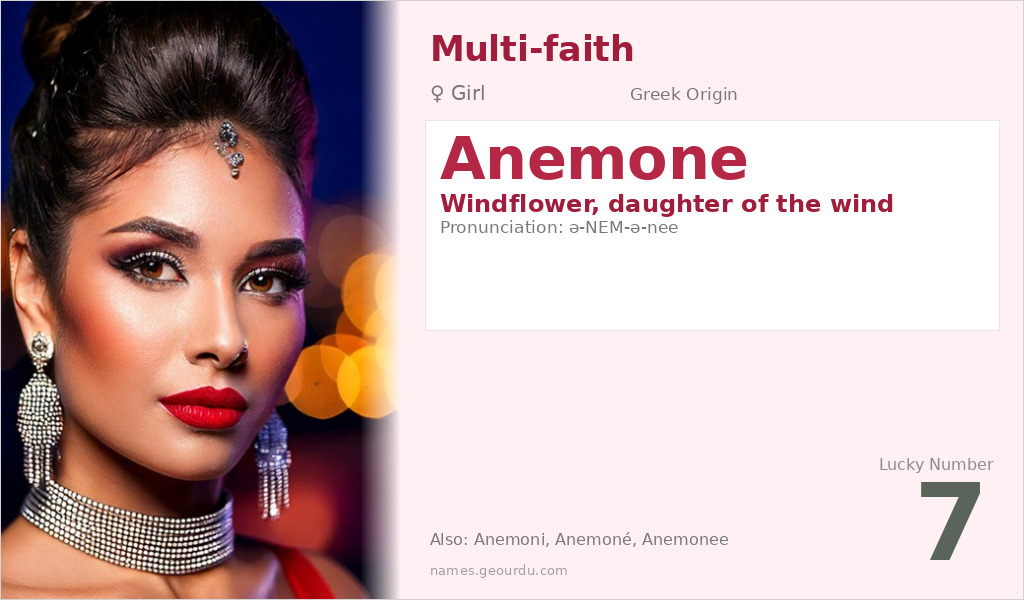
Anemone is a beautiful and poetic name with deep roots in ancient Greek mythology and botany. Meaning ‘windflower’ or ‘daughter of the wind’, this name evokes images of delicate blossoms dancing in the breeze. While primarily used in Western cultures, its lyrical quality has made it appealing to parents seeking nature-inspired names worldwide. Let’s explore the fascinating origins and characteristics of this floral name.
Meaning of Anemone
The name Anemone comes directly from the ancient Greek word ἀνεμώνη (anemōnē), which is derived from ἄνεμος (ánemos), meaning ‘wind’. This etymology reflects the flower’s characteristic of trembling in the wind, with the name essentially meaning ‘daughter of the wind’. In Greek mythology, anemones were said to have sprung from the blood of Adonis when he was mortally wounded, or alternatively created by Aphrodite as a memorial to her beloved. The name entered Latin as ‘anemone’ and subsequently spread to European languages, maintaining its botanical association. Today, it’s recognized internationally as both a flower name and occasionally as a given name with poetic connotations.
| 📛 Name | Anemone |
| 💎 Meaning | Windflower, daughter of the wind |
| 👤 Gender | Girl |
| 🕌 Religion | Multi-faith |
| 🌍 Origin | Greek |
| 🗣 Pronunciation | ə-NEM-ə-nee |
| ✍️ Urdu | اینیمون (phonetic adaptation, not native) |
| ✍️ Arabic | أنيمون (phonetic adaptation, not native) |
| 🔢 Numerology | 7 |
| ✨ Spellings | Anemoni, Anemoné, Anemonee |
Origin & Cultural Significance
Anemone originates from ancient Greece, where it was primarily the name of a wildflower rather than a personal name. The mythological connections to Adonis and Aphrodite gave the flower symbolic meaning in Greek culture, representing fading beauty and the transience of life. As a given name, Anemone gained popularity in Western cultures during the 19th and 20th centuries as part of the floral naming trend. While it has no established roots in Hindu, Sanskrit, or Indian traditions, its universal floral appeal has made it occasionally used across various cultures. The name remains relatively rare but distinctive, appealing to parents who appreciate botanical names with classical origins.
Personality Traits
Those named Anemone are often perceived as gentle, artistic, and in tune with nature. Like the delicate flower that inspired their name, they may possess a quiet strength and resilience that allows them to weather life’s challenges gracefully. Their connection to wind symbolism suggests adaptability and freedom of spirit, while the floral association points to beauty, growth, and natural elegance.
Similar Names
If you like Anemone, consider: Anthea, Chloe, Daphne, Flora, Iris
Famous People Named Anemone
- Anemone (1948-2019) — French actress and comedian, known for her work in French cinema
- Anemone — stage name of Canadian singer-songwriter Anemone Patterson
Frequently Asked Questions About Anemone
What does Anemone mean?
Anemone means 'windflower' or 'daughter of the wind', originating from the ancient Greek word ἀνεμώνη (anemōnē), derived from ἄνεμος (ánemos) meaning 'wind'.
Is Anemone a boy or girl name?
Anemone is almost exclusively used as a girl's name, following the tradition of floral names being feminine in most Western cultures where it's primarily used.
What is the origin of Anemone?
Anemone originates from ancient Greek language and mythology, with no established connections to Hindu, Sanskrit, or Indian traditions despite some incorrect online claims.