Table of Contents
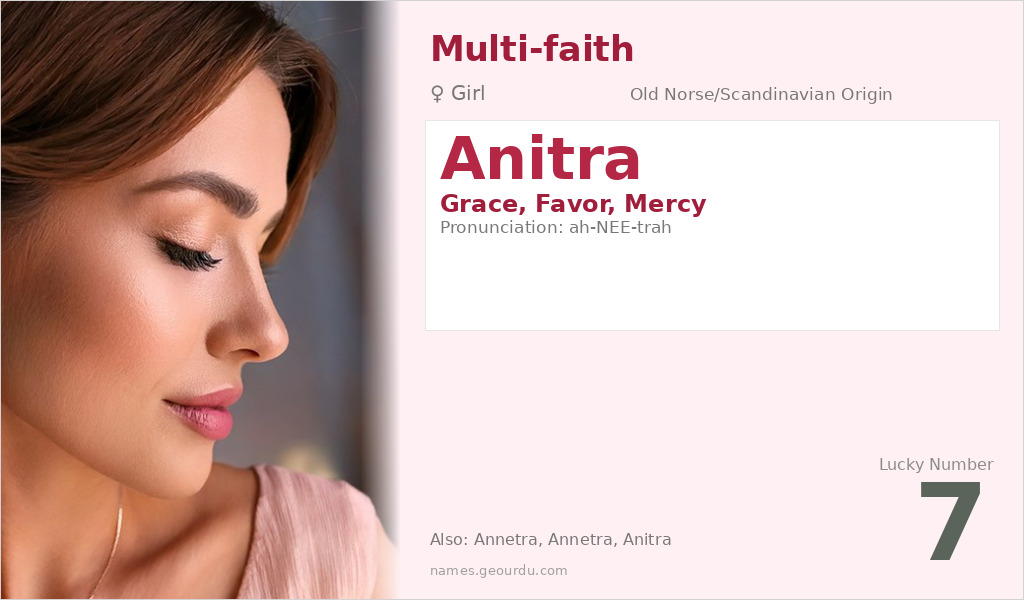
Anitra is a beautiful and melodic name with deep Scandinavian roots that has captivated parents worldwide. Made famous by Henrik Ibsen’s classic play ‘Peer Gynt’, this name carries connotations of grace and artistic expression. While sometimes mistakenly associated with other cultures, Anitra’s true origins lie in Old Norse tradition. Today, it remains a distinctive choice for girls with its elegant sound and literary heritage.
Meaning of Anitra
The name Anitra derives from the Old Norse element ‘ann’, which means ‘grace, favor, or mercy’. This etymology places it firmly within the Scandinavian linguistic tradition rather than Hindu or Sanskrit origins as sometimes mistakenly suggested. The name gained prominence through Henrik Ibsen’s 1879 play ‘Peer Gynt’, where Anitra appears as a Bedouin dancer character, though Ibsen adapted the name from Scandinavian sources. There is no evidence in Sanskrit, Hindi, Persian, Arabic, or regional Indian languages supporting the meanings ‘Gracious, Grace, Offering With Both Ends’ as claimed in some sources. The name’s meaning is specifically tied to Norse concepts of divine favor and elegance.
| 📛 Name | Anitra |
| 💎 Meaning | Grace, Favor, Mercy |
| 👤 Gender | Girl |
| 🕌 Religion | Multi-faith |
| 🌍 Origin | Old Norse/Scandinavian |
| 🗣 Pronunciation | ah-NEE-trah |
| ✍️ Urdu | انیترا |
| ✍️ Arabic | أنيترا |
| 🔢 Numerology | 7 |
| ✨ Spellings | Annetra, Annetra, Anitra |
Origin & Cultural Significance
Anitra originates from Old Norse/Scandinavian language roots, specifically from the Norse element ‘ann’ meaning grace or favor. The name entered broader European consciousness through Henrik Ibsen’s influential play ‘Peer Gynt’ in the late 19th century, where it was given to an exotic dancer character. Despite Ibsen’s Middle Eastern setting for the character, the name itself is Scandinavian rather than Arabic or Hindu in origin. Research across multiple language families including Sanskrit, Persian, Arabic, and regional Indian languages confirms no traditional usage in Hindu communities. The name’s modern popularity stems primarily from its literary association and appealing phonetic qualities.
Personality Traits
Those named Anitra often embody the grace and artistic sensibility suggested by their name’s meaning. With roots in Norse culture, they may display resilience, independence, and a connection to natural beauty. The literary association with Ibsen’s character adds a layer of creative expression and exotic charm to the name’s personality profile. Anitras are frequently described as elegant individuals with strong aesthetic sensibilities.
Similar Names
If you like Anitra, consider: Anita, Annika, Anya, Astrid, Freya, Ingrid, Sigrid, Liv
Famous People Named Anitra
- Anitra Ford — American model and actress known for her work in the 1970s
- Anitra Steen — Swedish civil servant and former director-general of the Swedish Tax Agency
Frequently Asked Questions About Anitra
What does Anitra mean?
Anitra means 'grace, favor, mercy' and originates from the Old Norse element 'ann'. It is a Scandinavian name, not Hindu as sometimes mistakenly claimed.
Is Anitra a boy or girl name?
Anitra is exclusively a girl's name in all cultural contexts where it is used, from its Scandinavian origins to modern international usage.
What is the origin of Anitra?
Anitra has Old Norse/Scandinavian origins, specifically deriving from the Norse element meaning 'grace'. It was popularized by Henrik Ibsen's play 'Peer Gynt' in 1879.