
Table of Contents
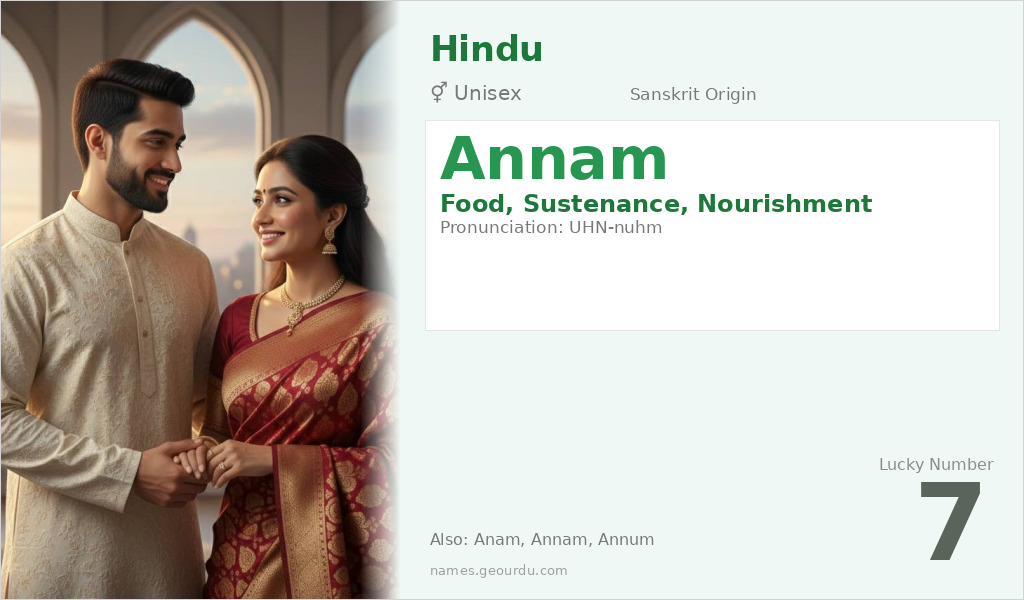
Annam is a beautiful, meaningful name with deep roots in ancient Indian culture and philosophy. Derived from Sanskrit, this name carries the profound significance of ‘food’, ‘sustenance’, and ‘nourishment’ – representing the essential elements that sustain life. While relatively uncommon as a personal name today, Annam holds important cultural and spiritual significance in Hindu tradition. This guide explores the true origins, meaning, and cultural context of the name Annam.
Meaning of Annam
The name Annam comes directly from the Sanskrit word ‘annam’ (अन्नम्), which fundamentally means ‘food’, ‘sustenance’, or ‘nourishment’. In Vedic philosophy, annam is considered one of the five sheaths (koshas) that constitute human existence – specifically the ‘annamaya kosha’ or food sheath, representing the physical body. The term appears in ancient texts like the Taittiriya Upanishad, which states ‘Annam Brahmeti Vyajanat’ (One should know food as Brahman). This elevates the concept of food from mere physical sustenance to a spiritual principle. The name thus carries connotations of nourishment, provision, and the fundamental support systems that sustain life.
| 📛 Name | Annam |
| 💎 Meaning | Food, Sustenance, Nourishment |
| 👤 Gender | Unisex |
| 🕌 Religion | Hindu |
| 🌍 Origin | Sanskrit |
| 🗣 Pronunciation | UHN-nuhm |
| ✍️ Urdu | انعم |
| ✍️ Arabic | أنعم |
| 🔢 Numerology | 7 |
| ✨ Spellings | Anam, Annam, Annum |
Origin & Cultural Significance
Annam originates from Sanskrit, the ancient liturgical language of Hinduism, Buddhism, and Jainism. While primarily used as a common noun meaning ‘food’ in Sanskrit and derived Indian languages, it occasionally appears as a personal name, particularly in South Indian communities. The name is most commonly found among Hindu families, reflecting the cultural and spiritual significance of food in Hindu tradition, where feeding others is considered a sacred duty (annadanam). Unlike many Sanskrit names that have been adapted into Muslim communities in South Asia, Annam remains predominantly associated with Hindu culture and has not been documented as a traditional Muslim name in reliable sources.
Personality Traits
People named Annam often embody the nurturing qualities suggested by their name’s meaning. They tend to be practical, grounded individuals who value stability and providing for others. Their connection to the name’s meaning of sustenance often manifests in caretaking roles, whether in family, community, or professional settings. While individual personalities vary, the name’s earthy, fundamental meaning suggests someone who is reliable, nourishing to be around, and deeply connected to life’s basic necessities.
Similar Names
If you like Annam, consider: Anna, Ananya, Annapurna, Anand, Anant
Famous People Named Annam
- Annam Acharya — Indian classical musician and composer
- Annamalai University — Named after founder Dr. Rajah Sir Annamalai Chettiar, though 'Annamalai' is a different name
Frequently Asked Questions About Annam
What does Annam mean?
Annam means 'food', 'sustenance', or 'nourishment' in Sanskrit. It comes from the ancient Sanskrit word 'annam' (अन्नम्) which represents physical nourishment and sustenance.
Is Annam a boy or girl name?
Annam is a unisex name, though it is relatively uncommon as a personal name in modern times. It is more frequently used as a common noun meaning 'food' in Indian languages than as a given name.
What is the origin of Annam?
Annam originates from Sanskrit, the ancient language of India. It is primarily associated with Hindu culture and philosophy, where food and nourishment hold significant spiritual meaning.