
Table of Contents
Apollo is a name that resonates with ancient power and mythological grandeur. Originating from Greek mythology as the name of the god of prophecy, music, and healing, this name carries centuries of cultural significance. While often associated with classical antiquity, Apollo has found modern appeal across various cultures and religions. This comprehensive guide explores the true meaning, origins, and contemporary usage of this timeless name.
Meaning of Apollo
The name Apollo derives from ancient Greek Ἀπόλλων (Apollōn), with its most widely accepted meaning being ‘destroyer’ or ‘to destroy’ from the Greek verb ἀπόλλυμι (apollymi). This etymology reflects the dual nature of the Greek god Apollo, who could bring both plague and healing, destruction and creation. Some scholars suggest alternative origins, including connections to the Doric word for ‘assembly’ (apella) or the Anatolian deity Apaliunas, but the ‘destroyer’ interpretation remains predominant in classical studies. The name’s meaning encompasses both the destructive power and the purifying aspects associated with the mythological figure.
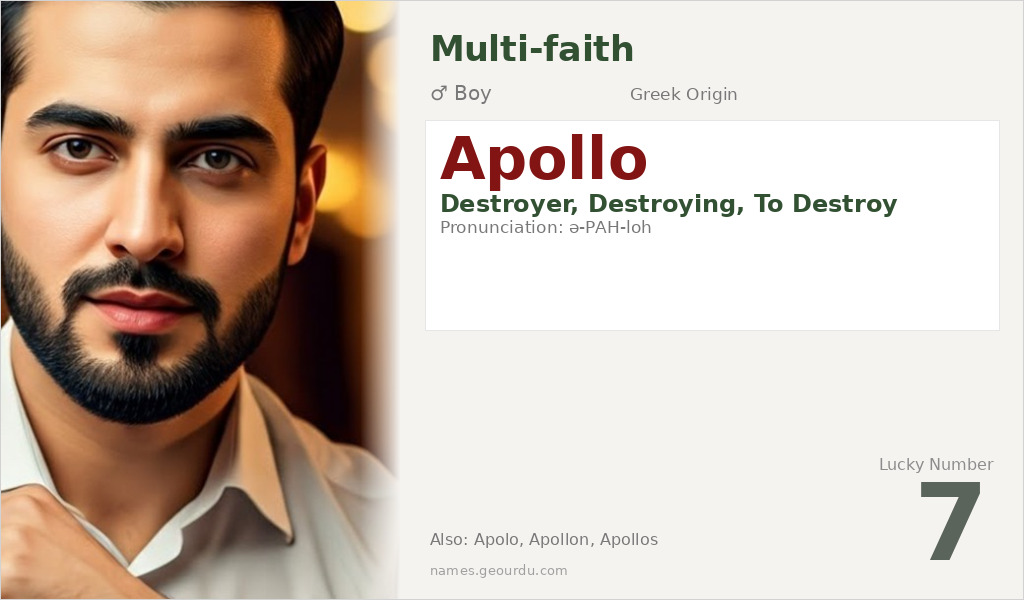
| 📛 Name | Apollo |
| 💎 Meaning | Destroyer, Destroying, To Destroy |
| 👤 Gender | Boy |
| 🕌 Religion | Multi-faith |
| 🌍 Origin | Greek |
| 🗣 Pronunciation | ə-PAH-loh |
| ✍️ Urdu | اپولو |
| ✍️ Arabic | أبولو |
| 🔢 Numerology | 7 |
| ✨ Spellings | Apolo, Apollon, Apollos, Apollonius |
Origin & Cultural Significance
Apollo originates from ancient Greek mythology as the name of one of the most important Olympian deities, son of Zeus and Leto. The name spread throughout the Hellenistic world and was later adopted by the Romans, who maintained Apollo as a major god in their pantheon. During the Christian era, the name continued in use, particularly in Eastern Orthodox traditions where several saints bore the name. In modern times, Apollo has become a multicultural name used by people of various religious backgrounds, though it remains most strongly associated with its Greek mythological roots rather than any specific religion.
Personality Traits
Those named Apollo often project confidence, creativity, and intellectual curiosity. The name’s mythological associations suggest individuals who may excel in artistic pursuits, demonstrate leadership qualities, and possess a charismatic presence. Like the Greek god who presided over multiple domains, people with this name often show versatility and a broad range of interests, from the arts to intellectual pursuits.
Similar Names
If you like Apollo, consider: Atlas, Orion, Zeus, Ares, Hermes
Famous People Named Apollo
- Apollo Creed — Fictional boxer from the Rocky film series
- Apollo Anton Ohno — American short track speed skater and Olympic medalist
Frequently Asked Questions About Apollo
What does Apollo mean?
Apollo means 'destroyer' or 'to destroy' in Greek, derived from the ancient Greek verb ἀπόλλυμι (apollymi).
Is Apollo a boy or girl name?
Apollo is traditionally and almost exclusively a masculine name, originating as the name of the male Greek god of prophecy, music, and healing.
What is the origin of Apollo?
Apollo originates from ancient Greek mythology as the name of the Olympian god Apollo, with linguistic roots in the Greek language and connections to earlier Anatolian deities.





