
Table of Contents
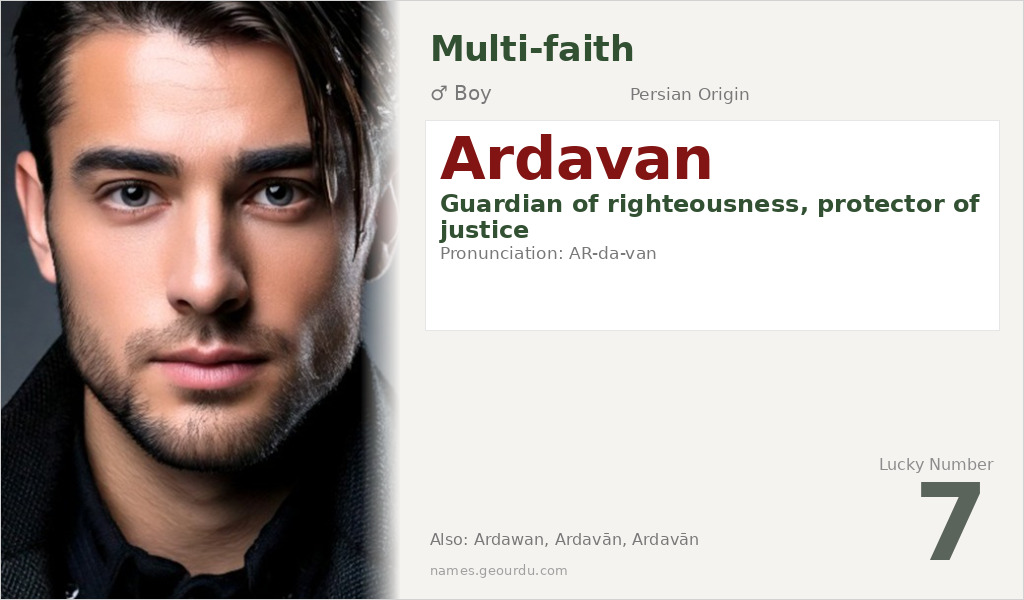
Ardavan is a distinguished name with deep historical roots in Persian culture, carrying centuries of royal heritage. Meaning ‘guardian of righteousness’ or ‘protector of justice,’ this name connects modern bearers to the ancient Parthian Empire. While historically significant, it remains a meaningful choice for parents seeking a name with strong ethical connotations. Discover the rich linguistic and cultural journey of this timeless name.
Meaning of Ardavan
Ardavan derives from Middle Persian ‘Ardavān’, composed of two elements: ‘ard’ meaning righteousness, truth, or cosmic order, and ‘vān’ meaning protector or guardian. This creates the comprehensive meaning ‘guardian of righteousness.’ The ‘ard’ component relates to the Zoroastrian concept of Asha (truth/order), one of the most important principles in ancient Persian philosophy. Historically, the name was borne by several Parthian kings, reflecting its association with leadership and moral authority. In modern Persian and related languages, it retains these core meanings while being adapted across various cultures.
| 📛 Name | Ardavan |
| 💎 Meaning | Guardian of righteousness, protector of justice |
| 👤 Gender | Boy |
| 🕌 Religion | Multi-faith |
| 🌍 Origin | Persian |
| 🗣 Pronunciation | AR-da-van |
| ✍️ Urdu | اردوان |
| ✍️ Arabic | أردوان |
| 🔢 Numerology | 7 |
| ✨ Spellings | Ardawan, Ardavān, Ardavān, Ardavan |
Origin & Cultural Significance
Ardavan originates from the Parthian Empire (247 BCE–224 CE), where it was used as a royal name for several monarchs. The most famous bearers were Ardavan I (127–124 BCE) and Ardavan V, the last Parthian king defeated by Ardashir I in 224 CE. While rooted in Zoroastrian Persian culture, the name spread through Persianate societies and is now used by Muslims, Zoroastrians, and others in Iran, Afghanistan, Pakistan, and diaspora communities. Its historical significance makes it particularly valued in families with connections to Persian history or those appreciating ancient cultural heritage.
Personality Traits
Those named Ardavan are often associated with qualities of protection, justice, and moral integrity. The name’s meaning suggests someone who values truth and order, potentially influencing their approach to relationships and responsibilities. In cultural contexts, Ardavan might be expected to demonstrate leadership qualities and a strong sense of ethics. These associations, while not deterministic, reflect the aspirational qualities embedded in the name’s etymology.
Similar Names
If you like Ardavan, consider: Ardeshir, Ardashir, Arman, Arvin, Ardan
Famous People Named Ardavan
- Ardavan I — Parthian king who ruled from 127–124 BCE, known for his military campaigns
- Ardavan V — Last Parthian king (r. 213–224 CE) defeated by Ardashir I, ending the Parthian Empire
Frequently Asked Questions About Ardavan
What does Ardavan mean?
Ardavan means 'guardian of righteousness' or 'protector of justice,' derived from Middle Persian elements 'ard' (righteousness) and 'vān' (protector).
Is Ardavan a boy or girl name?
Ardavan is exclusively a masculine name with historical usage as a royal name for Parthian kings and continued use for boys in Persianate cultures.
What is the origin of Ardavan?
Ardavan originates from Middle Persian (Pahlavi) and was historically used in the Parthian Empire. It has Persian linguistic roots with connections to Zoroastrian concepts of truth and order.





