
Table of Contents
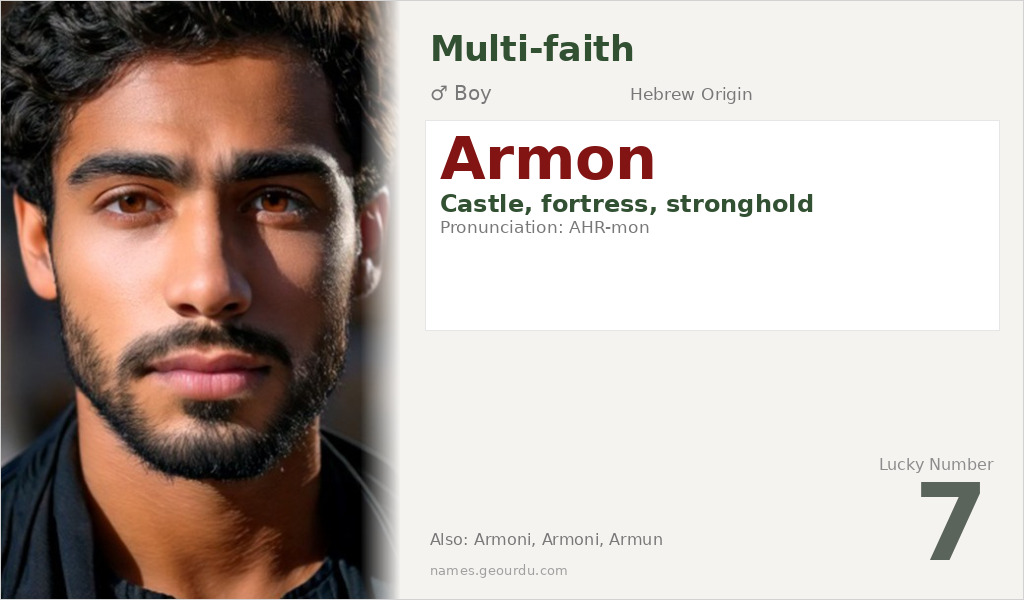
Armon is a distinctive boy’s name with deep historical roots and a powerful meaning. Derived from Hebrew, this name carries the strength and permanence of a fortress or castle. While not extremely common, it has maintained steady usage across different cultures and continues to appeal to parents seeking a name with both traditional significance and modern appeal. The name’s straightforward pronunciation and strong imagery make it a compelling choice for many families.
Meaning of Armon
The name Armon originates from the Hebrew word ‘armon’ (אַרְמוֹן), which directly translates to ‘castle’, ‘fortress’, or ‘palace’. This term appears numerous times in the Hebrew Bible, most notably in references to Solomon’s palace and other royal residences. The root of the word is connected to concepts of height, elevation, and protection, reflecting the architectural and defensive nature of ancient fortifications. In modern Hebrew, the word continues to be used for palaces and grand buildings, maintaining its connection to strength and grandeur. The name’s meaning has remained consistent throughout its linguistic history, making it one of the more straightforward etymologies among Hebrew names.
| 📛 Name | Armon |
| 💎 Meaning | Castle, fortress, stronghold |
| 👤 Gender | Boy |
| 🕌 Religion | Multi-faith |
| 🌍 Origin | Hebrew |
| 🗣 Pronunciation | AHR-mon |
| ✍️ Urdu | آرمن |
| ✍️ Arabic | أرمن |
| 🔢 Numerology | 7 |
| ✨ Spellings | Armoni, Armoni, Armun |
Origin & Cultural Significance
Armon has its primary origins in ancient Hebrew language and culture, with documented usage dating back to Biblical times. While the name appears in the Hebrew Bible primarily as a common noun rather than a personal name, it has been adopted as a given name in modern times, particularly among Jewish communities and those appreciating Hebrew names. The name has spread beyond its original cultural context and is now used in various English-speaking countries and other regions. Unlike many Hebrew names that have religious connotations, Armon’s meaning is architectural and symbolic rather than explicitly theological, which may contribute to its cross-cultural appeal.
Personality Traits
People named Armon often embody the protective and steadfast qualities suggested by their name’s meaning. They tend to be reliable individuals who create security for those around them, much like a fortress provides shelter. Their analytical nature and preference for structure often lead them to careers where planning and protection are valued. While they can be reserved initially, those who know them well appreciate their loyalty and the safe haven they provide in relationships.
Similar Names
If you like Armon, consider: Ariel, Aron, Ethan, Eli, Asher
Famous People Named Armon
- Armon Warren — American social media personality and content creator
- Armon Sadler — American actor known for roles in various television series
Frequently Asked Questions About Armon
What does Armon mean?
Armon means 'castle', 'fortress', or 'palace' in Hebrew. The name comes directly from the Hebrew word 'armon' (אַרְמוֹן) which appears multiple times in the Old Testament.
Is Armon a boy or girl name?
Armon is traditionally and almost exclusively a boy's name. While names can sometimes cross gender boundaries, there are no documented traditions of Armon being used as a feminine name in its cultures of origin.
What is the origin of Armon?
Armon originates from Hebrew language and culture. It is derived from the Hebrew word for castle or fortress, with Biblical usage dating back thousands of years. The name has been adopted as a personal name in modern times.





