
Table of Contents
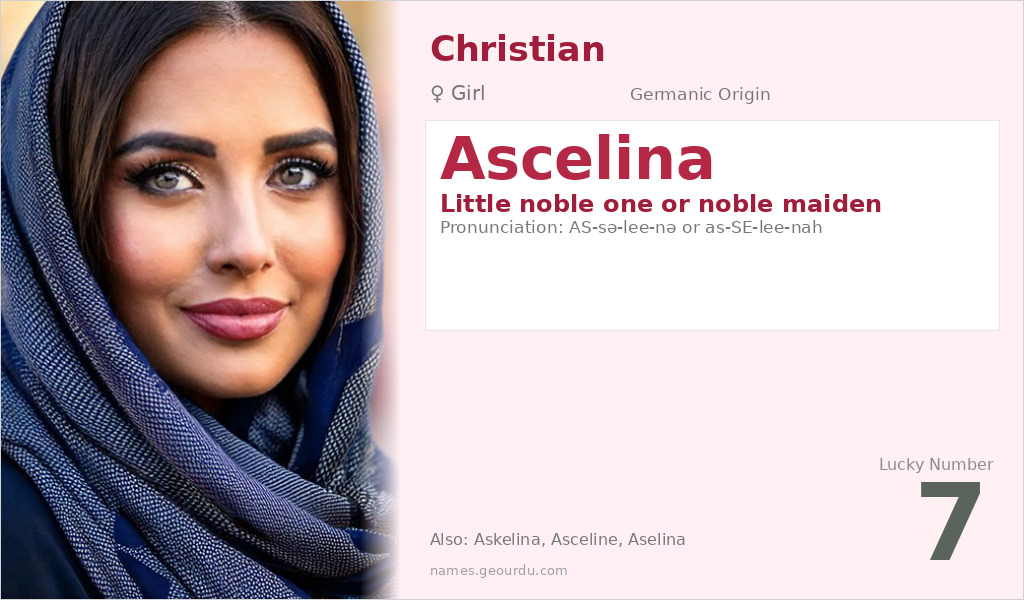
Ascelina is a beautiful, historically rich feminine name with roots in medieval Europe. Derived from Germanic elements meaning ‘noble,’ this name carries an air of elegance and tradition. While less common today, Ascelina appears in historical records of French and German nobility from the Middle Ages. Its melodic sound and meaningful origin make it a distinctive choice with centuries of heritage.
Meaning of Ascelina
Ascelina originates from Old High German, specifically from the element ‘adal’ meaning ‘noble, aristocracy’ combined with the diminutive suffix ‘-lina’ or ‘-lind,’ creating the meaning ‘little noble one’ or ‘noble maiden.’ The name appears in medieval Latin documents as Ascelina and Aselina, particularly in France and German-speaking regions during the 11th to 13th centuries. It represents a pet form or diminutive of longer names containing the ‘adal’ element, similar to how modern names like Addie derive from Adelaide. The name’s structure follows common Germanic naming patterns where meaningful elements combine with affectionate suffixes to create endearing forms.
| 📛 Name | Ascelina |
| 💎 Meaning | Little noble one or noble maiden |
| 👤 Gender | Girl |
| 🕌 Religion | Christian |
| 🌍 Origin | Germanic |
| 🗣 Pronunciation | AS-sə-lee-nə or as-SE-lee-nah |
| ✍️ Urdu | اسکیلینا |
| ✍️ Arabic | أسكيلينا |
| 🔢 Numerology | 7 |
| ✨ Spellings | Askelina, Asceline, Aselina, Ascelinda, Ascelinde |
Origin & Cultural Significance
Ascelina has its origins in medieval Germanic naming traditions that spread throughout Western Europe following the Frankish Empire. The name appears in historical records from regions that are now modern France and Germany, particularly among noble families. During the High Middle Ages, names with ‘adal’ (noble) elements were popular among aristocracy, and their diminutive forms like Ascelina represented affectionate versions used within families. The name’s documentation in Latin charters and historical texts confirms its usage in medieval Christian societies, though it never became as widespread as related names like Adelaide or Adeline.
Personality Traits
The noble etymology of Ascelina suggests qualities of refinement, dignity, and natural leadership. Those bearing this name might be perceived as possessing grace, intelligence, and a strong moral compass. The historical connection to medieval nobility implies someone who values tradition, carries themselves with poise, and approaches challenges with thoughtful consideration rather than impulsivity.
Similar Names
If you like Ascelina, consider: Adeline, Adelaide, Alina, Celina, Selina
Famous People Named Ascelina
- Ascelina of Burgundy — 12th century French noblewoman, daughter of Count Renaud II of Burgundy
- Ascelina (Aselina) — Historical figure mentioned in medieval charters from Normandy, 11th century
Frequently Asked Questions About Ascelina
What does Ascelina mean?
Ascelina means 'little noble one' or 'noble maiden,' derived from the Old High German element 'adal' (noble) with the diminutive suffix '-lina.'
Is Ascelina a boy or girl name?
Ascelina is exclusively a feminine name, with all historical records showing female bearers. It follows typical Germanic feminine naming patterns with the '-lina' ending.
What is the origin of Ascelina?
Ascelina originates from Germanic languages, specifically Old High German, and was used in medieval France and Germany during the 11th-13th centuries among Christian nobility.





