
Table of Contents
Ashwat is a profound Sanskrit name with deep roots in Hindu spirituality and Indian culture. Derived from the sacred fig tree (Ficus religiosa), this name carries centuries of religious and philosophical significance. Unlike ordinary tree names, Ashwat specifically references the Bodhi tree under which Buddha attained enlightenment. This name connects the bearer to ancient wisdom and natural symbolism that transcends generations.
Meaning of Ashwat
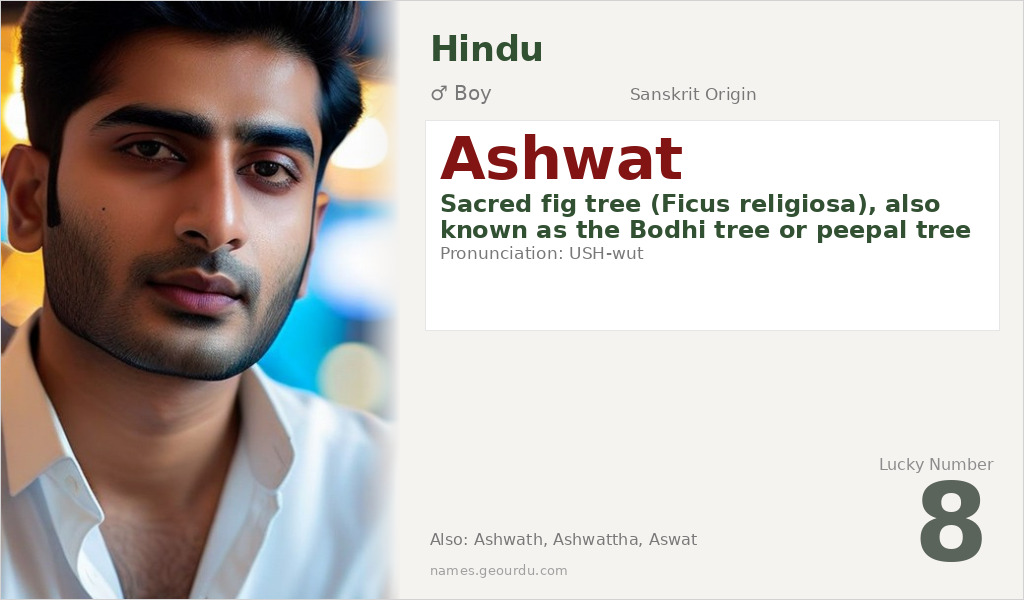
Ashwat originates from the Sanskrit word ‘aśvattha’ (अश्वत्थ), which specifically denotes the sacred fig tree, also known as the peepal tree or Bodhi tree. This isn’t just any tree—it’s the Ficus religiosa species revered in Hinduism, Buddhism, and Jainism. The etymology breaks down to ‘aśva’ meaning horse and ‘stha’ meaning standing or stable, possibly referencing the tree’s use in Vedic horse sacrifices or its enduring nature. In the Bhagavad Gita (Chapter 15), Krishna describes the aśvattha tree as having roots above and branches below, representing the inverted tree of life with its roots in the spiritual realm. This makes Ashwat one of the most spiritually charged botanical names in Indian tradition.
| 📛 Name | Ashwat |
| 💎 Meaning | Sacred fig tree (Ficus religiosa), also known as the Bodhi tree or peepal tree |
| 👤 Gender | Boy |
| 🕌 Religion | Hindu |
| 🌍 Origin | Sanskrit |
| 🗣 Pronunciation | USH-wut |
| ✍️ Urdu | اشوت |
| ✍️ Arabic | أشوات |
| 🔢 Numerology | 8 |
| ✨ Spellings | Ashwath, Ashwattha, Aswat, Ashwatha |
Origin & Cultural Significance
Ashwat has its origins in ancient Sanskrit literature and Hindu scriptures, particularly the Bhagavad Gita where it appears as a central metaphor. The sacred fig tree (aśvattha) has been worshipped in India for millennia, with archaeological evidence dating back to the Indus Valley Civilization. In Hindu tradition, the tree is associated with the Trimurti—Brahma in the roots, Vishnu in the trunk, and Shiva in the leaves. The name gained cultural prominence through the epic Mahabharata, where Ashwatthama (meaning ‘horse-voiced like an aśvattha tree’) is a major warrior character. Today, the name remains popular among Hindu families, especially those seeking names with deep philosophical and natural symbolism.
Personality Traits
Those named Ashwat often embody the qualities of the sacred tree they’re named after—deeply rooted yet constantly growing, providing shade and shelter to others. They tend to be contemplative individuals with strong connections to tradition and spirituality. Like the evergreen aśvattha tree, Ashwats demonstrate resilience and longevity in their pursuits, often serving as stable anchors in their communities. Their personality combines earthly practicality with philosophical depth, making them both grounded and insightful.
Similar Names
If you like Ashwat, consider: Ashwin, Ashish, Ashok, Vriksh, Tarun
Famous People Named Ashwat
- Ashwatthama — legendary warrior from the Mahabharata, son of Dronacharya
- Ashwath Damodaran — Indian-American finance professor and valuation expert
Frequently Asked Questions About Ashwat
What does Ashwat mean?
Ashwat means 'sacred fig tree' (Ficus religiosa) in Sanskrit, specifically referring to the Bodhi or peepal tree revered in Hindu and Buddhist traditions.
Is Ashwat a boy or girl name?
Ashwat is traditionally a masculine name in Hindu naming conventions, though its botanical nature could theoretically make it unisex in modern contexts.
What is the origin of Ashwat?
Ashwat originates from Sanskrit and Hindu tradition, specifically from the word 'aśvattha' found in ancient texts like the Bhagavad Gita and Mahabharata.





