Table of Contents
Asp is a distinctive masculine name with deep roots in Persian language and culture, where it carries the powerful meaning of ‘horse’ or ‘steed’. This name evokes images of strength, speed, and nobility—qualities highly valued in traditional Persian epics and poetry. Used across various cultures influenced by Persian tradition, Asp represents a connection to ancient equestrian heritage and warrior ideals. While relatively uncommon today, it remains a meaningful choice for parents seeking a name with historical resonance.
Meaning of Asp
The name Asp derives directly from the Persian word ‘asp’ (اسپ), which means ‘horse’ or specifically ‘steed’—a riding horse, often implying nobility and speed. This term has been used in Persian literature for centuries, most notably in Ferdowsi’s Shahnameh (Book of Kings), where horses play significant roles as companions to heroes. Linguistically, ‘asp’ shares ancestry with other Indo-European words for horse through the Proto-Indo-European root *h₁éḱwos, related to Latin ‘equus’, Sanskrit ‘aśva’, and Greek ‘hippos’. In modern usage, the name preserves these equine associations while also suggesting qualities of strength, loyalty, and freedom that horses symbolize in Persian culture.
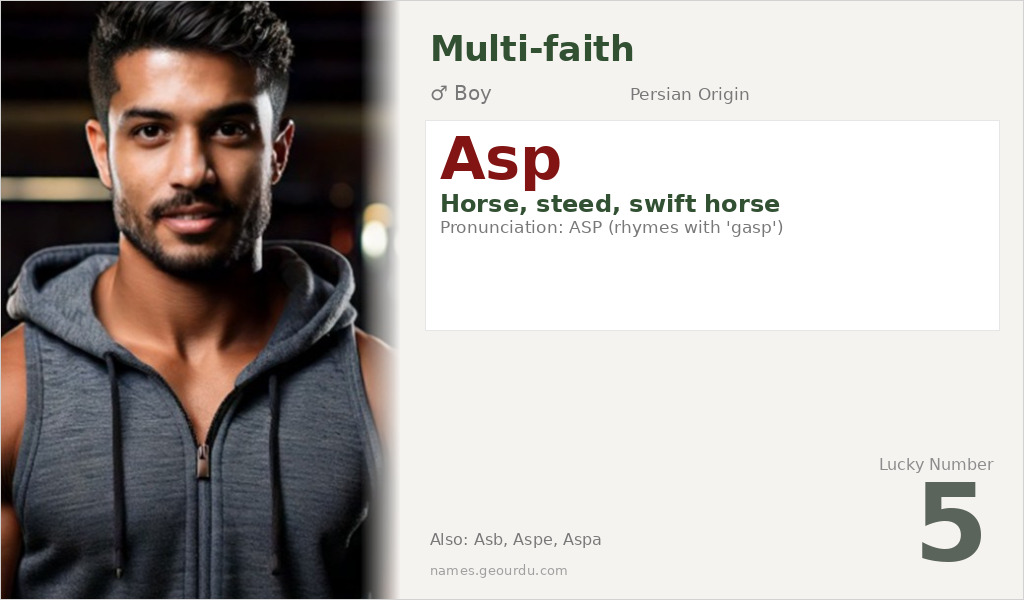
| 📛 Name | Asp |
| 💎 Meaning | Horse, steed, swift horse |
| 👤 Gender | Boy |
| 🕌 Religion | Multi-faith |
| 🌍 Origin | Persian |
| 🗣 Pronunciation | ASP (rhymes with 'gasp') |
| ✍️ Urdu | اسپ |
| ✍️ Arabic | أسپ |
| 🔢 Numerology | 5 |
| ✨ Spellings | Asb, Aspe, Aspa |
Origin & Cultural Significance
Asp originates from Persian language and culture, where it has been used as both a common noun and occasionally as a given name for centuries. The name spread through Persian influence across Central Asia, South Asia, and the Middle East, appearing in various forms in Pashto, Kurdish, Urdu, and Turkic languages. Historically, horses held immense cultural importance in Persian society—not just for transportation and warfare, but as symbols of status, beauty, and poetic inspiration. While the name is used by Muslims in Persian-speaking regions, it is not exclusively Islamic and appears in Zoroastrian and other cultural contexts within the Persianate world, reflecting its linguistic rather than religious origins.
Personality Traits
Those named Asp are often thought to embody the characteristics associated with horses in Persian tradition: strength, grace, endurance, and nobility. They may display natural leadership qualities, a strong sense of independence, and loyalty to those they care about. The name suggests someone who values freedom and movement, possibly with an adventurous spirit and determination to overcome obstacles. These associations stem from centuries of Persian poetry and epic literature that celebrated the bond between warriors and their noble steeds.
Similar Names
If you like Asp, consider: Asghar, Aslan, Farhad, Rustam, Buraq
Famous People Named Asp
- Asp (historical) — Name of several Persian and Central Asian historical figures and warriors
- Asp (modern) — Occasionally used as a given name in Iran, Afghanistan, and Pakistan among Persian-speaking communities
Frequently Asked Questions About Asp
What does Asp mean?
Asp means 'horse' or 'steed' in Persian (Farsi). The name comes directly from the Persian word 'asp' (اسپ), which refers to a riding horse, often with connotations of nobility and speed.
Is Asp a boy or girl name?
Asp is traditionally a masculine name. In Persian and related cultures where it originates, it is exclusively used for boys, reflecting the historical association of horses with masculine warrior ideals.
What is the origin of Asp?
Asp originates from the Persian language and culture. While used in various Muslim-majority regions today, its roots are linguistic (Persian) rather than religious, and it has historical usage across Persian-influenced cultures regardless of faith.