
Table of Contents
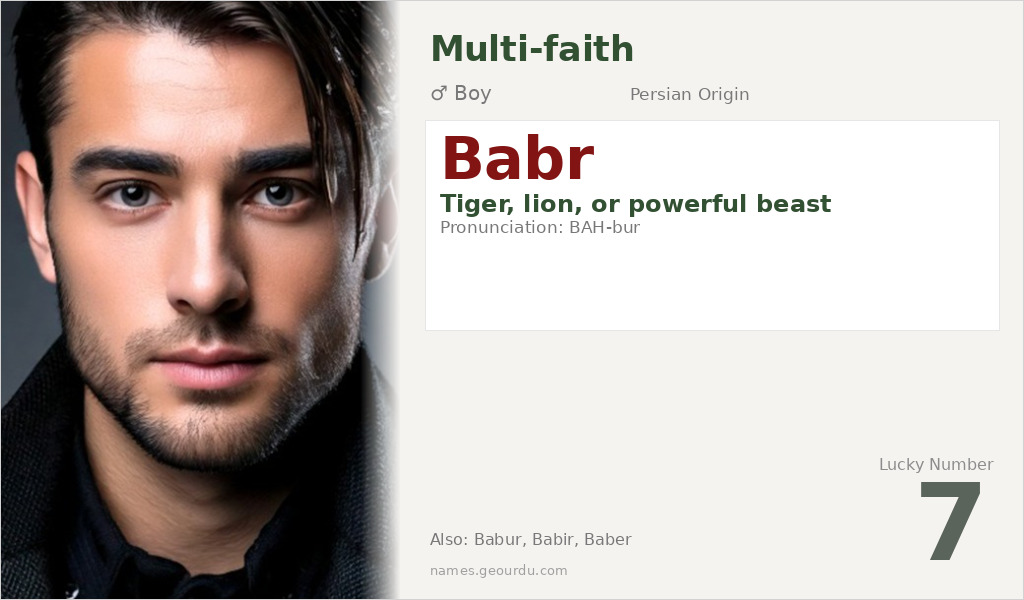
Babr is a powerful and historic name with roots in Persian culture, meaning ‘tiger’ or ‘lion’. This name carries connotations of strength, courage, and nobility, making it a popular choice for boys in various regions including Iran, Afghanistan, Pakistan, and Turkey. From ancient poetry to modern usage, Babr has maintained its symbolic connection to formidable qualities. In this guide, we explore the etymology, cultural significance, and notable figures associated with this distinctive name.
Meaning of Babr
The name Babr originates from the Persian word ‘babr’ (ببر), which unequivocally means ‘tiger’. In Persian linguistics, this term has been used since classical times to describe the Bengal tiger and other large felines, often appearing in epic poetry and historical texts as a symbol of power and ferocity. The word shares etymological connections with other Indo-Iranian languages, though its primary documented source is Persian. Over centuries, ‘babr’ evolved from a common noun into a proper name, particularly in royal and warrior contexts. The Mughal emperor Babur’s name is a direct variant, demonstrating how this animal term became anthroponymic. In some Turkic languages, the name was adopted with similar meanings, though Persian remains its definitive origin.
| 📛 Name | Babr |
| 💎 Meaning | Tiger, lion, or powerful beast |
| 👤 Gender | Boy |
| 🕌 Religion | Multi-faith |
| 🌍 Origin | Persian |
| 🗣 Pronunciation | BAH-bur |
| ✍️ Urdu | ببر |
| ✍️ Arabic | ببر |
| 🔢 Numerology | 7 |
| ✨ Spellings | Babur, Babir, Baber |
Origin & Cultural Significance
Babr has its origins in Persian culture, where it has been used as both a common word and a personal name for centuries. The name spread through Persian influence across Central Asia, South Asia, and the Middle East, particularly during periods of Persianate empires like the Timurids and Mughals. Historically, it appears in Persian literature such as the Shahnameh, where tigers symbolize heroic qualities. While commonly used in Muslim-majority regions due to Persian’s cultural and literary prominence in Islamic civilizations, the name itself is not exclusively Islamic and appears in pre-Islamic Persian contexts. Today, it remains popular in Iran, Afghanistan, Pakistan, and among diaspora communities, often chosen for its strong, natural imagery.
Personality Traits
Those named Babr are often associated with traits of bravery, leadership, and protective instincts. Like the tiger, they may exhibit a combination of grace and power, approaching challenges with strategic fierceness. In social settings, they tend to be charismatic yet reserved, commanding respect through their actions rather than words. These personality associations stem from the name’s literal meaning and cultural symbolism across Persian and related traditions.
Similar Names
If you like Babr, consider: Babur, Sher, Aslan, Arslan, Singh
Famous People Named Babr
- Babur — Founder of the Mughal Empire in India (1483-1530), whose name is a variant of Babr
- Babrak Karmal — Afghan politician (1929-1996), whose first name derives from the same Persian root
Frequently Asked Questions About Babr
What does Babr mean?
Babr means 'tiger' or 'lion' in Persian. It is derived from the Persian word 'babr' (ببر), which specifically refers to the tiger as a symbol of strength and courage.
Is Babr a boy or girl name?
Babr is exclusively a boy's name. In all cultural contexts where it is used—Persian, Turkish, Urdu-speaking regions—it is traditionally masculine, reflecting the strong, warrior-like qualities associated with tigers.
What is the origin of Babr?
Babr originates from the Persian language. It has been used for centuries in Persian literature and history, later spreading to other cultures through Persian influence, particularly in Central and South Asia.





