
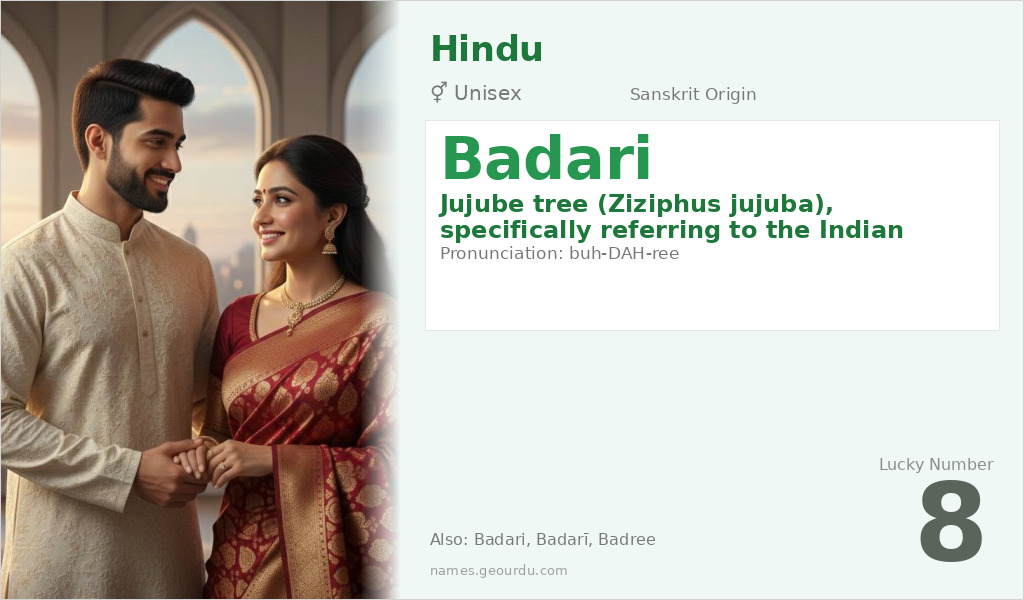
Table of Contents
Badari is a name rich with botanical and spiritual significance, rooted in ancient Sanskrit tradition. While often associated with Hindu culture, this name carries the enduring symbolism of the resilient jujube tree that appears throughout Indian mythology. Whether chosen for a boy or girl, Badari connects the bearer to nature, spirituality, and cultural heritage. Discover the fascinating layers of meaning behind this distinctive name.
Meaning of Badari
Badari derives directly from the Sanskrit word ‘badarī’ (बदरी), which specifically denotes the Indian jujube tree (Ziziphus jujuba), commonly known as ber in Hindi. This isn’t just any tree—in Hindu tradition, the Badari tree is sacred, mentioned in texts like the Mahabharata and Puranas as growing in Badarikashrama, a Himalayan hermitage associated with Lord Vishnu and Nara-Narayana. The name carries connotations of resilience, nourishment (as the tree bears sweet fruit), and spiritual shelter. Linguistically, it shares roots with similar tree names across Indian languages, all pointing to this particular species that thrives in arid conditions.
| 📛 Name | Badari |
| 💎 Meaning | Jujube tree (Ziziphus jujuba), specifically referring to the Indian jujube or ber tree |
| 👤 Gender | Unisex |
| 🕌 Religion | Hindu |
| 🌍 Origin | Sanskrit |
| 🗣 Pronunciation | buh-DAH-ree |
| ✍️ Urdu | بدری |
| ✍️ Arabic | بادري |
| 🔢 Numerology | 8 |
| ✨ Spellings | Badari, Badarī, Badree, Badri |
Origin & Cultural Significance
Badari originates from classical Sanskrit, India’s ancient liturgical language, and has been used for centuries within Hindu communities. The name gained prominence through its association with Badarikashrama (also called Badrinath), one of the Char Dham pilgrimage sites in Uttarakhand, where Lord Vishnu is believed to have meditated under a Badari tree. While primarily Hindu in usage, the name transcends specific regional boundaries within the Indian subcontinent. Its botanical origin makes it part of a tradition of nature-based names common in Sanskrit, similar to names like Ashoka (without sorrow) or Tulsi (holy basil).
Personality Traits
Those named Badari often embody the qualities of their namesake tree—resilient, deeply rooted, and life-sustaining. They tend to approach challenges with practical wisdom and endurance, much like the jujube tree that flourishes in difficult terrain. Spiritually inclined and traditionally minded, Badaris often value heritage and stability while providing nourishment and support to those around them, reflecting the tree’s generous fruit-bearing nature.
Similar Names
If you like Badari, consider: Badrinath, Badarik, Badarika, Ber, Jujube, Amala, Ashoka, Tulsi, Neem
Famous People Named Badari
- Badari Narayan — Indian historian and author specializing in subaltern studies
- Badari K. Iyer — Indian-American scientist and researcher in materials science
Frequently Asked Questions About Badari
What does Badari mean?
Badari means 'Indian jujube tree' (Ziziphus jujuba) in Sanskrit, specifically referring to the ber tree that holds religious significance in Hinduism.
Is Badari a boy or girl name?
Badari is a unisex name in Hindu tradition, though it appears more frequently for girls in modern usage while remaining acceptable for boys.
What is the origin of Badari?
Badari originates from Sanskrit, an ancient Indian language, and is deeply connected to Hindu mythology and the sacred Badarikashrama pilgrimage site.