
Table of Contents
Bakul is a beautiful name with deep roots in Indian culture and Sanskrit literature. Derived from the fragrant bakula tree (Mimusops elengi), this name evokes images of delicate white flowers that bloom at night with intoxicating fragrance. Used for both boys and girls in Hindu communities, Bakul carries botanical elegance and cultural heritage. The name appears in classical Sanskrit poetry and continues to be cherished in modern naming traditions.
Meaning of Bakul
Bakul comes directly from the Sanskrit word ‘बकुल’ (bakula), which specifically refers to the Mimusops elengi tree, commonly known as Spanish cherry or bullet wood. This evergreen tree is native to South Asia and Southeast Asia, celebrated for its fragrant white flowers that release their scent primarily at night. In Sanskrit literature, the bakula tree is mentioned in works like Kalidasa’s ‘Meghadūta’ and ‘Kumārasambhava,’ often symbolizing beauty, love, and natural elegance. The name’s meaning has remained remarkably consistent across centuries, passing into modern Indian languages with the same botanical reference intact.
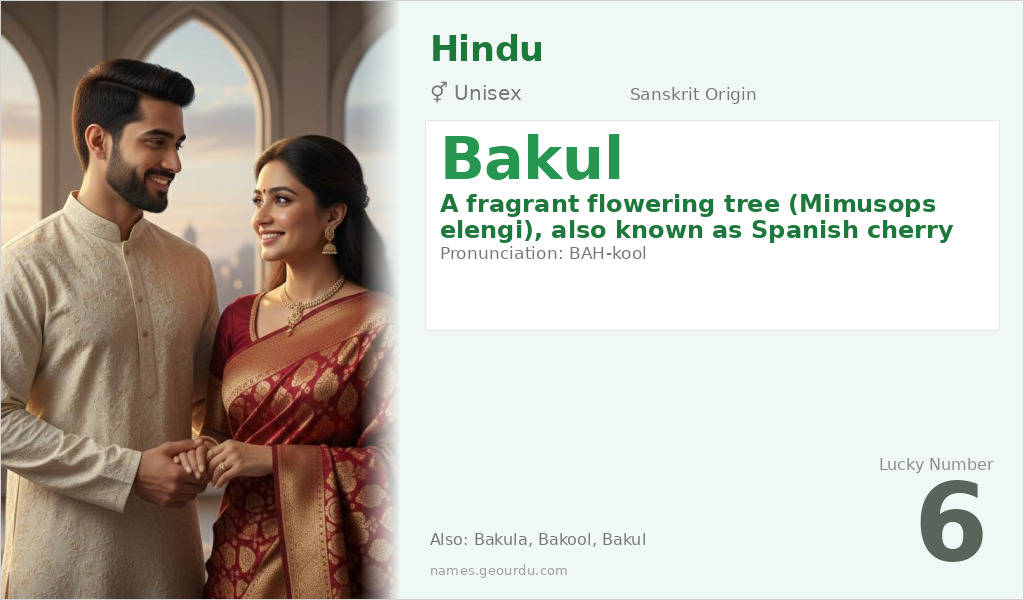
| 📛 Name | Bakul |
| 💎 Meaning | A fragrant flowering tree (Mimusops elengi), also known as Spanish cherry or bullet wood |
| 👤 Gender | Unisex |
| 🕌 Religion | Hindu |
| 🌍 Origin | Sanskrit |
| 🗣 Pronunciation | BAH-kool |
| ✍️ Urdu | بکول |
| ✍️ Arabic | باكول |
| 🔢 Numerology | 6 |
| ✨ Spellings | Bakula, Bakool, Bakul |
Origin & Cultural Significance
Bakul originates from classical Sanskrit, the ancient liturgical language of Hinduism, and has been used in Indian naming traditions for centuries. The name gained cultural significance through its appearance in Sanskrit literature, where the bakula tree was frequently used as a poetic symbol. In Hindu tradition, the tree is sometimes associated with Kamadeva, the god of love, due to its fragrant flowers. While primarily used in Hindu communities, the name has spread through Indian diaspora communities worldwide, maintaining its botanical and cultural associations across regions.
Personality Traits
People named Bakul are often perceived as having a gentle, artistic nature that reflects the name’s botanical origins. They may exhibit a calm, nurturing personality with an appreciation for natural beauty and aesthetic harmony. The name’s association with fragrant night-blooming flowers suggests someone who reveals their best qualities in peaceful settings and has a subtle but lasting impact on others.
Similar Names
If you like Bakul, consider: Chandan, Kesar, Neel, Tulsi, Amala
Famous People Named Bakul
- Bakul Patel — Indian-American FDA official and regulatory expert
- Bakul Tripathi — Indian classical vocalist and musicologist
Frequently Asked Questions About Bakul
What does Bakul mean?
Bakul means 'fragrant flowering tree,' specifically the Mimusops elengi tree (Spanish cherry), originating from Sanskrit 'बकुल' (bakula).
Is Bakul a boy or girl name?
Bakul is a unisex name used for both boys and girls in Hindu naming traditions, though it may be slightly more common for boys in some regions.
What is the origin of Bakul?
Bakul originates from Sanskrit, the classical language of ancient India, and has been used in Hindu culture for centuries, appearing in Sanskrit literature and poetry.